
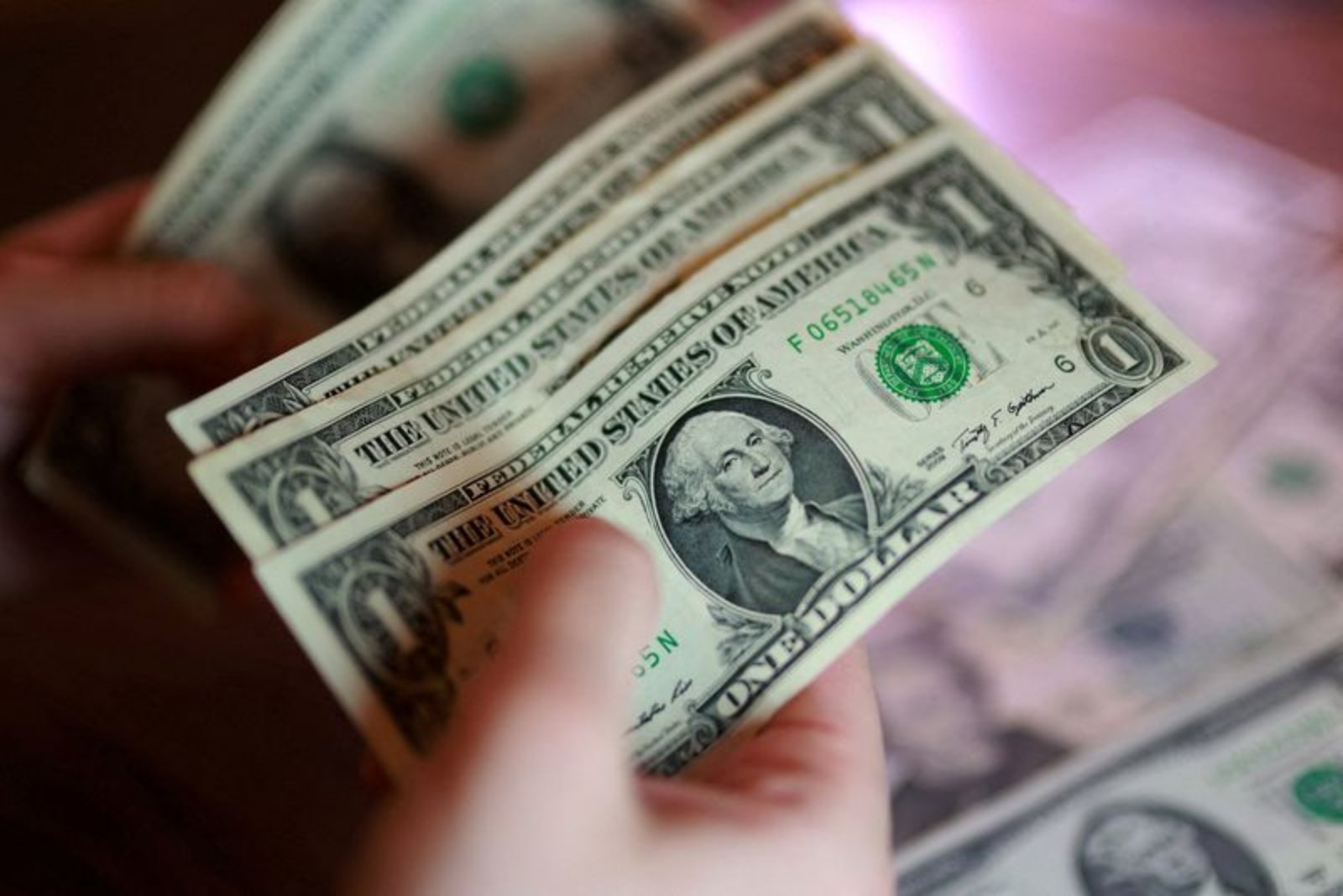
The U.S. dollar is on track for its largest weekly fall since January, pressured as other currencies gained ground on growing optimism that a ceasefire in the Gulf will persist and maritime traffic will gradually resume.
Markets have been waiting on the outcome of weekend discussions between U.S. and Iranian officials in Islamabad for further direction. Iranian representatives arrived in Islamabad on Thursday and a U.S. delegation, led by Vice President JD Vance, was due to arrive on Friday to engage in talks that investors hope could secure a more durable peace.
During March, the dollar had strengthened as investors sought safety amid the U.S. and Israeli conflict with Iran, which drove oil prices sharply higher, weighed on equities and gold, and pushed inflation concerns into bond markets. Since a fragile ceasefire was agreed on Tuesday, some of those defensive positions have been unwound, leaving the U.S. dollar index down about 1.3% for the week so far.
On currency charts the euro has pushed above its 200-day moving average and was trading at $1.1690, a breach of resistance that technical traders view as opening the path for further appreciation. The Australian and New Zealand dollars, both sensitive to global risk appetite, looked set for weekly gains approaching 3% versus the greenback, with the Australian dollar trading just above $0.70 and the New Zealand dollar at $0.5847.
Sterling has risen 1.8% this week, climbing past its 200-day moving average to $1.3424. Even the Japanese yen, which has faced sustained pressure from low domestic interest rates, government spending plans and heavy reliance on imported energy, was holding just above recent lows at 159.2 to the dollar.
Market strategists linked the move to a shift in risk perception. "People were buying the U.S. dollar when the war was at its most intense moment and now they’re selling as the tail risk of a really bad outcome has faded quite a bit," said Jason Wong, senior strategist at BNZ in Wellington. He added that the ceasefire, while still fragile, has meaningfully eased that tail risk from a sentiment perspective, but warned conditions could reverse quickly if the planned weekend talks do not make progress.
Signs of a return to maritime activity have been limited but notable. In the first 24 hours after the ceasefire took effect, a single oil products tanker and five dry bulk carriers transited the Strait of Hormuz. That waterway, before the conflict, typically handled around 140 ships a day and roughly one fifth of the world’s oil and liquefied natural gas flows, highlighting the scale of disruption experienced during the height of hostilities.
Wong cautioned that the direction of the dollar will be closely tied to the Islamabad meetings. "If there’s positive talks, that would be dollar negative. And if we get to Monday and talks went badly and there’s still a lack of ships...things could turn around quickly," he said.
Elsewhere, South Korea’s central bank left its policy interest rate unchanged on Friday as widely expected. The won traded at 1,478 to the dollar, having recovered from levels beyond 1,500 earlier in the period.
China’s currency has also benefited from the dollar’s retreat. The offshore yuan was at 6.83 per dollar on Friday, its strongest reading since 2023, after having held up through the period of conflict that began in late February. "The CNY has been a surprising winner of the Iran war, despite China’s role as the largest oil importer in the world," said ING economist Lynn Song. She noted that some market participants have begun to re-evaluate a perceived "China risk premium" amid mounting uncertainty elsewhere, a shift that has contributed to China appearing relatively stable in investor assessments.
For now, the market narrative is organized around two near-term catalysts: the success or failure of the Islamabad negotiations between U.S. and Iranian delegations, and how quickly shipping through the Strait of Hormuz returns to more normal volumes. Both developments carry the potential to push currencies and markets decisively in either direction in the days ahead.
Markets and sectors affected: Foreign exchange markets, oil and maritime shipping, equities, and government bonds are the primary areas reacting to the ceasefire and the prospect of resumed traffic through the Strait of Hormuz. Changes in these areas could also influence policy-sensitive sectors such as energy and trade-exposed industries.