
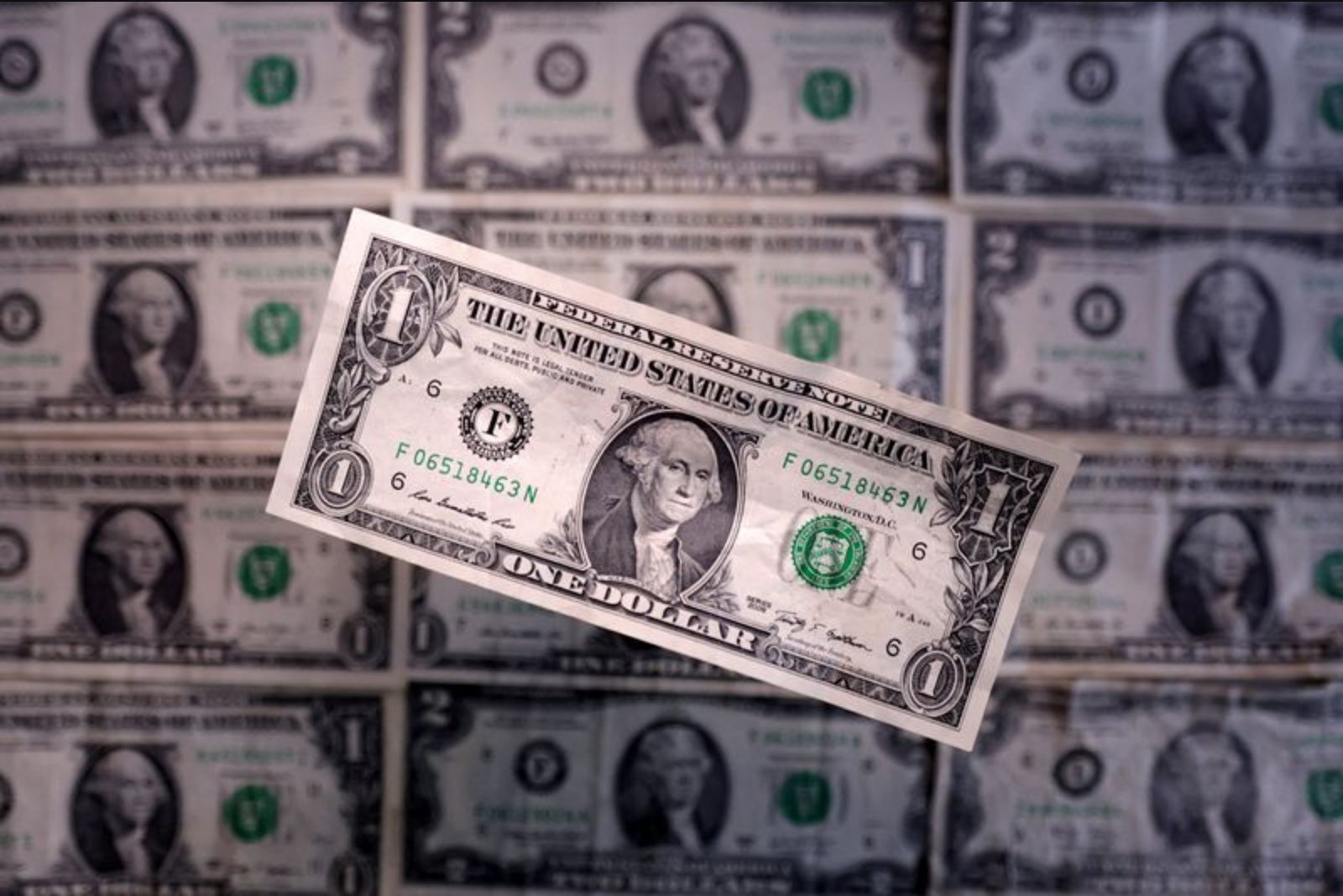
The U.S. dollar stabilized at the start of Asian trading on Thursday as markets waited for interest rate decisions from the European Central Bank and the Bank of England, each widely expected to maintain current policy settings later in the global trading day.
The U.S. dollar index, which gauges the greenback against a basket of six currencies, was up 0.2% at 96.671 after earlier moving close to a two-week high. The euro held steady at $1.1800 ahead of the ECB decision, where policy is expected to be left unchanged. Investors will be watching the ECB press conference closely to assess how officials view the outlook for monetary policy over coming months.
Analysts at Bank of America said the central bank will likely convey higher uncertainty, with only modest adjustments to its communication. They added: "Our conviction in a March cut is not rock solid, but we remain convinced of an easing bias from here."
The British pound was flat at $1.3650 before the Bank of England’s policy announcement, which is also expected to conclude with no change to rates. Against the Japanese yen, the dollar was trading at 156.92, steady as Japan’s election campaign moves into its final stretch ahead of Sunday’s poll.
The dollar has shown some strength this week as investors weigh U.S. corporate earnings, now about halfway through the reporting season, and move into a more risk-off posture. The Nasdaq Composite fell 2.9% over the past two trading days, its sharpest two-day decline since October, amid volatility tied to major market names including Google parent Alphabet. Investors reacted to Alphabet’s reported plans for aggressive capital expenditure alongside its earnings, and software stocks broadly were under pressure as they adjust to developments in generative AI.
In remarks as Asian trading began, Federal Reserve Governor Lisa Cook said she is more worried about stalled progress on inflation than a deteriorating labour market, signalling she would not back another interest rate cut until tariff-related price pressures fade.
Fed funds futures implied a 90.6% probability that the U.S. central bank will keep rates unchanged at its next two-day meeting ending on March 18, unchanged from the prior day, according to the CME Group’s FedWatch tool.
In currency moves tied to geopolitical engagement, the dollar dipped 0.1% against the Chinese yuan trading offshore in Hong Kong to 6.9386 yuan after a phone call between U.S. President Donald Trump and Chinese leader Xi Jinping in which they discussed trade, security issues and U.S. arms sales to Taiwan.
Commodities-linked currencies showed modest gains. The Australian dollar rose 0.1% to $0.70045 following trade balance figures that came in a little ahead of market expectations, while the New Zealand dollar was 0.1% firmer at $0.60045.
Cryptocurrencies steadied after a recent selloff that had taken digital assets to their weakest levels since November 2024. Bitcoin was last up 0.2% at $72,745.23, while ether edged higher by 1% to $2,146.63.
Market context and near-term focus
With the ECB and Bank of England both expected to pause on policy moves, the immediate focus shifts to tone and forward guidance. The ECB’s press conference in particular is likely to be scrutinised for nuances that could update market expectations for the timing and scale of future easing.
Equity market volatility, especially the recent losses in technology-heavy indices, has supported demand for the dollar as investors adopt a more defensive stance. At the same time, central bank messaging and geopolitical developments are continuing to produce short-term swings across currency and crypto markets.