
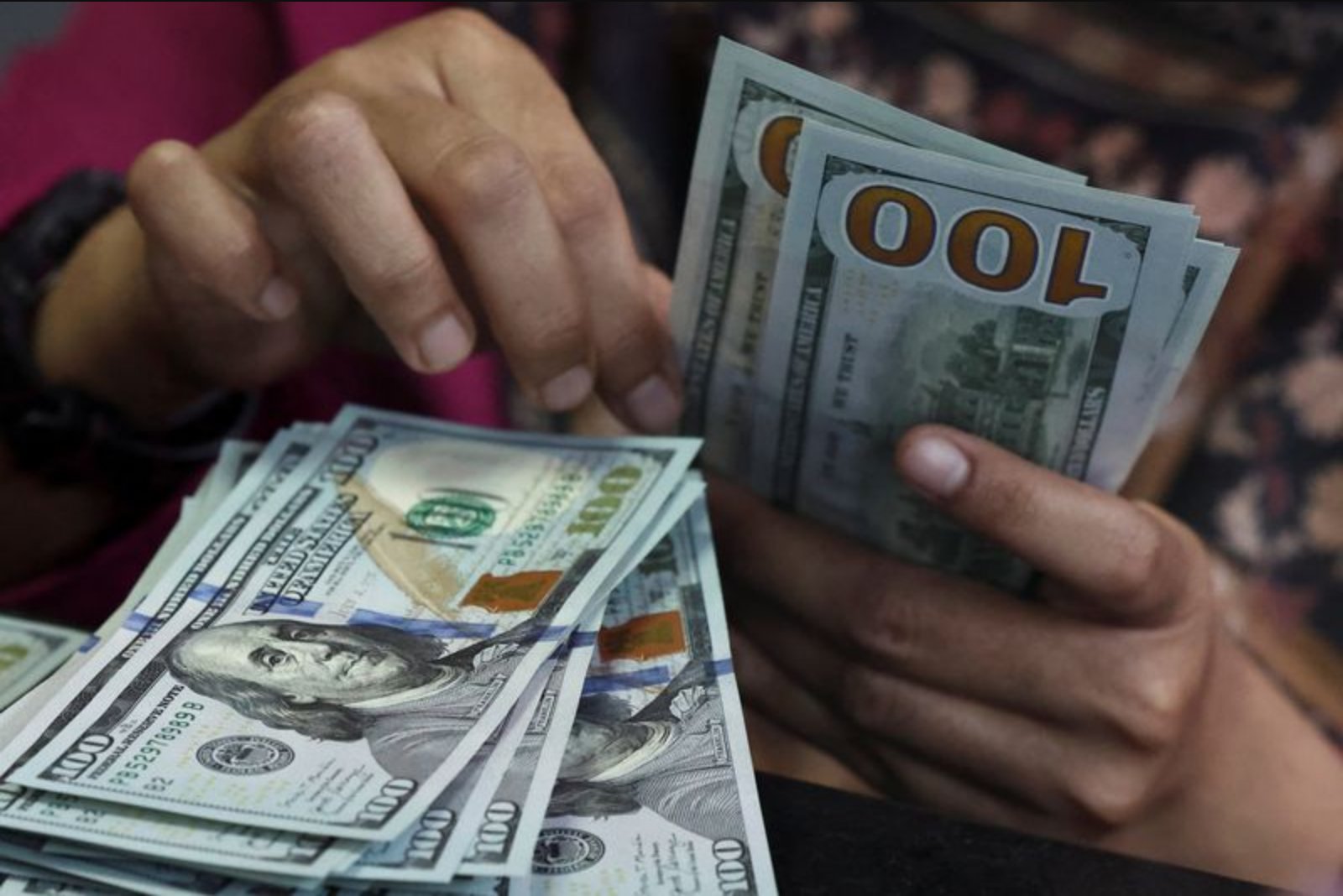
The dollar maintained its recent strength on Tuesday as a mix of unexpectedly positive U.S. economic data and evolving expectations about Federal Reserve policy dominated investor attention, offsetting concerns about the risk of another U.S. government shutdown.
Overnight, the greenback gained after the Institute for Supply Management (ISM) reported that U.S. manufacturing returned to growth. At the same time, a high-profile Federal Reserve nomination has shaped market assumptions about the future pace of rate cuts, supporting dollar demand.
Market moves and data flow
The dollar index - which tracks the greenback against a basket of currencies - stood little changed at 97.50 after a two-day advance. The euro traded at $1.1804, up about 0.1%, while the yen was at 155.53 per dollar, also recording a 0.1% move.
Analysts pointed to the ISM manufacturing surprise as a key domestic factor boosting the dollar. Rodrigo Catril, a currency strategist at National Australia Bank, said on a podcast that the ISM reading was a significant supportive element for the greenback. He also noted that easing tensions between the U.S. and Iran - which have brought Iran back to the negotiating table - had a calming effect on risk perceptions.
At the same time, a high-profile nomination for the Federal Reserve's next chair has influenced market pricing. U.S. President Donald Trump nominated Kevin Warsh as the likely next Fed chair, and analysts have interpreted that choice as suggesting a lower probability of aggressive, rapid rate cuts compared with some other candidates who were considered.
Central bank calendar and currencies
The Australian dollar rose 0.3% to $0.6965 ahead of a widely expected rate increase from the Reserve Bank of Australia, which markets see as the start of a renewed hiking cycle after three rate cuts last year. New Zealand's dollar was also stronger, with the kiwi up 0.3% at $0.6017. Sterling gained modestly, trading around $1.3676.
European Central Bank and Bank of England decisions are due later in the week, and both are expected to leave policy rates unchanged when they announce their latest moves on Thursday.
Geopolitics and trade
Geopolitical tensions eased somewhat as the U.S. announced a trade deal with India that cuts tariffs on Indian goods in return for India curbing Russian oil purchases and lowering trade barriers. In addition, Washington said nuclear talks with Iran will resume, with negotiations set to restart on Friday in Turkey. President Trump warned that negative consequences were possible if the talks failed to produce an agreement.
Japan, the yen and upcoming election
The yen remained under pressure after investors sold the currency and Japanese government bonds amid expectations of more expansionary fiscal policy should Prime Minister Sanae Takaichi secure a strong mandate in the Feb. 8 election. Finance Minister Satsuki Katayama sought to downplay Takaichi's recent comments about the benefits of a weaker yen, saying the premier had referenced "what is written in textbooks."
Those dynamics helped keep the yen lower despite the finance minister's remarks.
Other markets
Cryptocurrencies moved higher alongside broader risk appetite. Bitcoin gained roughly 0.5% to $78,840.02, while ether ticked up about 0.1% to $2,343.94.
What to watch
Investors will monitor the U.S. political situation for signs of whether a domestic impasse will delay a key jobs report, and they will also watch central bank announcements this week for policy guidance. The Reserve Bank of Australia's expected decision is the first of three significant central bank policy events, followed by the ECB and the Bank of England later in the week.
For now, markets have responded to a combination of firmer U.S. data, evolving Fed leadership expectations, easing geopolitical tensions and the prospect of renewed RBA tightening. These factors collectively have sustained the dollar's recent advances while supporting gains in commodity-linked and risk-sensitive currencies such as the Australian and New Zealand dollars.