
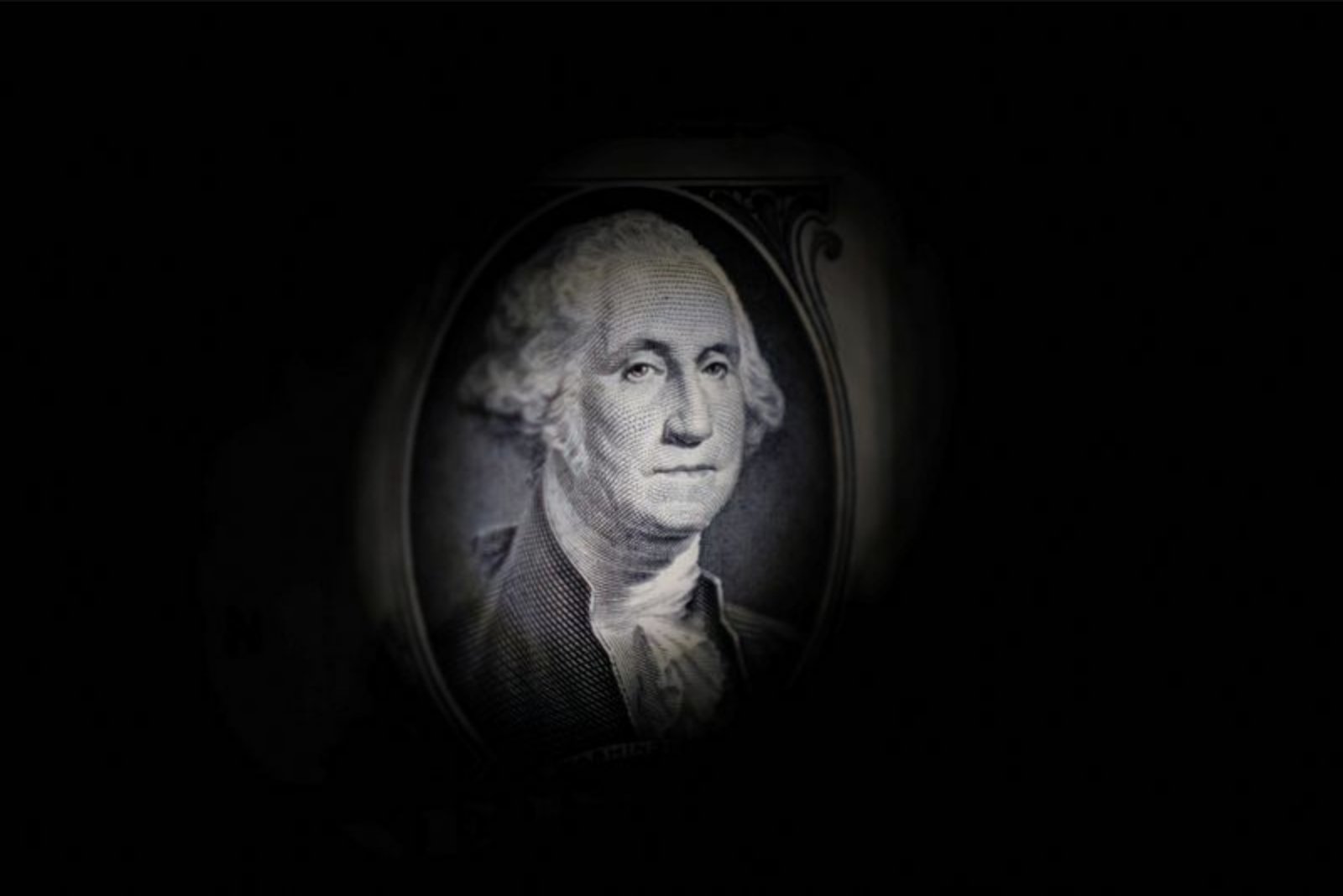
The U.S. dollar has come under renewed pressure in the opening weeks of 2026 as investors reassess assumptions of near-term stability for the currency. A range of developments - from explicit policy signals in Washington to heightened geopolitical tensions and shifting central bank expectations - have combined to push the dollar lower against other major currencies.
On Monday the dollar was tracking toward its largest three-day decline versus a basket of major currencies since last April, when U.S. tariff measures described as "Liberation Day" triggered an almost unprecedented selloff in U.S. assets. That episode highlighted how trade policy and cross-border tensions can quickly affect currency and asset markets; investors are now parsing a fresh sequence of political and policy moves for their implications on the dollar.
In his first year in office, the president's volatile approach to trade and international diplomacy, public criticism of the Federal Reserve that challenged its independence, and substantial increases in public spending all contributed to a roughly 10% drop in the dollar. Market observers say the same mix of policy and political noise is resurfacing and is weighing on the currency again.
Major currencies including the euro, sterling and the Swiss franc have outperformed the dollar in recent sessions. "There are a number of factors coming together," said Seema Shah, chief global strategist at Principal Asset Management. "I don’t think this is a 'Sell America' trade, but the fundamentals are coming together, and faster than expected." Principal Asset Management manages just over $600 billion of assets.
This month alone, a series of high-profile moves and threats originating in Washington have altered the risk backdrop. These include public threats to take control of Greenland, a warning of additional tariffs on European allies over that matter, a move toward criminally indicting the chair of the Federal Reserve, and an operation to seize the president of Venezuela. On Saturday, the president also threatened Canada with what amounted to an effective trade embargo. While some of those threats - such as the Greenland and European tariff threats - have since been de-escalated, and markets have partially absorbed the strike on Venezuela, the overall backdrop remains tense.
Domestic policy measures are also a factor. An aggressive crackdown on illegal immigration that has resulted in the deaths of two U.S. citizens this month and provoked public protests could further destabilize the political environment and may prompt another government shutdown this month, according to observers of the unfolding events.
Market indicators reflect the strain. Volatility measures remain elevated and sentiment in bond markets is fragile, not least because of an aggressive selloff in Japanese government debt that markets fear could spill over into U.S. Treasuries. At the same time, gold has repeatedly hit new record highs, signaling demand for alternative safe-haven assets.
Interest-rate expectations are also shifting in a way that is unfavorable to the dollar. The Federal Reserve is widely expected to cut interest rates at least twice this year, while other major central banks are pausing or could even raise rates. That divergence reduces the dollar's relative appeal to yield-seeking investors, who may prefer currencies linked to rising lending rates.
Federal Reserve Chair Jerome Powell has resisted political pressure for faster rate cuts but is slated to step down in May. Online betting markets have moved quickly on potential successors, with the probability attached to BlackRock's Rick Rieder - characterized in market commentary as an advocate of lower rates - rising to around 50% from less than 10% a week earlier. That shift in perceived leadership preferences is one of several factors cited by market participants as contributing to dollar weakness.
Global equities posted strong gains last year, in part driven by enthusiasm for artificial intelligence. Yet the U.S. equity benchmark has lagged several peers since the president's inauguration. The S&P 500 has risen by about 15% since then, compared with a 95% advance in Seoul's Kospi index, a roughly 40% gain in Tokyo's Nikkei, and a near 30% increase in Shanghai's main index. "At the margin, asset managers are keen to continue to diversify away from the U.S.," said Chris Scicluna, an economist at Daiwa Capital Markets. "It’s clear that many had been excessively, or felt they were excessively, overweight U.S. markets."
Trade policy rhetoric remains a focal point as well. The president has repeatedly defended tariffs as a tool to correct trade imbalances, specifically flagging the currencies of Asian countries with which the U.S. runs large trade deficits. In a related development on Friday, the Bank of Japan and the New York Fed were suspected of conducting a series of rate checks for the yen - an action markets viewed as a possible precursor to joint Japanese-U.S. intervention, the first in 15 years, aimed at supporting the Japanese currency. Even after the subsequent yen appreciation, the Japanese currency remains about 13% weaker against the dollar over the past year.
Measured on a trade-weighted basis, however, the dollar's decline is smaller. An index calculated by the Bank for International Settlements shows the dollar has lost roughly 5.3% in the past 12 months. That gap between bilateral moves and the trade-weighted benchmark is one reason investors are reassessing overall dollar exposure rather than reacting solely to swings against individual currencies.
Dominic Bunning, head of G10 FX strategy at Nomura, said last year's dollar decline was driven largely by cyclical economic factors such as moderating growth. "The difference to me this year is that the policies the U.S. is seemingly putting in place are much more antagonistic and geopolitical as opposed to economic with tariffs," he said, highlighting how the character of recent policy moves may be prompting a reevaluation of currency risk.
As market participants weigh these overlapping influences - political signals, geopolitical operations, central bank policy paths and portfolio rebalancing - the immediate outlook for the dollar appears to be one of elevated uncertainty. Investors and asset managers will be watching policy developments, leadership changes at the Fed, and moves in bond and currency markets for clearer guidance on whether the current episode of dollar weakness has further to run.