
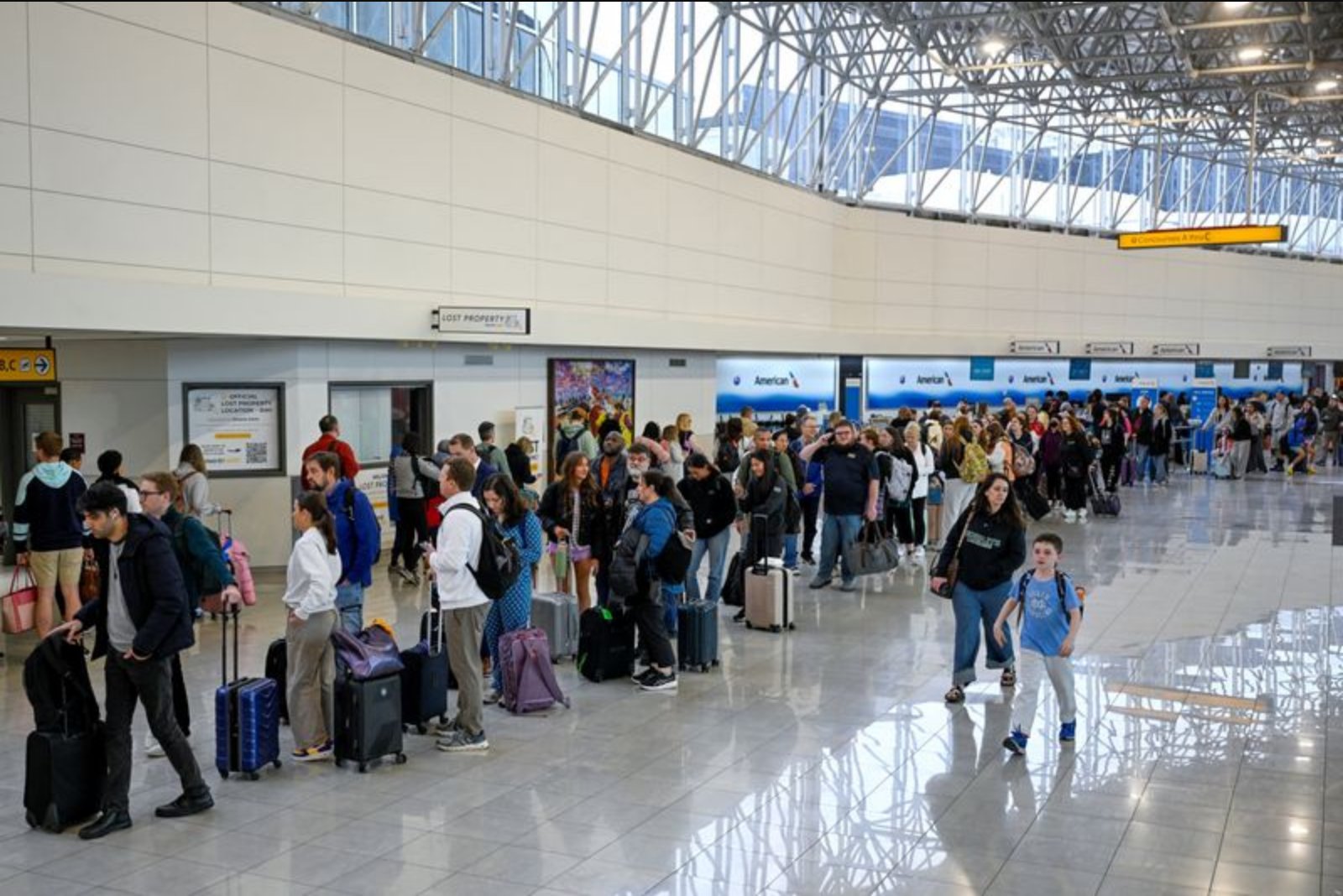
The Department of Homeland Security on Friday announced an emergency measure to pay about 50,000 airport security officers who have gone without pay since mid-February, after widespread work absences produced severe staffing shortages and prolonged security lines at U.S. airports.
In a statement, DHS said that "(The Transportation Security Administration) has immediately begun the process of paying its workforce. TSA officers should begin seeing paychecks as early as Monday." The action followed a presidential directive; President Donald Trump said on Thursday he would take executive action to pay TSA workers and a memo directing the payments was issued on Friday.
The surge in absences and the resulting operational disruption have been acute. The TSA reported earlier on Friday that nearly 12% of airport security officers did not report to duty on Thursday, marking the highest rate of no-shows since mid-February. The agency said more than 3,450 officers were absent that day, including more than one-third of the workforce at New York's JFK and at airports in Baltimore, Houston and Atlanta.
Major disruptions were reported at a number of large airports on Thursday and again on Friday, with passengers and airport officials citing security lines that stretched for hours. The TSA described reports of lines lasting four hours or more at airports around the country, characterizing the delays as the worst in the agency's nearly 25-year history.
Airlines warned that absences and extended lines could intensify over the coming weekend if there were no firm details on how TSA officers would be paid. The agency also noted that nearly 500 airport security officers have resigned since February, compounding staffing pressures.
How long the emergency funding will last is unclear. It is also not known whether the administration will draw on funding for the Department of Homeland Security that was approved last year as part of a large tax and spending bill. That uncertainty is set against a backdrop of congressional deadlock over DHS appropriations.
Democrats in Congress have been withholding funding for DHS while seeking changes to rules governing immigration operations following the fatal shootings in Minneapolis of U.S. citizens Renee Good and Alex Pretti by agents. On Friday, Republican leaders in the U.S. House rejected a bipartisan Senate compromise that had aimed to resolve the six-week impasse over DHS funding.
Lawmakers had discussed alternatives, with congressional Democrats proposing separate funding for TSA while negotiations continued over reforms to Immigration and Customs Enforcement operations. The TSA reiterated on Wednesday that, should staffing conditions deteriorate further, it could be forced to close smaller airports.
Complicating operational planning for airports is a spring-break travel surge, with passenger volumes about 5% higher than the same period last year. To bolster screening capacity, hundreds of U.S. immigration agents and Homeland Security Investigations officers began deploying at 14 U.S. airports on Monday to assist with security screening.
Context and next steps
The emergency payment measure is intended to stem absences by restoring pay to TSA officers. DHS implementation of payments and the timeframe for whether additional or alternative funding will be used remain open questions until further administrative or congressional action is taken.