
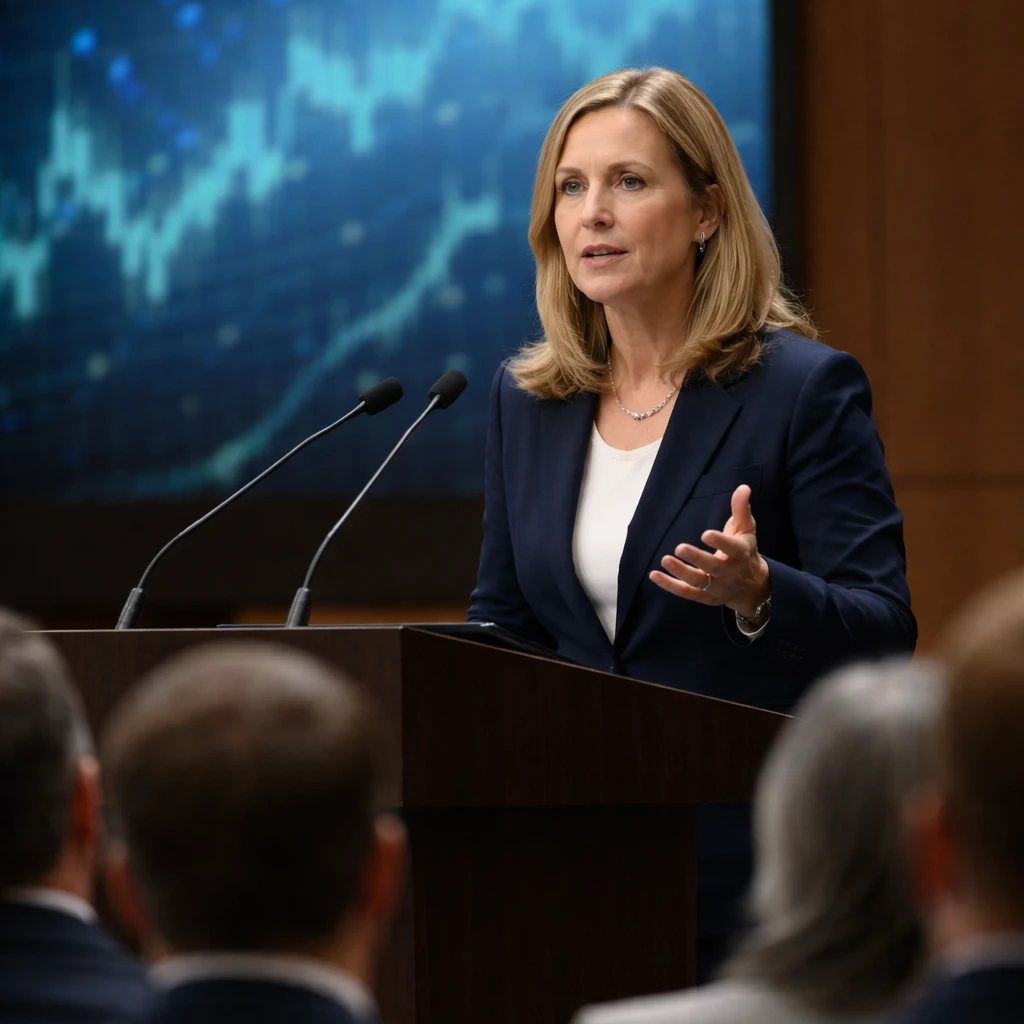
Dallas Federal Reserve President Lorie Logan on Thursday set out several approaches the U.S. central bank could use to pare down its balance sheet while keeping intact the stability advantages associated with the current framework of ample reserves.
Speaking at an event hosted by the Dallas Fed, Logan framed balance-sheet policy squarely in terms of public service and economic support. "When it comes to the balance sheet, as with all of the Fed's work, the focus needs to be on how we can best serve the public and support a strong economy and financial system," she said in prepared remarks.
Logan underscored that the ample reserves structure "is efficient and effective," and she warned that attempting to force banks to reduce their reserve holdings could elevate risks. "Pressing banks to economize on reserves would only increase risk in the system," she said.
"When it comes to the balance sheet, as with all of the Fed's work, the focus needs to be on how we can best serve the public and support a strong economy and financial system."
She noted the numerical scale of the Fed's footprint: the balance sheet currently stands at around $6.6 trillion, down from a peak of approximately $9 trillion in 2022. Bank reserves are about $3 trillion. The central bank more than doubled its holdings during the COVID-19 pandemic and then allowed bonds to mature without replacement beginning in 2022.
In describing potential levers to shrink reserve demand, Logan pointed to regulatory changes under active consideration at the Fed. Those changes aim to make reserves management "more efficient," particularly in stressed conditions, which she suggested could reduce the necessity for large reserve buffers at financial firms.
Logan also highlighted the role that broader access to Fed liquidity facilities could play. Expanding usage of tools such as discount window lending could lessen firms' incentives to hold large cash stockpiles, she said. "Shifting the demand curve inward through steps like these holds substantial promise for reducing reserves while maintaining the benefits of the ample reserves framework," Logan added.
In closing, she offered a measured view of balance-sheet dynamics: "Balance sheet growth isn't bad if it serves the public, but neither should we waste balance sheet space and let it be a distraction from our mission."
Summary: Logan presented a range of policy options aimed at shrinking reserve demand and the Fed's balance sheet without sacrificing the operational benefits of ample reserves, while warning of risks from any approach that forces banks to economize on reserves.