
Overview
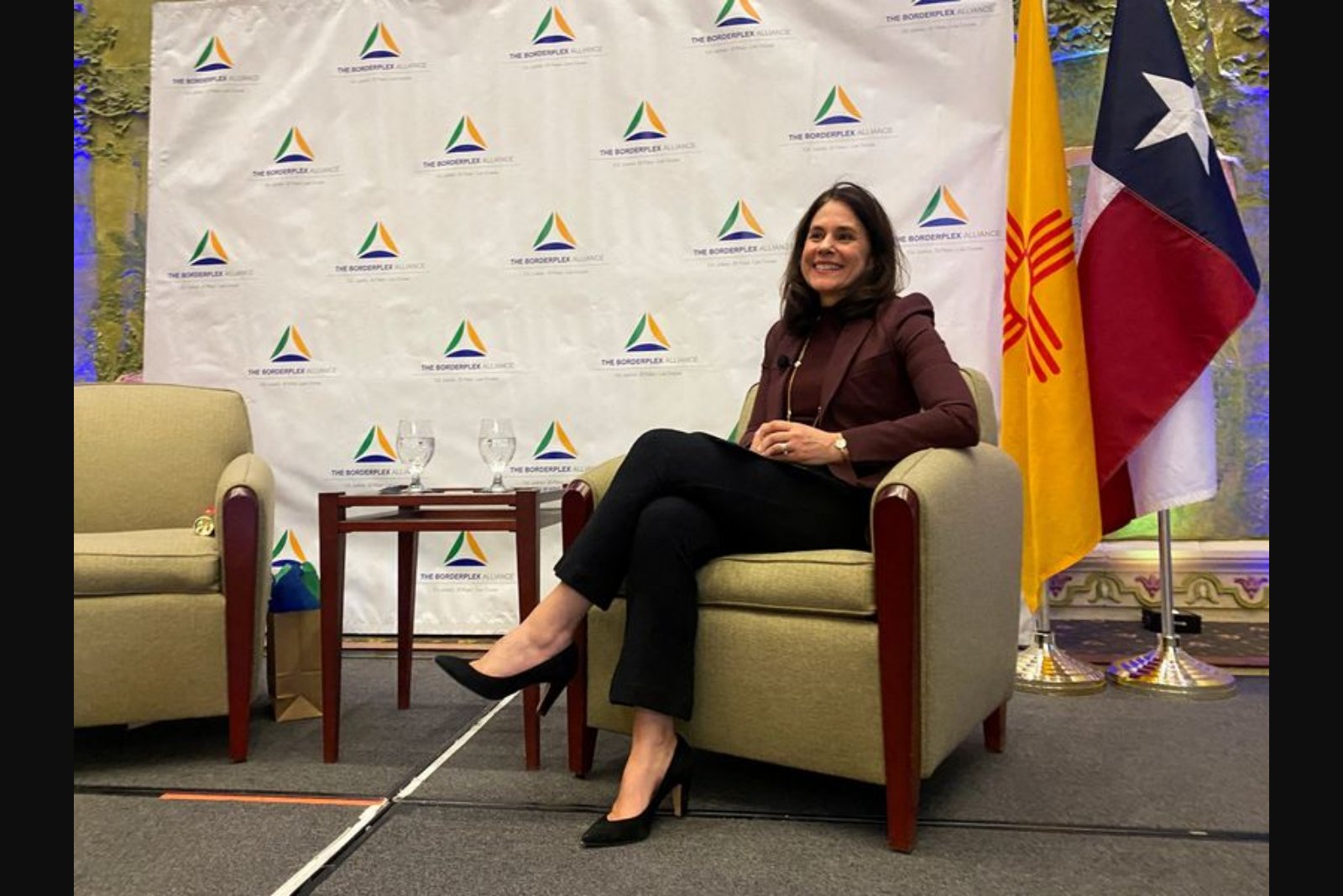
Dallas Federal Reserve President Lorie Logan said on Thursday that U.S. oil producers are unlikely to raise output soon enough to shield consumers from higher gasoline prices. Speaking at a conference held by her regional Fed bank, she cited the price point producers say they need to see to restart or expand drilling and emphasized the need for that price to persist before investment follows.
Logan said the price U.S. producers say they need to see to start drilling is "just shy of $70 a barrel," which she noted is well below the current price of around $110 a barrel. She added that prices at or above that breakeven level would need to be sustained for the firms to make the necessary investment that could eventually bring relief for consumers.
"U.S. oil firms 'need to have a sense that those higher prices are going to stay around for a while, and so I am not hearing that we’re going to see a dramatic increase in production here in the short run,'" the Dallas Fed chief said.
Implications for inflation and the economy
Logan's remarks point to a scenario in which energy price rises tied to the U.S.-Israeli war with Iran will remain a near-term problem for inflation and overall economic activity. She contrasted the United States' position with that of nations closer to the conflict by noting the U.S. has buffers those countries do not, but she made clear that inflation remains a primary concern for her.
On the inflation outlook, Logan said: "On the inflation side, even before the conflict in the Middle East, I wasn’t convinced that we were headed on a path all the way to our 2% target." She underscored the importance of bringing inflation back to that goal: "It’s incredibly important to restore price stability, to get inflation back to 2% because stable inflation is just the bedrock for a strong economy."
Reflecting a cautious, data-dependent approach that is common among her colleagues, Logan said current uncertainty argues for watching incoming information rather than pre-committing to a fixed policy path. "I really like thinking about things in scenarios right now," she said. "I think policy is positioned to adjust to the data as it’s coming in, and we’re prepared to make adjustments to the policy path as appropriate."
Energy price dynamics and policy trade-offs
Surging energy costs present a tangible challenge for the Federal Reserve at present. The central bank trimmed its policy interest rate by three quarters of a percentage point last year to support a softening labor market while inflationary pressures remained elevated. The conflict in the Middle East risks pushing inflation higher still while also creating new headwinds for the job market and broader economic growth.
These developments tighten the trade-offs confronting the Fed, which by law must both contain inflation and promote maximum sustainable employment. Traditionally, the central bank has tended to look through energy price spikes on the grounds that they are temporary and exert only limited influence on underlying inflation. But that conventional view is being tested amid an extended period of inflation running above the Fed's target.
St. Louis Fed President Alberto Musalem noted on Wednesday that the prolonged stretch of above-target inflation raises the risk that energy inflation could persist and become more entrenched as an economic problem.
Analysts at Capital Economics estimated the "indirect" impact of higher energy prices on inflation - separate from broader wage and price dynamics - could be around seven-tenths of a percentage point in the United States and nearly 1.5 percentage points in the euro zone, with the United Kingdom and Japan somewhere between those figures.
On the Federal Reserve's preferred inflation gauge, the Personal Consumption Expenditures Price Index, the data show inflation was up 2.8% in January, and measured 3.1% when food and energy were excluded.
Those inflation readings have helped fuel market speculation that higher interest rates could be required to counter renewed inflationary pressures. At its meeting last month the Fed left its benchmark overnight interest rate in a 3.50%-3.75% range and released projections showing policymakers expected one rate cut in 2026.
Uncertainty and the outlook
Logan said the war has "increased our level of uncertainty about the economy and the outlook, it’s made our jobs more complex because it’s increasing risks on both sides of our mandate." She drew a distinction between scenarios in which the conflict is resolved quickly and those in which it extends. If the war is resolved quickly, she said the economic impact will likely be "moderate." A prolonged conflict, in contrast, would likely have more "adverse" effects that "could be moving in opposite directions with respect to our dual mandate, and cause a lot of tension between our responsibilities," Logan added.
Where this matters
- Energy markets: Producers' breakeven thresholds and decisions on drilling affect future crude supply and gasoline prices.
- Consumers: Elevated gasoline prices directly pressure household budgets and can feed into broader price measures.
- Labor market and growth: Rising energy costs can complicate the Fed's efforts to balance inflation control with support for employment and economic expansion.
- Monetary policy and markets: Inflation readings and geopolitical risks shape expectations for the path of interest rates and the timing of rate cuts.
Conclusion
Lorie Logan's remarks emphasize that, absent a clear signal that higher crude prices will persist, U.S. oil producers are unlikely to mount a near-term supply response sufficient to ease gasoline costs for consumers. That dynamic, combined with geopolitical uncertainty tied to the U.S.-Israeli war with Iran, adds complexity to the Fed's task of restoring price stability while supporting the labor market and growth. Policymakers, Logan said, will monitor incoming data and remain prepared to adjust the policy path as circumstances evolve.