
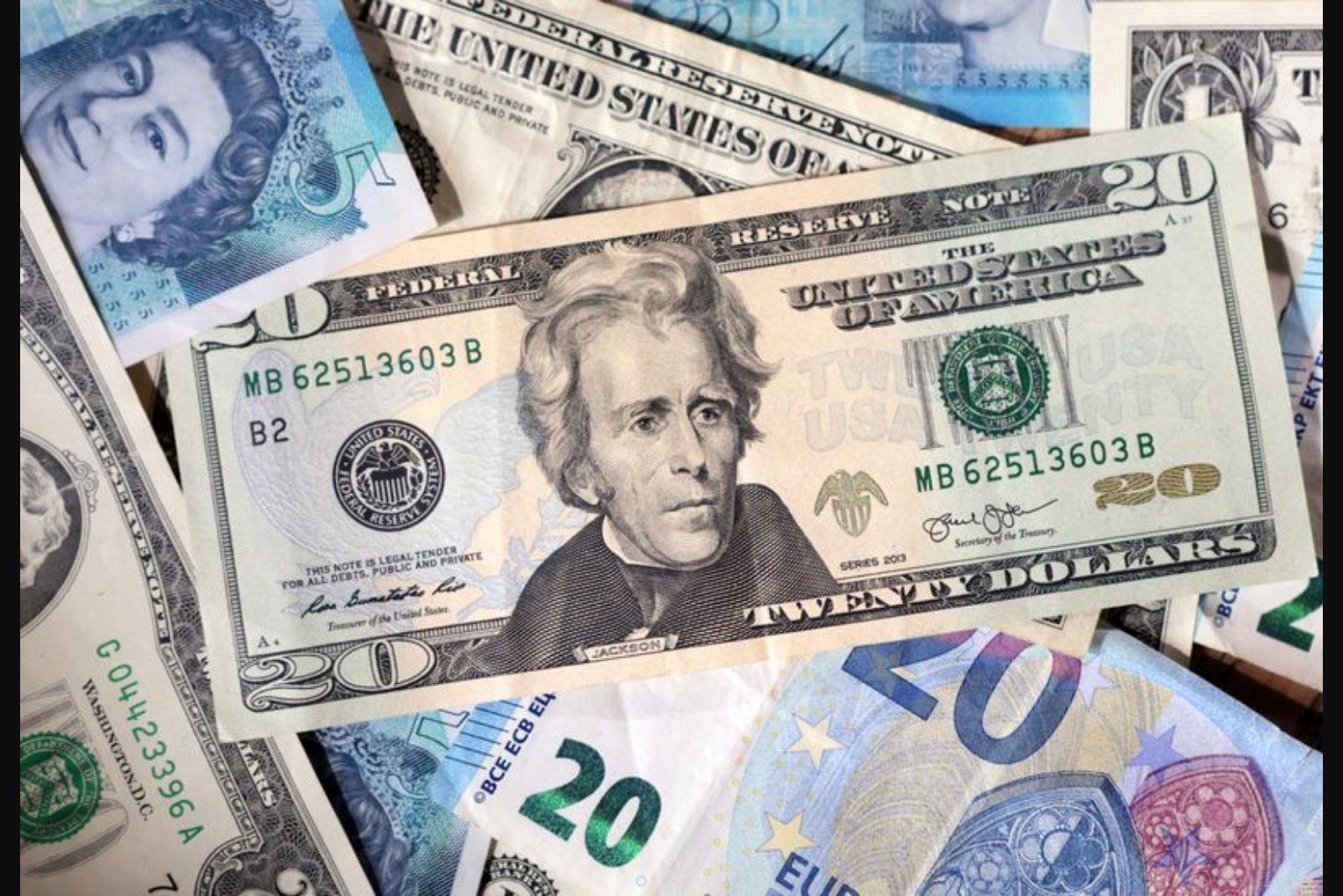
Major currencies were largely unchanged in subdued trading on Thursday as market participants waited for a high-profile national address by U.S. President Donald Trump that could clarify whether a ceasefire in the Gulf conflict is near.
President Trump is scheduled to speak at 9 p.m. EDT (0100 GMT). The address is widely expected to state that the U.S. military has achieved its wartime objectives with Iran and to restate plans to wind down the conflict within two to three weeks - comments that could influence global market sentiment.
The U.S. dollar has seen support from safe-haven flows since the conflict began in late February. But expectations that a ceasefire could be approaching have reversed some of the market's recent positioning and contributed to a two-day decline in the greenback.
In early Asian trade the euro was trading at $1.1592 and sterling at $1.3308, both little changed versus the dollar while holding on to gains recorded in recent sessions. Risk-sensitive currencies were also steady: the Australian dollar was at $0.69265 and the New Zealand dollar at $0.57495.
The dollar index, which measures the U.S. currency against a basket of peers, was little changed at 99.56 after a 0.3% drop on Wednesday.
"It all hinges now on what U.S. President Donald Trump says in his address to the nation today," said Kyle Rodda, senior financial market analyst at capital.com. "But there is a quiet optimism, perhaps if only as market participants look to reshape the narrative to explain the price action - of a de-escalation in the war."
Not everyone believes a U.S. military drawdown would immediately restore stability to energy routes. Carol Kong, a currency strategist at Commonwealth Bank of Australia, warned that even if U.S. forces pull back, Iran could still restrict access to the Strait of Hormuz, a chokepoint carrying roughly 20% of global oil and liquefied natural gas flows.
"Together with damaged energy and transport infrastructure, energy supplies are unlikely to return to pre-war levels quickly," she said.
The Japanese yen was trading at 158.64, remaining inside levels widely viewed as critical by policymakers and short of the psychologically important 160 threshold that is commonly seen as the line in the sand for intervention by Japanese authorities.
Beyond the presidential address, market attention will turn to Friday’s U.S. non-farm payrolls report. The Reuters-polled median estimate of economists calls for a 60,000 increase in jobs for March. A marked deterioration in the labor market could revive expectations for Federal Reserve rate cuts later this year - expectations that had been diminished as sharply rising oil prices tied to the Iran conflict pushed inflation concerns higher.
Market participants are therefore closely watching two near-term events for signals on policy and risk appetite: the content of the U.S. president’s televised remarks on the Iran war and the U.S. employment report due Friday.