
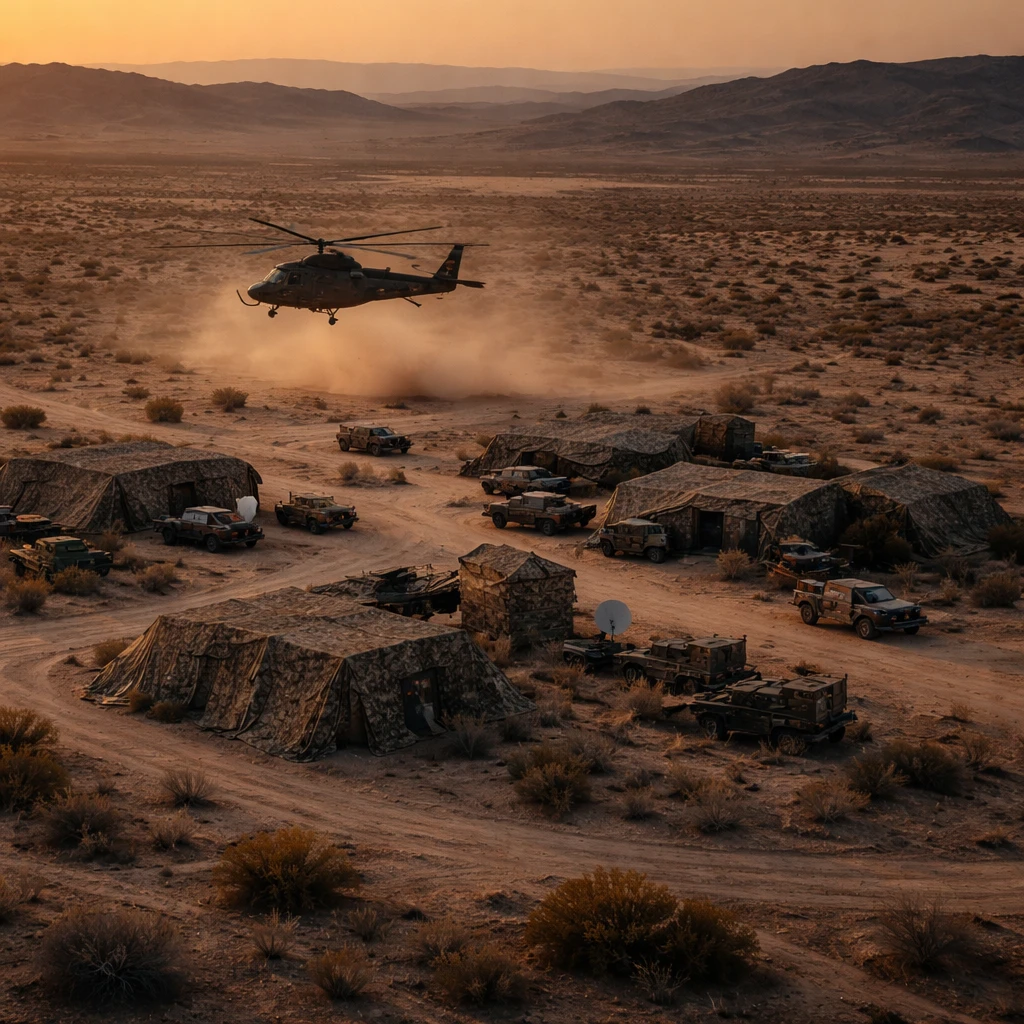
Sources familiar with the situation, among them U.S. officials, say Israel set up a secret military outpost in the western desert of Iraq to assist its air operations against Iran. The installation was reportedly put in place shortly before the start of the hostilities and served as a forward staging area for personnel whose role included recovery of downed aircrews.
According to those sources, the outpost accommodated Israeli special forces and search-and-rescue teams prepared to operate if Israeli pilots were forced down during missions over Iranian territory. The base's presence permitted forces to be located closer to the theater of operations, a positioning that, the sources say, enabled a sustained tempo of airstrikes during a five-week campaign.
In early March, the site nearly came to light after a local shepherd reported what he perceived as unusual helicopter movements in the vicinity. Iraqi military units moved to investigate that activity, creating a situation in which the clandestine facility was at risk of exposure.
Those familiar with the matter say Israeli forces responded with airstrikes intended to deter or displace the Iraqi units investigating the area. Iraqi authorities publicly condemned the action at the time; the strike reportedly killed one Iraqi soldier and wounded two others, according to the same sources.
Officials describe the outpost as a key enabler that allowed Israel to carry out thousands of airstrikes over the course of the five-week operation by shortening the distance between support elements and the battlespace. The facility's placement in Iraq's western desert was presented as a tactical measure to sustain operations and recover personnel if needed.
Summary
A covert Israeli base in western Iraq was established with reported U.S. knowledge to back an extended air campaign against Iran. The site housed special forces and search-and-rescue teams, was nearly discovered after local reports of helicopter activity, and was defended by strikes that resulted in Iraqi casualties. The outpost purportedly aided the conduct of thousands of strikes during a five-week period by positioning forces closer to the conflict zone.
Key points
- The outpost was located in Iraq's western desert and built shortly before the conflict, with reported U.S. awareness - impacts defense and geopolitics sectors.
- The facility hosted Israeli special forces and search-and-rescue teams prepared to recover downed pilots - relevant for military operations and logistics.
- After local reports of helicopter activity, Iraqi troops moved to investigate and were targeted by strikes that killed one soldier and wounded two - implications for regional security and diplomatic relations.
Risks and uncertainties
- Escalation risk from military actions on Iraqi soil that drew Iraqi condemnation - a risk to regional stability and defense markets.
- Potential for further exposure of clandestine sites following local reports or investigations, which could complicate ongoing operations - a risk to military logistics and intelligence operations.
- Uncertainty around the full scope and duration of the outpost's role, beyond the described five-week campaign - limits assessments of longer-term operational impact.