
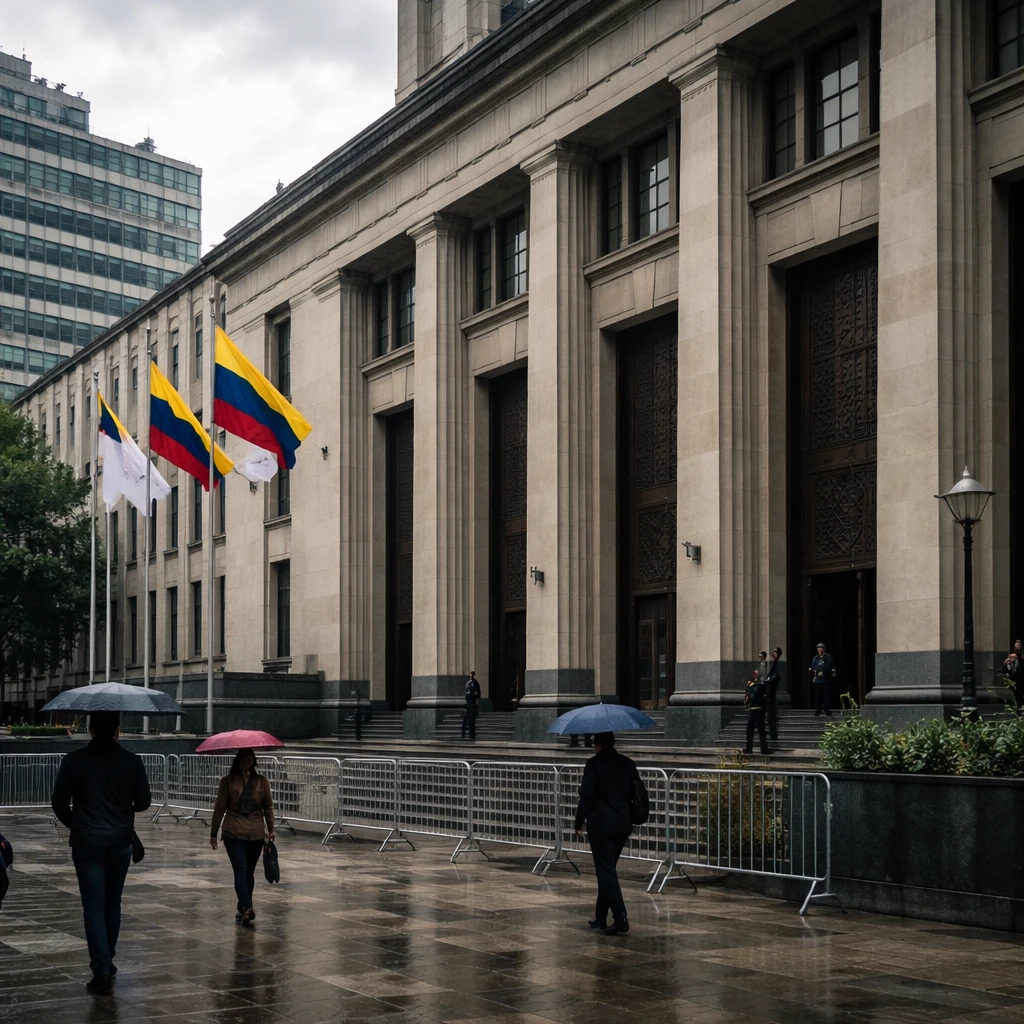
Cesar Giraldo, a voting member of Colombia's central bank board, has said the monetary authority should refrain from further hiking interest rates because the current inflationary episode is driven largely by factors outside the reach of conventional monetary policy.
In an interview at the central bank's Bogota headquarters, Giraldo noted that advancing the policy rate to 11.25% has not arrested accelerating inflation. He pointed to rising oil prices, disruptions in supply chains and climate-related shocks as the main sources of price pressure - forces he said monetary policy cannot resolve. Giraldo has voted against the recent rate increases.
His stance places him alongside President Gustavo Petro, who has stepped up criticism of the central bank following two consecutive full percentage point rate hikes earlier this year. Tensions between the executive and the monetary authority escalated to the point that Finance Minister Germán Ávila threatened to boycott a rate-setting meeting last month. Policymakers subsequently voted unanimously to pause further increases and keep borrowing costs unchanged to defuse the dispute.
Official figures show annual inflation accelerated to 5.6% in March, the fastest pace since 2024. Inflation expectations jumped following Petro's decision to raise the 2026 minimum wage by a record 23%.
Rather than relying exclusively on high interest rates, Giraldo suggested a mix of monetary operations and targeted fiscal measures. He mentioned the use of open market operations, tighter liquidity management and interventions in the currency market as tools the central bank could deploy. He also proposed that the government ease cost pressures through measures such as targeted energy subsidies and lower tariffs, among other steps.
Giraldo acknowledged that private consumption has gained momentum, underpinned by higher wages and inflows of remittances. However, he said this spending upswing has not been driven by excessive household borrowing.
Context and implications
Giraldo's position reflects a debate over whether to prioritize further rate tightening or to rely on a broader policy mix that distinguishes between demand-driven and supply-driven inflation. The recent pause in rate increases followed intense political pressure and a rare coordination moment among policymakers to maintain stability in the board's decisions.