
Economy February 3, 2026

Citadel’s Ken Griffin Urges Fiscal Restraint, Backs Warsh for Fed

Griffin says political rhetoric has weakened the dollar and calls for bipartisan action on the national debt; praises Kevin Warsh as a strong Fed nominee

By Priya Menon
Citadel’s Ken Griffin Urges Fiscal Restraint, Backs Warsh for Fed

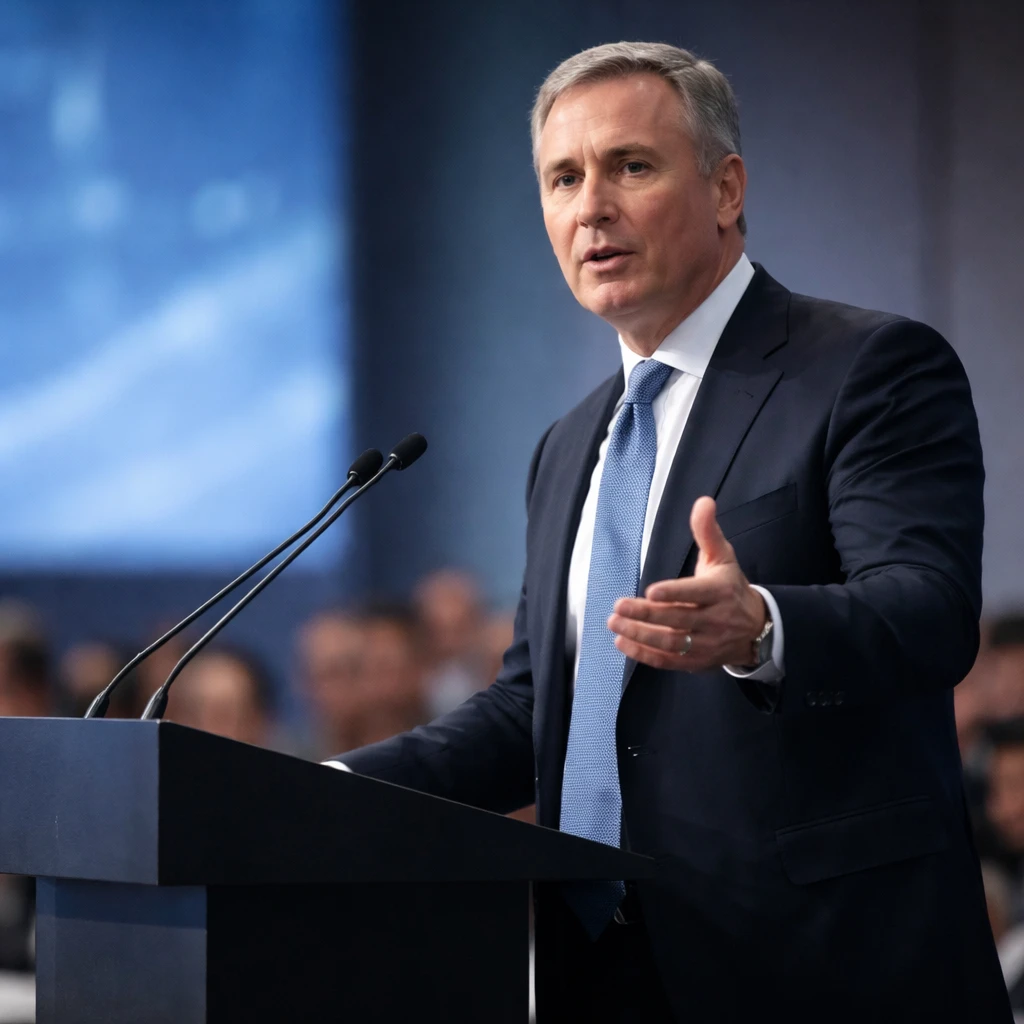
At a financial conference on Tuesday, Citadel CEO Ken Griffin warned that rhetoric from the current administration has reduced the attractiveness of the U.S. dollar, urged greater fiscal discipline with bipartisan support to tackle the national debt, and endorsed Kevin Warsh as a solid choice for the Federal Reserve. He also commented that Democrats have shifted debate toward affordability issues and said artificial intelligence is unlikely to be a major campaign issue or a driver of current unemployment.

Key Points

  • Griffin said rhetoric from the current administration has reduced the appeal of the U.S. dollar - relevant to currency and fixed-income markets.
  • He urged greater fiscal discipline and bipartisan cooperation to address the national debt - a focus on public finances and government borrowing.
  • Griffin endorsed Kevin Warsh as a "really solid choice" for the Federal Reserve and noted a political shift from inflation to affordability issues.

At a Tuesday appearance at a financial industry conference, Citadel founder and chief executive Ken Griffin critiqued recent political rhetoric for eroding some of the appeal of the U.S. dollar. Griffin said that language coming from the current administration had diminished the currency's attractiveness, a point he raised while speaking to attendees about broader economic and policy themes.

Griffin pressed for stronger fiscal discipline in Washington, emphasizing the need to confront the national debt. He argued that addressing that challenge will require buy-in from both major parties, stressing bipartisan cooperation as essential to any meaningful progress on fiscal matters.

On the question of Federal Reserve leadership, Griffin expressed approval of President Trump's nominee, saying Kevin Warsh represents "a really solid choice." He framed the appointment as a positive signal in the context of broader economic governance.

Turning to the political landscape, Griffin noted a shift in Democratic messaging. Where inflation was previously at the center of debate, he said Democrats have moved the conversation toward issues of affordability, a change he flagged while outlining the contours of current public-policy discussions.

Griffin also addressed the role of artificial intelligence in the labor market. He dismissed the notion that productivity gains from AI are behind today's unemployment figures. Further, he suggested that AI is unlikely to emerge as a major issue in the upcoming election cycle.

The remarks touched on currency perceptions, fiscal strategy, central bank appointments, party messaging, and technology's interaction with employment. Griffin's comments combined critique, prescription, and assessment across those topics without introducing new policy proposals or specific legislative detail.


Contextual takeaway: Griffin's comments linked political rhetoric, fiscal policy, and leadership at the Federal Reserve to current economic narratives, while downplaying near-term electoral relevance for AI-related job concerns.

Risks

  • Political rhetoric may continue to weaken confidence in the U.S. dollar, affecting currency-sensitive sectors and international investors.
  • Lack of bipartisan agreement on fiscal measures could leave the national debt unaddressed, with implications for government borrowing costs and fiscal stability.
  • Shifts in political messaging toward affordability could alter policy priorities, creating uncertainty for sectors sensitive to fiscal and social spending decisions.

More from Economy

Dispute Over Inflation Measurement Unsettles Argentine Markets Feb 3, 2026 White House Talks Between Banks and Crypto Firms End Without Breakthrough on Stablecoin Rules Feb 3, 2026 Warsh’s Fed Nomination Puts Balance Sheet Strategy in Flux Feb 3, 2026 Dollar Disorder Tests Global Portfolios as Policy Moves Stoke Volatility Feb 3, 2026 Mexico unveils 5.6 trillion-peso public-private investment plan for 2026-2030 Feb 3, 2026