
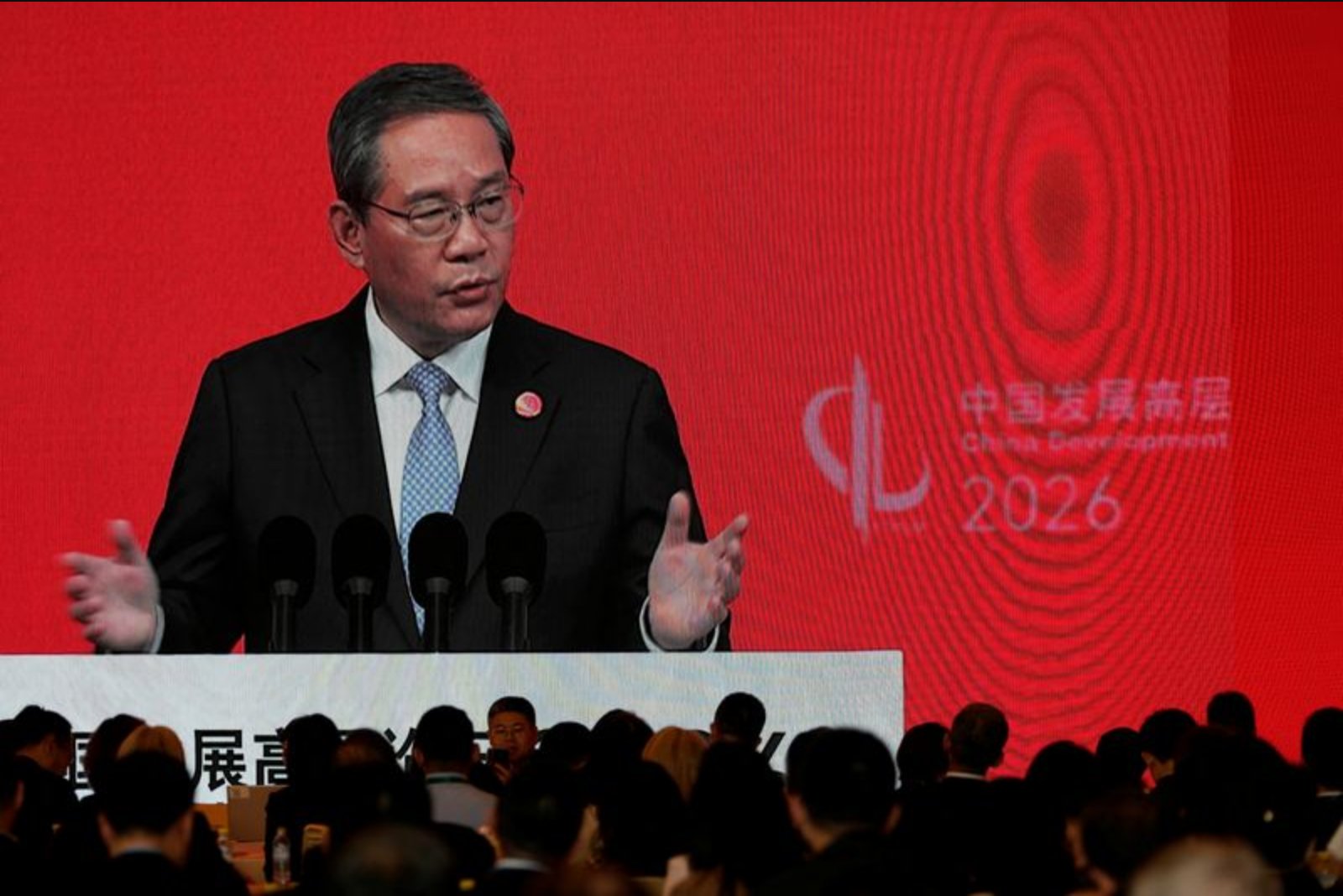
Global corporate leaders gathered for China’s premier annual business event departed with a clearer signal from Beijing that the country intends to serve as a steady economic anchor as geopolitical uncertainty intensifies. The China Development Forum - which concluded on Monday - carried a noticeably more self-assured tone than in recent post-pandemic editions, according to analysts and participants.
Speakers and officials placed less emphasis on emergency support measures or short-term recovery narratives and more on medium-term strategy. Central themes highlighted at the forum included technological self-reliance, industrial upgrading and what Chinese authorities called "high-quality development" - pillars that also feature prominently in the latest five-year plan issued earlier this month and set as the event’s theme.
Han Lin, China Country Director at the U.S.-based strategy consultancy The Asia Group, said the country’s messaging at this year’s forum was the most confident compared with previous CDFs. "Compared to previous CDFs, the China messaging was the most confident," he said. "While identifying challenges in the international system and without naming the U.S. directly, (Premier Li Qiang’s) opening speech focused on what China was doing right to encourage innovation, trade and other opportunities to collaborate."
The timing of the forum sharpened that message. China is nearly a year into a sharpened trade dispute and approaching a postponed summit between President Xi Jinping and U.S. President Donald Trump, navigating strained relations with Washington while facing a rise in trade barriers elsewhere following a record $1.2 trillion trade surplus in 2025. Separately, the U.S.-Israeli conflict with Iran has driven energy prices higher, producing ripple effects across the global economy and allowing China to present itself as a bastion of calm that stresses sovereignty and respect for the international rules-based order.
Attendance patterns at the forum reflected these evolving geopolitical contours. A larger-than-usual contingent of U.S. corporate leaders travelled to Beijing, including the chief executives of Apple, McDonald’s, Eli Lilly, Coach parent Tapestry and Mastercard. Their presence indicated that despite diplomatic friction, many American multinationals remain intent on maintaining channels with China as both sides adjust trade and investment approaches.
Albert Hu, a professor of economics at the China Europe International Business School in Shanghai, observed the resonance of stability as a theme. "Given all the erratic policies introduced by Donald Trump and the uncertainty his policies have introduced to the world economy, the message of China being a stabilizing force probably finds a more willing audience this year than last year," Hu said.
Notably absent from this year’s forum were Japanese executives, who had a visible role at the prior meeting - including a widely publicised interaction with President Xi. Their non-attendance this year underscores how China’s stated openness is being constrained by diplomatic red lines and highlights how geopolitical tensions continue to shape corporate engagement decisions.
Organisers had not confirmed by the close of the event whether President Xi would again host a roundtable with a selection of chief executives. Han Lin suggested the lack of an immediate announcement could be a matter of sequencing rather than reluctance, arguing that a meeting with CEOs might be scheduled only after a visit by President Trump. "I think Xi has every intention to meet CEOs, but only after a Trump visit," Han said. "Beijing wants trade terms set at the leadership level first, then multinationals get their signal on what comes next."
Chinese policymakers used the forum to reiterate the policy priorities that will shape the medium-term economic agenda. The thrust toward domestic technological capability, upgrading of industry, and an emphasis on high-quality growth were repeatedly stressed, reflecting priorities set out in the recently released five-year plan.
Despite the confident framing from officials, not all attendees found the forum’s program useful. Several participants criticised what they saw as an increasingly procedural and bureaucratic agenda. "The meetings are getting more and more bureaucratic. I cut short my trip and am going home now," said a Chinese senior executive at an international hotel chain. "CDF is losing its glamour. I hoped to sit in on some interesting sessions, but it turned out to be very bureaucratic and a total waste of my time."
For international companies weighing strategy in China, the forum offered both reassurance of a predictable policy stance and reminders of the constraints imposed by geopolitics. The mix of encouraging messages on domestic reform and industrial policy with the reality of strained bilateral ties illustrated the narrow path Beijing is seeking to navigate as it seeks to attract investment while protecting strategic priorities.
Summary
At the China Development Forum, Beijing sought to reassure global business leaders that it will remain a stable and predictable economic force, emphasizing technology self-sufficiency, industrial upgrading and high-quality development aligned with the new five-year plan. Increased attendance from U.S. executives contrasted with the absence of Japanese firms, and while the message of stability found a receptive audience, some delegates criticised the forum as increasingly bureaucratic.
Key points
- China presented a confident, stability-focused message at the forum, emphasizing technological self-reliance and industrial upgrading - policies central to the new five-year plan. (Impacted sectors: technology, manufacturing.)
- Higher attendance by U.S. corporate leaders signalled continued commercial engagement despite diplomatic tensions, while the absence of Japanese executives highlighted geopolitical limits on openness. (Impacted sectors: consumer goods, finance, multinational operations.)
- Global energy-price volatility linked to the U.S.-Israeli conflict with Iran and a record $1.2 trillion trade surplus in 2025 framed Beijing’s pitch as a stabilizing force in an uncertain global economy. (Impacted sectors: energy, trade.)
Risks and uncertainties
- Strained relations with the United States and ongoing trade tensions could reshape trade and investment flows, affecting exporters and multinational supply chains. (Affected sectors: manufacturing, technology, export-oriented industries.)
- Rising trade barriers elsewhere and diplomatic rifts, exemplified by the notable absence of Japanese executives, may limit the scope of foreign engagement in strategic sectors. (Affected sectors: automotive, electronics, capital goods.)
- Perceptions of the forum becoming more bureaucratic could reduce its effectiveness as a platform for candid dialogue between policymakers and business leaders. (Affected sectors: services, hospitality, corporate strategy teams.)