
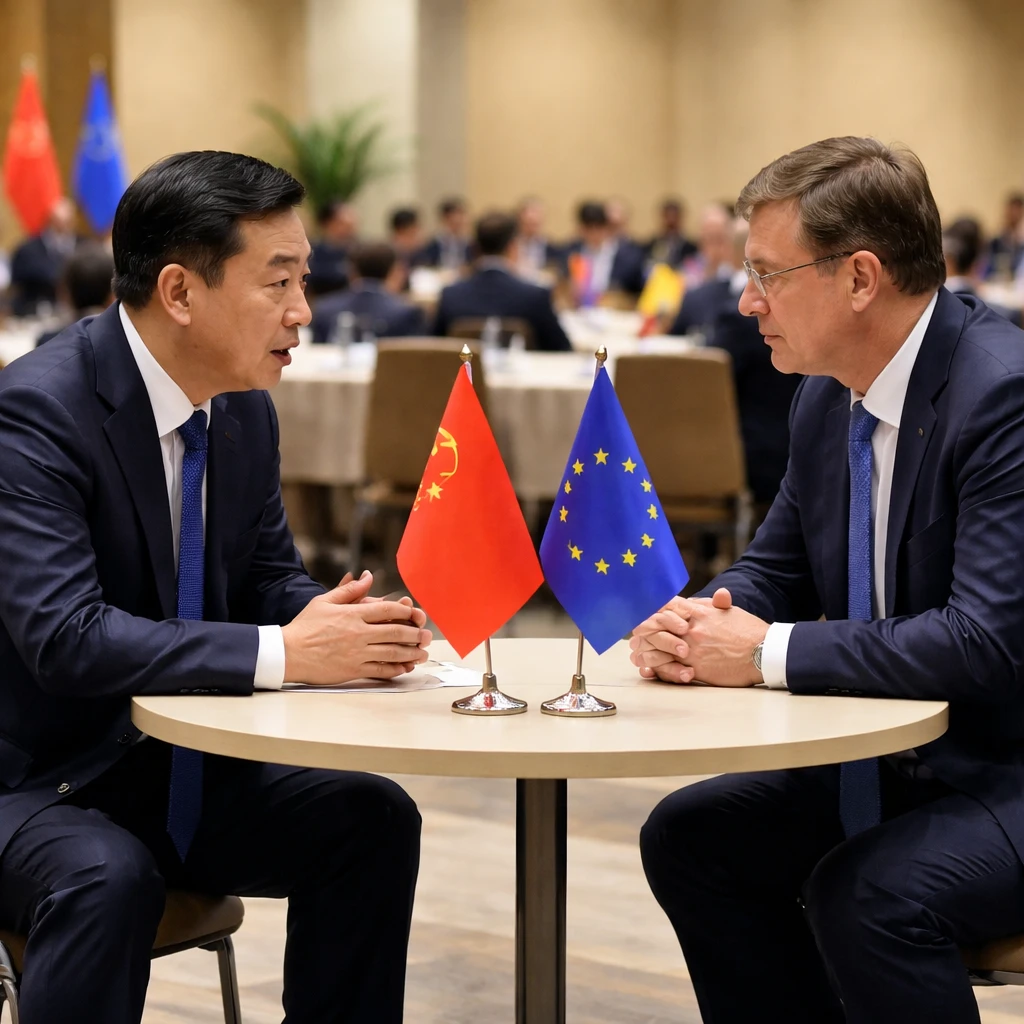
China’s Commerce Minister Wang Wentao told European Trade Commissioner Maros Sefcovic that China is willing to actively expand imports from the European Union, according to a statement issued by Wang’s ministry.
The meeting between the two officials occurred on the sidelines of a World Trade Organization gathering in Cameroon. In its statement, the Chinese commerce ministry quoted Wang as urging the EU to ease controls on high-tech exports to China and to refrain from politicising trade matters.
Wang conveyed Beijing’s expectation that the 27-state bloc will approach China’s development in a rational and objective manner. He called for differences and frictions to be handled appropriately and for both sides to work together to promote the growth of bilateral economic and trade ties.
The ministry statement also reported that Wang raised specific concerns about actions by some EU members that he said amount to abuse of industrial policies and violations of subsidy discipline.
The exchange, as described in the ministry release, centered on a set of requests and cautions from China: a commitment to import more European goods; a plea for fewer high-tech export restrictions; a call to keep trade policy free of political interference; and an admonition to address policy frictions through dialogue.
The details provided in the ministry statement convey Beijing’s preference for a cooperative, rules-based approach to bilateral trade relations while flagging perceived problems in the application of industrial policy and subsidy rules within parts of the EU.
No additional quantifiable commitments, timelines, or responses from the European Trade Commissioner were included in the ministry statement. The published account focuses on what Wang requested and the diplomatic framing he used to press those points during the WTO-side meeting.
Contextual note: The summary above is drawn from the Chinese commerce ministry's account of the encounter and reflects the points the ministry chose to highlight. The statement framed the interaction in terms of both opportunity - expanded imports - and contention - concerns about industrial policy and subsidies.