
Economy March 16, 2026

China and U.S. Find Preliminary Common Ground in Paris Trade Discussions

Negotiators agree to continue consultations after talks that raised objections over U.S. probes and restrictive measures

By Ajmal Hussain
China and U.S. Find Preliminary Common Ground in Paris Trade Discussions

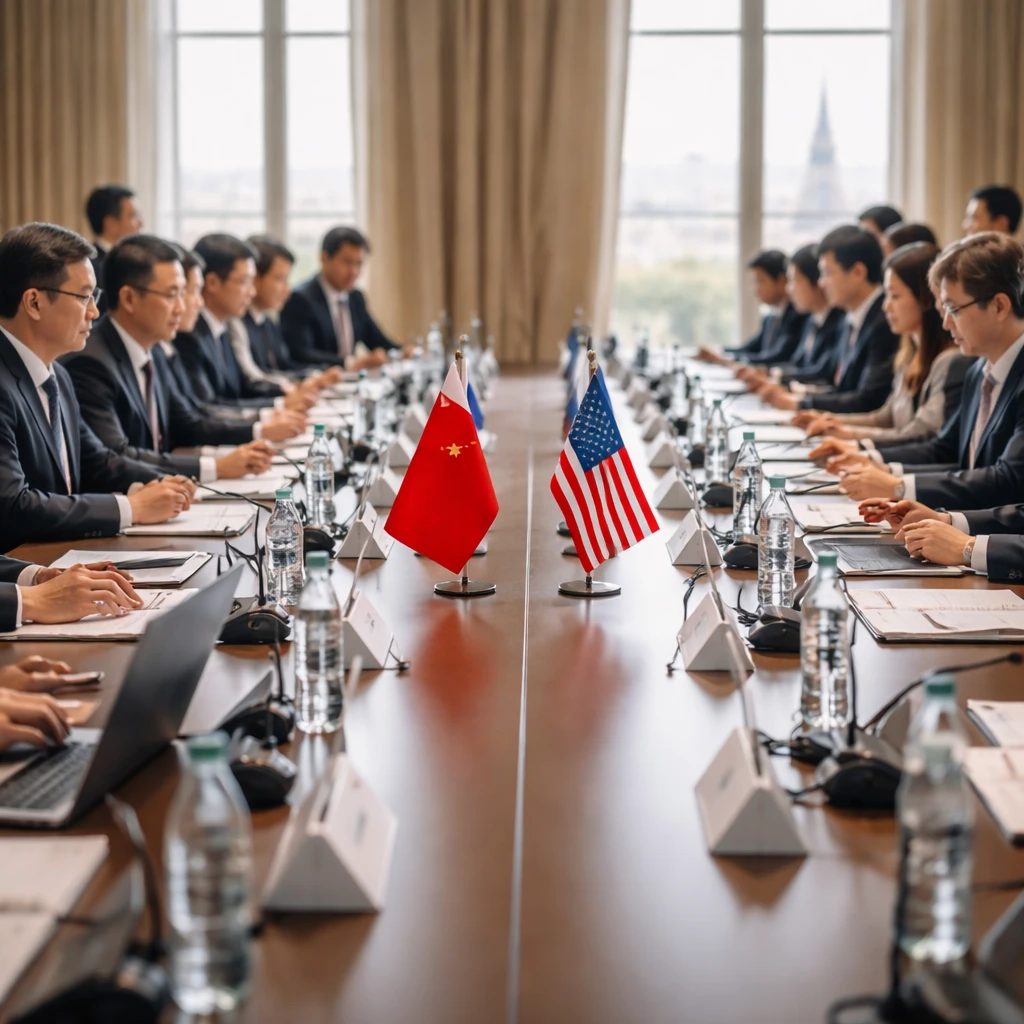
Chinese trade negotiator Li Chenggang said that China and the United States reached a preliminary consensus during trade talks held in Paris. The discussions covered bilateral trade and economic issues, with China registering objections to U.S. restrictive measures and Section 301 investigations. Both sides agreed that stable trade relations serve mutual interests and will pursue further consultations.

Key Points

  • Chinese negotiator Li Chenggang said a preliminary consensus was reached in Paris and both sides addressed trade and economic issues important to each country - sectors impacted include cross-border trade, exporters, and industries sensitive to tariffs.
  • China registered objections to the United States' rollout of restrictive measures targeting China and specifically raised concerns about Section 301 probes.
  • Both sides agreed that stable trade relations serve mutual interests and committed to continuing consultations following the Paris meeting - this ongoing engagement affects market sentiment around international trade and tariff-exposed sectors.

Summary

Chinese trade official Li Chenggang announced Monday that negotiators from China and the United States achieved a preliminary consensus during trade discussions convened in Paris. The talks touched on a range of trade and economic concerns that both sides regard as important, and participants agreed to keep engaging through follow-up consultations.


Details of the Paris talks

Li said the discussions in Paris addressed trade and economic issues of significance to both countries. He confirmed that, during the talks, China formally noted the United States' deployment of restrictive measures directed at China and raised objections to Section 301 probes as part of the negotiations.

According to Li's account, China opposes unilateral investigations of this type and will monitor the progress of those probes closely. He emphasized a mutual recognition that stable trade relations are in the interest of both nations and expressed hope that the United States will honor its commitments and meet China halfway as discussions continue.


Follow-up and process

Li confirmed that the two parties intend to maintain engagement after the Paris meeting through further consultations. The announcement did not provide a detailed schedule or specific outcomes beyond the preliminary consensus and the commitment to continue talks.


What Section 301 probes are

The negotiator noted that the Section 301 probes in question are U.S. trade investigations that can result in tariffs or other trade restrictions on countries accused of unfair trade practices. Li framed China’s stance as opposing unilateral use of such probes and said China will keep a close watch on their progress.


Context and limitations

The public account of the Paris discussions centers on the preliminary agreement to continue dialogue and on China’s objections to U.S. measures and probes. The announcement did not elaborate on specific concessions, timelines, or the precise issues covered beyond the general areas described by Li.

Risks

  • Section 301 probes remain active and can lead to tariffs or other trade restrictions, creating uncertainty for exporters and industries exposed to potential U.S. trade actions.
  • The U.S. rollout of restrictive measures targeting China, which China noted during talks, constitutes an ongoing source of tension that could affect trade flows until resolved.
  • The preliminary consensus depends on future consultations and reciprocal actions - failure to follow through on commitments or to meet halfway could leave trade relations unsettled.

More from Economy

Japan May Send Self-Defense Forces to Clear Mines in Strait of Hormuz if Fighting Stops Mar 22, 2026 VW Sticks to Plan to Cut 50,000 German Roles to Counter High Domestic Costs Mar 21, 2026 Second Nationwide Blackout in a Week Exposes Cuba’s Power System Vulnerability Mar 21, 2026 Why the Euro’s Recent Weakness Is Not a Replay of 2022 Mar 21, 2026 Europe’s Energy Vulnerability Is Largely Financial, Not Just Geographic Mar 21, 2026