
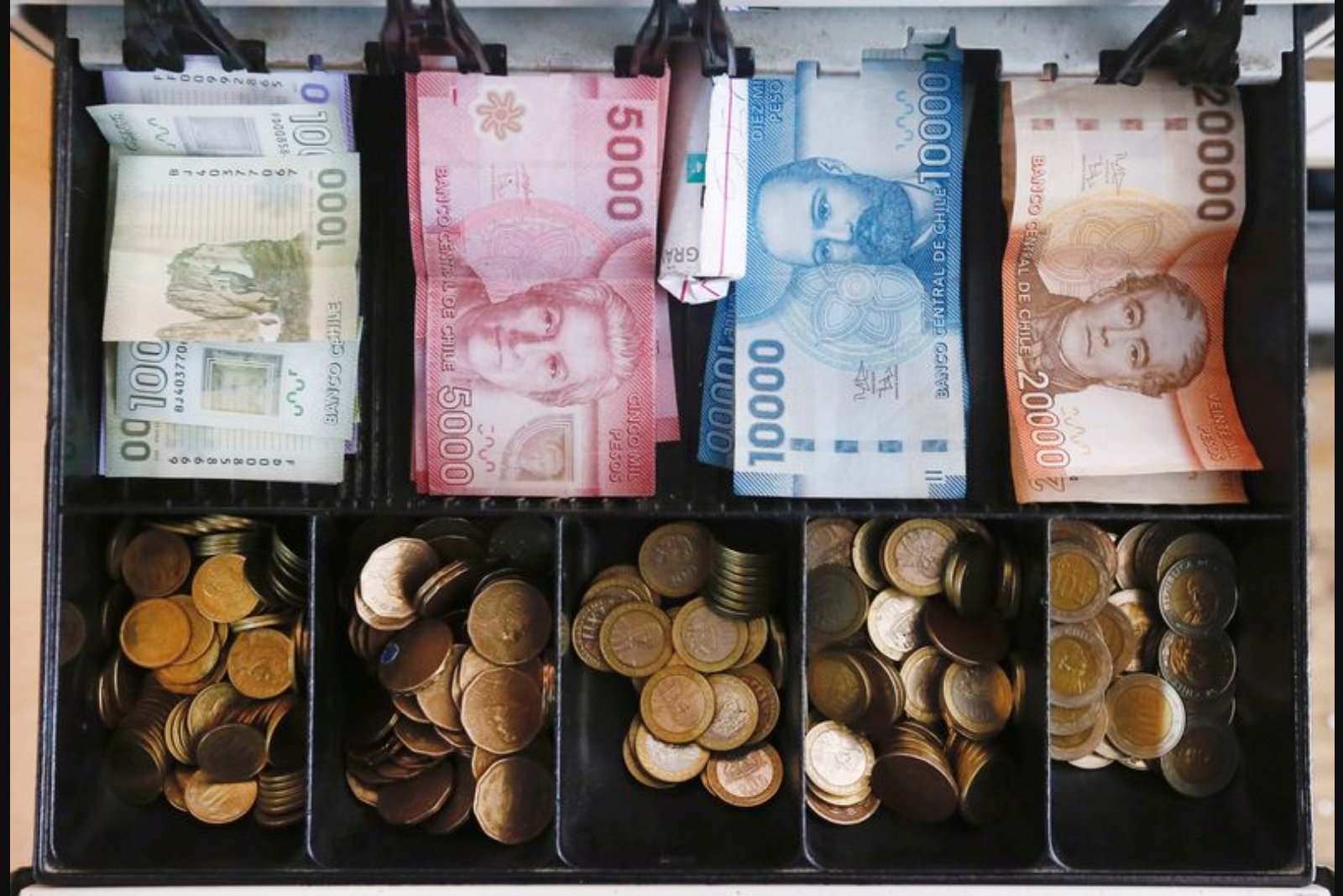
Chile’s currency bore the brunt of regional losses on Tuesday, sliding to the worst-performing Latin American unit since the Middle East conflict began, even as the country reported a trade surplus that marginally exceeded expectations.
The peso fell 0.67% against the U.S. dollar, while a broader index of regional currencies retreated 0.14%. The move underscores how the war - now in its sixth week - has dampened investor sentiment, with Chile’s reliance on imported oil and the broader strength of the dollar cited as key pressures on the currency.
Chile’s customs data showed a trade surplus of $3.06 billion in March, slightly above the $3 billion economists had forecast in a Reuters poll. Under normal conditions, a surplus would provide currency support because it suggests stronger foreign demand for the country’s exports and, therefore, for the peso. In this case, the market response diverged from that expectation.
"The selloff in the peso seems to be more than a standard risk-off episode," said Andres Abadia, chief LatAm economist at Pantheon Macroeconomics. He said the reaction exposes a structural vulnerability to simultaneous oil and USD shocks, and warned that the near-term outlook remains challenging.
Last month Chile’s central bank left its benchmark interest rate unchanged, while flagging that higher fuel prices could add to inflationary pressures. That combination - limited policy movement alongside rising energy costs - appears to have intensified sensitivity to external shocks.
Colombia bucks the trend briefly
By contrast, the Colombian peso edged higher, up 0.12%. It has been the strongest-performing currency in the region since March. Last week the central bank of Colombia increased interest rates despite pushback from the government - a high-rate environment that often bolsters currencies by attracting capital into domestic bonds and other assets.
Yet Abadia cautioned that the dispute between the central bank and the government could pose its own risks. "Markets read this as a credibility shock, prompting a repricing of institutional strength," he wrote.
Other regional currencies also moved lower. Brazil’s real slipped 0.59% and Argentina’s peso declined 0.07% in official interbank trading, while the parallel Argentine peso traded higher by 1.08%.
Risk-off mood tied to the Middle East and political rhetoric
Sentiment toward Latin American assets remained highly reactive to developments in the Middle East. With a deadline set by U.S. President Donald Trump for Iran to reach a deal fast approaching, investors have been cautious amid increasingly acidic exchanges between the two sides.
In a post on Truth Social, President Trump wrote: "A whole civilization will die tonight, never to be brought back again. I don’t want that to happen, but it probably will." Such rhetoric has heightened market wariness and contributed to downward pressure on regional risk assets.
An MSCI index tracking Latin American equities fell 0.57%, placing it on course for a third straight session of losses as investors pulled back.
Emerging market strains beyond Latin America
Elsewhere in emerging markets, the Indonesian rupiah breached the 17,100 level against the dollar for the first time, defying efforts by Indonesia’s central bank to prop it up. Energy shocks, together with lingering fiscal and governance concerns, have driven foreign investors away and pressured the currency.
Key Latin American stock indexes and currencies
| Equities | Latest | Daily % change |
|---|---|---|
| MSCI Emerging Markets | 1458.73 | 0.6 |
| MSCI LatAm | 3098.29 | -1.29 |
| Brazil Bovespa | 186037.55 | -1.13 |
| Mexico IPC | 69018.2 | 0.05 |
| Chile IPSA | 10531.09 | -1.53 |
| Argentina Merval | 2984742.21 | -0.715 |
| Colombia COLCAP | 2291.44 | -0.4 |
| Currencies | Latest | Daily % change |
|---|---|---|
| Brazil real | 5.1695 | -0.59 |
| Mexico peso | 17.746 | 0.02 |
| Chile peso | 923.61 | -0.67 |
| Colombia peso | 3672.68 | 0.12 |
| Peru sol | 3.4223 | -0.04 |
| Argentina peso (interbank) | 1395 | -0.07 |
| Argentina peso (parallel) | 1390 | 1.08 |
The day’s moves highlight how closely currency and equity performance in the region is tied to external political developments and to oil price dynamics. For now, markets remain vigilant, balancing domestic policy settings against a stronger dollar and the geopolitical backdrop.