
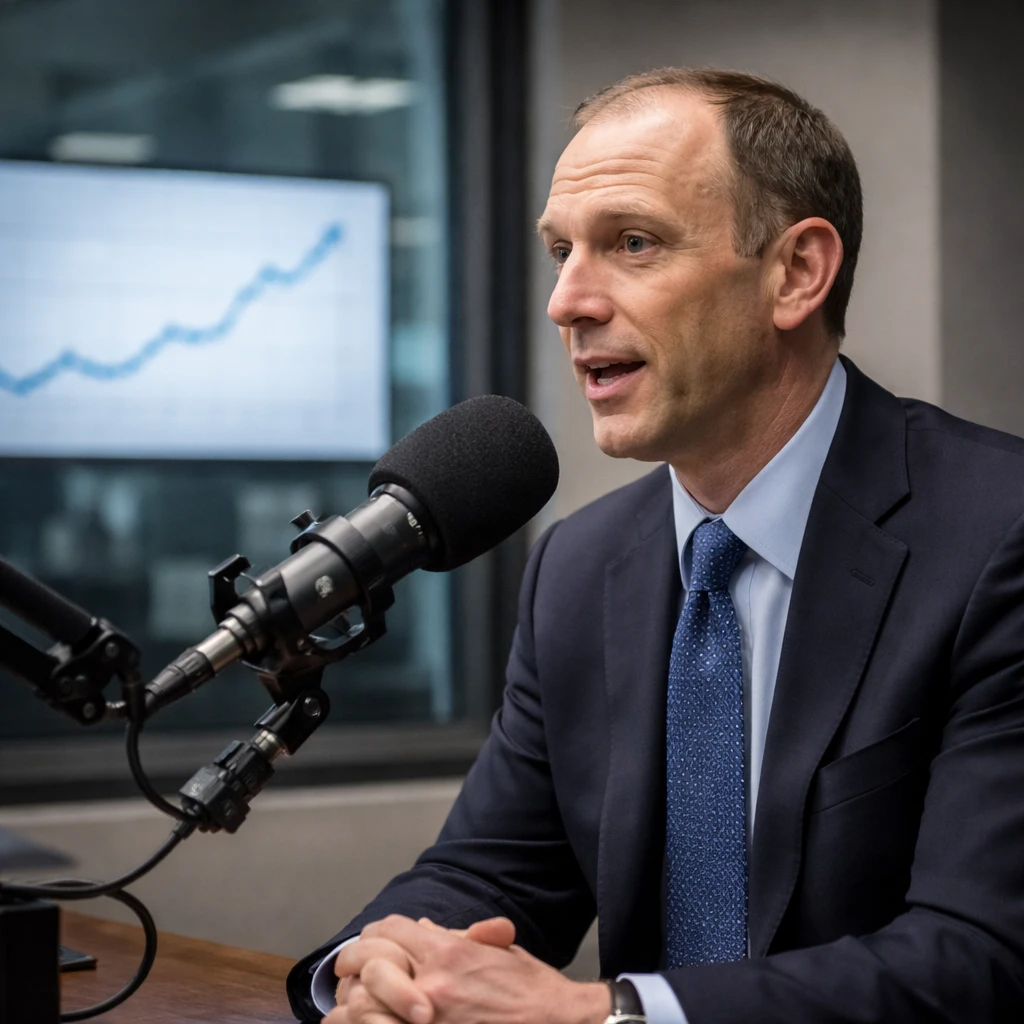
Federal Reserve Bank of Chicago President Austan Goolsbee warned on Tuesday that recent inflation readings reveal pervasive price pressures and may be a sign the U.S. economy is overheating. In an interview on NPR, Goolsbee stressed that the Fed needs to consider steps to interrupt a potential chain of escalating inflation if the underlying economy is indeed running too hot.
Goolsbee drew particular attention to measures of services inflation that exclude energy costs. He argued these components are less affected by external factors such as tariffs or recent energy-price swings, and therefore may better reflect domestic demand pressures.
The Bureau of Labor Statistics released a report earlier Tuesday showing overall consumer prices accelerated by 3.8% in April from a year earlier, the fastest annual pace since 2023. The report attributed much of the headline increase to a continued rise in gasoline prices, a development linked in the report to the Iran war.
Describing the report as worse than expected, Goolsbee said he was particularly troubled by the pickup in services inflation, which he noted is not driven by tariffs or the recent surge in energy prices. His direct assessment of the outlook was blunt: "We’ve got an inflation problem in this country and we’ve got to get it back down," he said.
Policymakers had left interest rates unchanged at their meeting last month. Nonetheless, concerns about inflation appear to be mounting among officials as inflation has remained above the central bank's 2% objective for five years.
Goolsbee's comments underscore a central policy tension: distinguishing between inflationary pressure emanating from energy or other transitory shocks and that coming from persistent, domestically driven services inflation. If the latter is confirmed as a broad-based phenomenon, the Fed will need to evaluate how policy can break an upward momentum in prices without destabilizing the broader economy.
The pronouncements reinforce that inflation dynamics remain central to the Fed's policy calculus and that recent data have prompted renewed scrutiny from senior officials.