
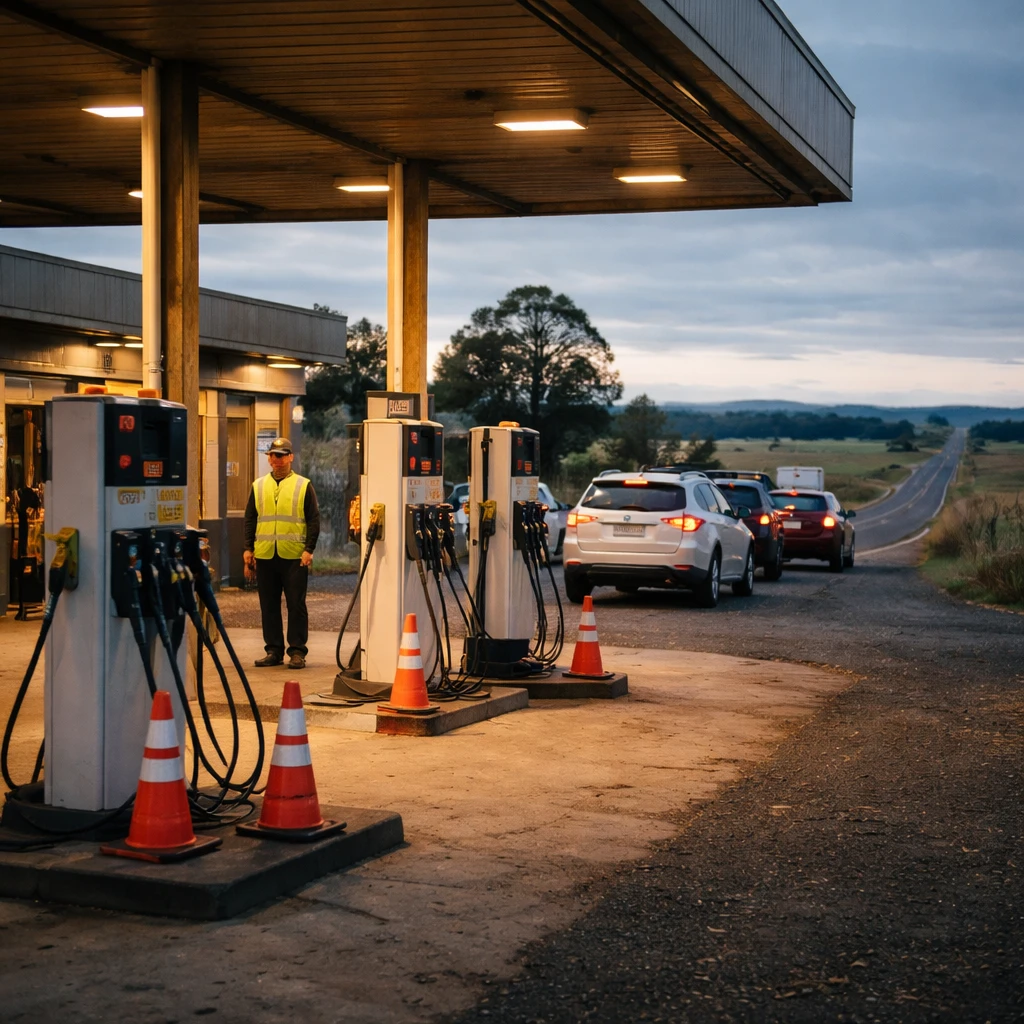
The Australian government has told citizens to carry on with planned Easter travel despite rising pressure on the nation’s fuel distribution system.
On Saturday, Energy Minister Chris Bowen said roughly 312 of Australia’s 8,000 service stations are currently out of diesel. The shortages are concentrated in rural areas where delivery schedules are more stretched, Bowen added.
Officials link the supply strain to the ongoing conflict in the Middle East, now in its sixth week, noting that Australia imports about 90% of its fuel. That reliance on international deliveries has contributed to localized gaps in availability, especially for diesel.
Government guidance and conservation measures
As authorities urged people not to cancel "faith and family" plans for the holiday period, Minister Bowen offered direct guidance to motorists: "get no more fuel than you need." The directive forms part of a broader push to limit non-essential demand and stretch existing supplies.
Australia’s strategic fuel stockpiles currently total 39 days of petrol, 29 days of diesel, and 30 days of jet fuel. Policymakers have highlighted diesel as a particular vulnerability because shortages there affect freight and farm operations where replenishment to remote pumps lags behind urban refueling cycles.
Leadership appeal and transport shift
Prime Minister Anthony Albanese delivered a rare address this week, warning that economic ripple effects from the regional war could last for months. In that address he encouraged the public to favor public transport when feasible, with the aim of preserving liquid fuel for essential services.
The fuel disruption has already prompted some travelers to abandon long-weekend plans, a development that could weigh on the tourism and hospitality sectors during one of their busiest stretches of the year.
Market and sector implications
For investors in energy and transport, the central concern is how long the Middle East conflict continues and whether it affects shipping lanes. Given that roughly 90% of Australian fuel is imported, officials warn that further escalation - particularly in the Strait of Hormuz - could expand current localized shortages into a wider national problem.
The tourism industry remains sensitive to changes in discretionary travel. If fuel insecurity and rising pump prices continue to disrupt holiday movement, the sector faces the possibility of slower activity in the second quarter.