
Oil markets closed March on a dramatic upswing, with Brent crude on track for its largest monthly rise on record and U.S. crude also marking one of its biggest monthly advances in years, as escalating hostilities in the Middle East ratcheted up concerns about inflation and economic momentum.
Markets entered Tuesday still reacting to a month of volatile headlines reflecting increasing tensions and attacks between the U.S., Israel and Iran. That environment has pushed investors toward a more defensive stance and amplified concerns about energy-driven price pressures.
Risk sentiment and market moves
“It appears markets have gone from just mechanically trading headlines ... into a little bit more of a fear mode, taking risk off the table,” said Vishnu Varathan, Mizuho’s head of macro research for Asia ex-Japan. He added that part of the shift may be attributable to a change in perceptions about the likely duration of the conflict: “That partly might have to do with the transition from earlier thinking that there’s a good chance of Trump being able to control the timeline and/or your TACO trade, to now beginning to be concerned or fearing a more prolonged conflict.”
Markets briefly found some relief after a report said U.S. President Donald Trump indicated willingness to end a military campaign against Iran even if the Strait of Hormuz remained largely closed. U.S. futures reversed early losses following that report, with Nasdaq futures up 0.34% and S&P 500 futures gaining 0.4%. European futures also rose, with EUROSTOXX 50 futures up 0.15% and DAX futures advancing 0.26%.
Oil: record monthly gains
Brent crude futures were trading about 2% higher at $114.98 a barrel, bringing the month's gains to roughly 59% - a rise described as the largest on record. U.S. crude climbed 1.8% to $104.73 a barrel and was set for a monthly gain of roughly 56%, the most significant increase in nearly six years.
Market strategists cautioned that higher energy prices threaten to push up inflation in the near term. “I think inflation will be the bigger near-term concern for global markets,” said Thomas Mathews, head of markets for Asia-Pacific at Capital Economics. “But if oil prices don’t fall back over the next few months, we will probably have to start thinking about growth too.”
Asia equities slump
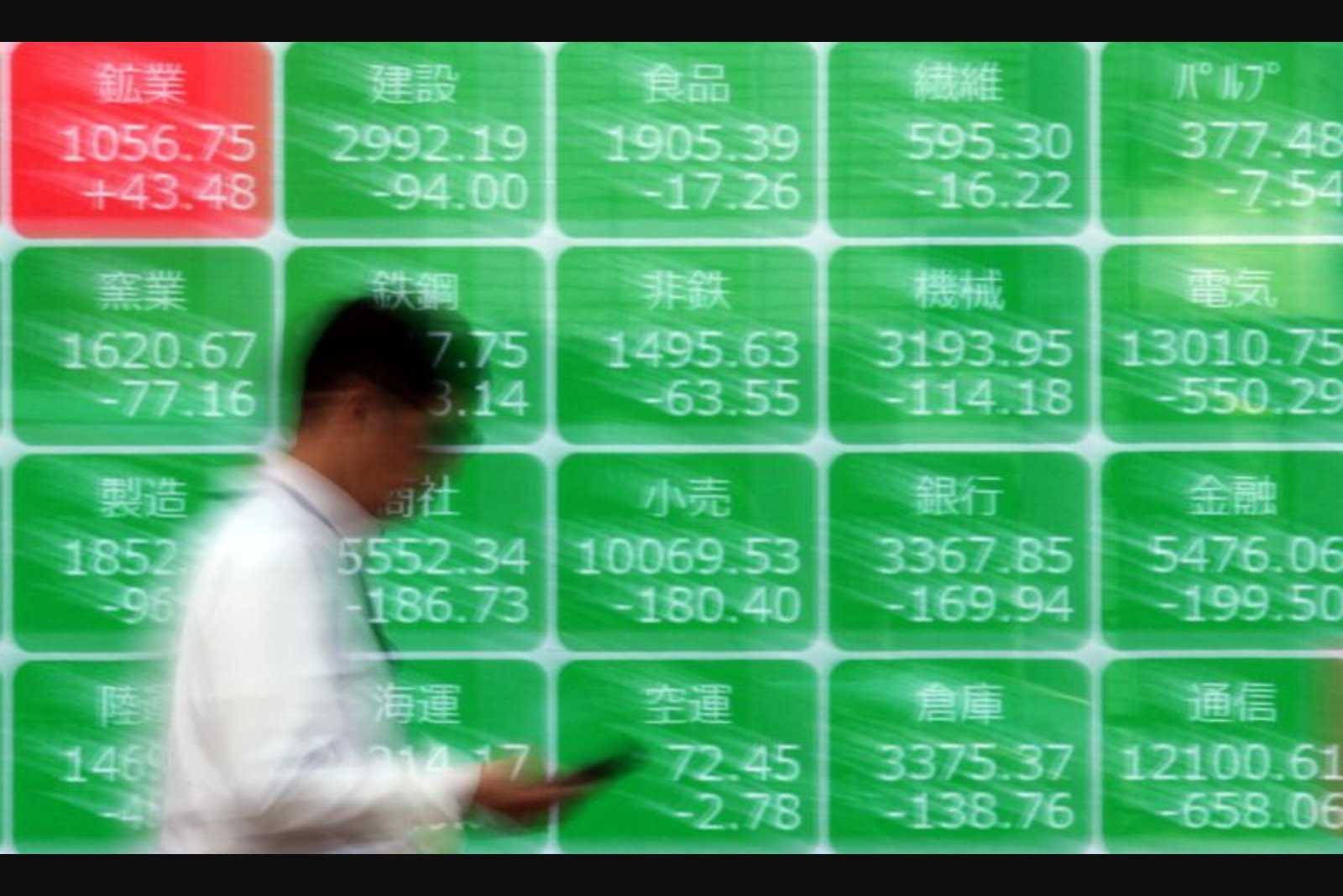
Asia was hit hard by the run-up in energy prices and the shifting risk environment. MSCI’s broadest index of Asia-Pacific shares outside Japan fell 0.55% on the day and was poised for a monthly drop of more than 12% - its largest monthly fall since September 2022.
Japan’s Nikkei declined 0.93% and was set to lose 12.6% for the month. South Korea’s Kospi also suffered, on track for a monthly decline of more than 17%, which would mark its biggest monthly fall since 2008.
Fixed income and monetary policy expectations
The prospect of a more persistent inflation shock from higher oil pushed investors to re-price monetary policy paths, with expectations for additional rate hikes across major central banks tightening. That repricing dealt a heavy blow to bond markets.
Two-year U.S. Treasury yields steadied on Tuesday but were set to rise more than 40 basis points for the month, the largest monthly increase since October 2024. The benchmark 10-year yield was similarly on course for roughly a 37 basis point rise in March, its largest monthly gain since December 2024.
The Federal Reserve is now widely expected to keep policy rates on hold this year, in contrast with market pricing before the conflict that anticipated more than 50 basis points of easing. Fed Chair Jerome Powell said on Monday that the U.S. central bank can wait to see how the Iran war affects the economy and inflation, noting that policymakers typically look through shocks such as those from higher oil prices.
Currencies and commodities
The dollar emerged as one of the chief beneficiaries of rising geopolitical risk, heading for its largest monthly gain since July and roughly a 2.9% rise against a basket of currencies for the month. The euro, which last bought $1.1474, was on track for a nearly 3% monthly loss, while sterling fell more than 2% in March.
The yen hovered a hair under the 160 per dollar mark, last at 159.93 and 0.1% weaker on the day. In precious metals, spot gold was trading higher by 0.6% at $4,538.07 an ounce.
Outlook
Investors remain sensitive to headlines and developments related to the Middle East conflict, which have continued to sway asset prices across oil, equities, bonds and currencies. With energy prices elevated and central bank expectations shifting, market participants are weighing near-term inflationary risks alongside the potential for slower growth if oil remains persistently higher.
Key data and quotes referenced in this report
- Brent crude: $114.98 per barrel, up about 2% on the day and roughly 59% for the month.
- U.S. crude: $104.73 per barrel, up 1.8% on the day and about 56% for the month.
- MSCI Asia-Pacific ex-Japan: down 0.55% on the day, on track for a monthly fall of more than 12%.
- Nikkei: down 0.93% on the day, set to lose 12.6% this month.
- Kospi: on track for a monthly decline of more than 17%.
- U.S. two-year Treasury yields: set to rise more than 40 basis points for the month (largest since October 2024).
- U.S. 10-year Treasury yield: advanced about 37 basis points in March (largest monthly rise since December 2024).
- Dollar: headed for roughly a 2.9% monthly gain; euro last bought $1.1474; sterling down over 2% in March; yen at 159.93.
- Spot gold: up 0.6% at $4,538.07 an ounce.