
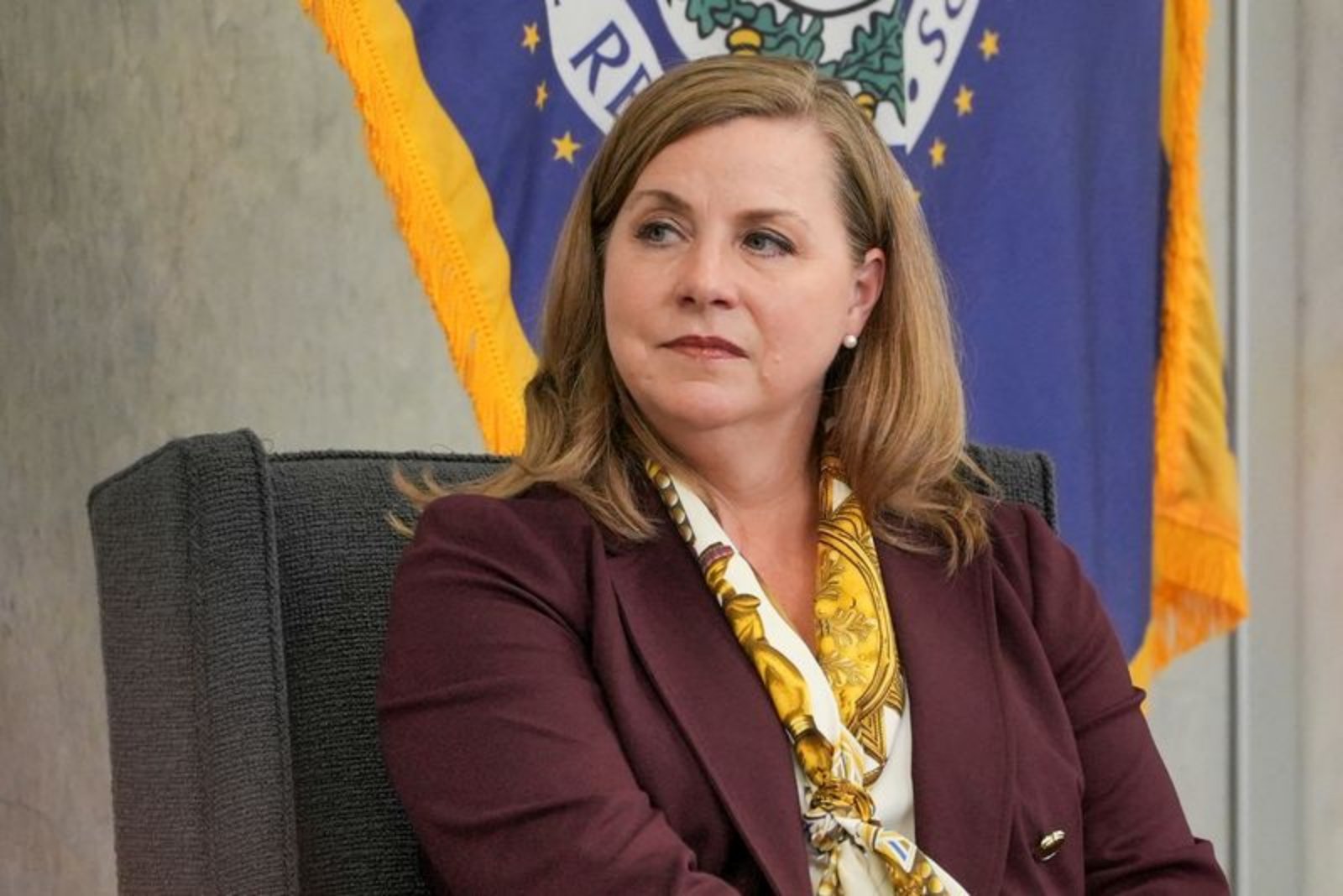
U.S. Federal Reserve Vice Chair for Supervision Michelle Bowman said she continues to believe that interest rates should come down this year, but she supported keeping monetary policy unchanged at the Federal Open Market Committee meeting this week in order to collect more information before moving forward with reductions.
Speaking at a graduate banking school event in Hawaii, Bowman said she expects "the need for three quarter-percentage-point rate cuts this year" and that her vote to hold was focused on the timing of the next step rather than a change in the ultimate policy direction. She framed the committee's decision as a choice about pacing, not about abandoning easing.
Bowman explained that the central question going into the meeting was the schedule for reducing policy restraint. She said: "the question at this meeting was about the timeline for implementing ... essentially choosing between continuing to remove policy restraint and arriving at my estimate of neutral by the April meeting, or moving policy to neutral at a more measured pace throughout this year." The Fed's next policy meeting is scheduled for March 17-18.
The vice chair noted that recent reductions had already moved policy considerably and described those earlier moves when she said the Fed had been "trimming rates by three-quarters of a percentage point at the last three meetings of 2025." Against that backdrop, her decision to vote for a pause was intended to allow officials to observe how the lower degree of policy restraint was affecting financial conditions and the labor market.
Bowman reiterated her view that inflation is likely to trend toward the Fed's 2% objective while the job market remains weak, a combination that, in her assessment, argues for looser policy overall. At the same time, she acknowledged that the labor market has shown some signs of stabilization and emphasized the need to be cautious in the face of lingering data uncertainty.
"The labor market is fragile," Bowman said. "I could have voted in favor of continuing to remove policy restraint in order to hedge more against the risk of further labor market deterioration. But we have seen some signs of stabilization ... We can afford to take time and 'keep policy powder dry' for a little while in order to carefully assess how the lower degree of policy restraint is flowing through to broader financial conditions and strengthening the labor market."
Bowman also warned that any pause should not be interpreted as a long-term maintenance of the current policy stance. "We should also not imply that we expect to maintain the current stance of policy for an extended period of time," she said, reiterating that she expects moves toward lower rates within the year.
The Federal Reserve voted 10-2 at the recent meeting to hold the target range for the federal funds rate at 3.50%-3.75%. Two governors, Christopher Waller and Stephen Miran, dissented in favor of a rate cut. Bowman had been viewed by some ahead of the meeting as a possible dissenting voice but ultimately joined the majority in voting to pause.
Bowman's comments made clear that her position is one of conditional patience: she supports easing policy but wanted to allow time to assess incoming data, particularly given gaps in information caused by last fall's U.S. government shutdown. She emphasized that the timing of moves this year should be data-dependent and that any delay in cutting rates is intended to allow a clearer view of how past easing is affecting economic conditions.
Context for markets and policymakers
Bowman's stance highlights a balancing act at the Fed between moving toward a neutral policy stance and ensuring that the labor market does not deteriorate further. Her vote to pause signals a desire among some policymakers to be deliberate about sequencing cuts, while still signaling an expectation that policy will be eased later in the year.