
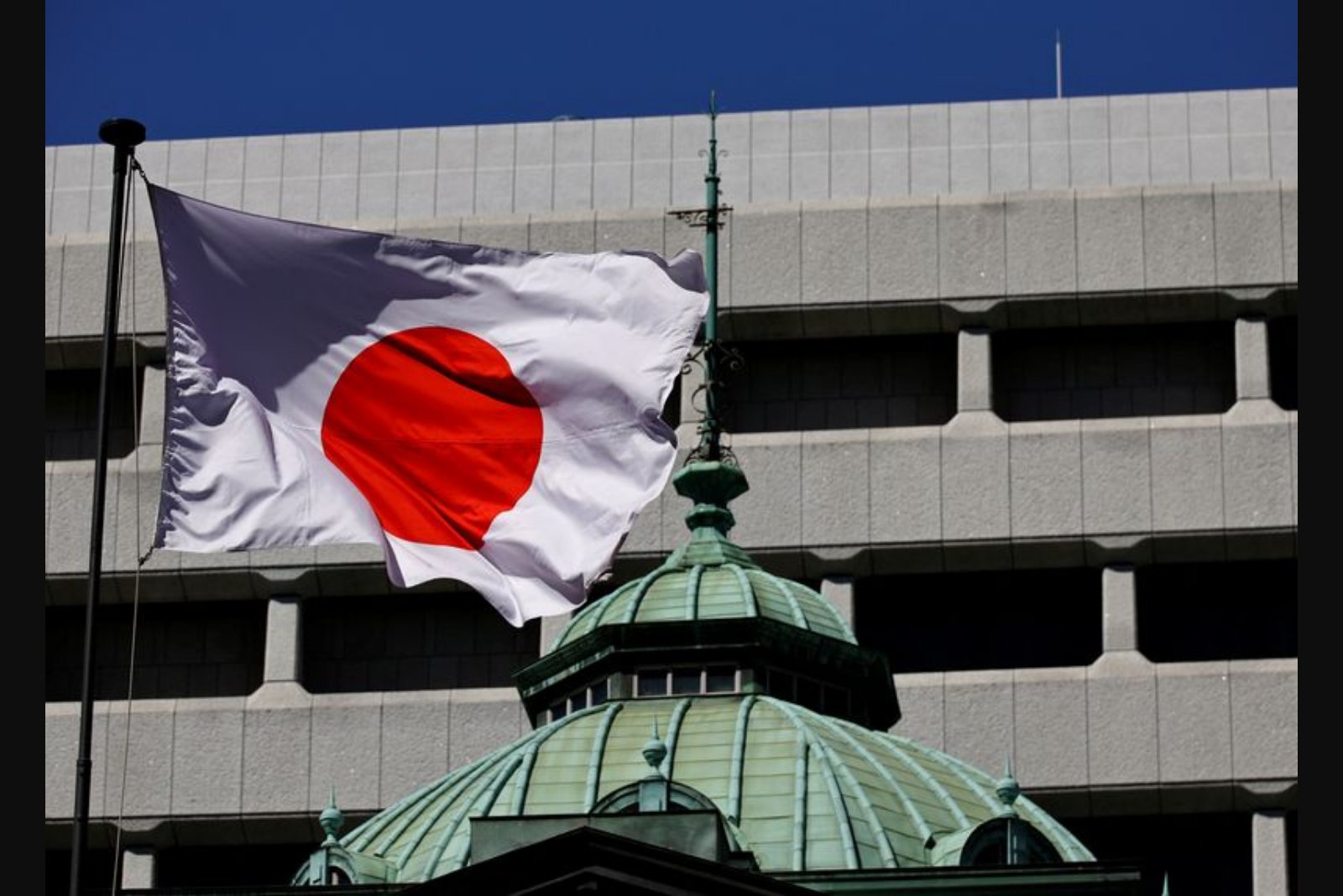
The Bank of Japan is setting the stage for adjustments to its policy wording at its April meeting, actions that would preserve the possibility of a near-term interest rate increase as a weak yen and turmoil in the Middle East place upward pressure on Japan's inflation outlook.
Although the central bank held policy steady at its most recent meeting, Governor Kazuo Ueda indicated a marked shift in tone away from an emphasis on downside economic risks that had justified a cautious approach to raising borrowing costs. Ueda said the board will discuss next month a change to guidance that currently ties rate rises to "improvements" in the economy - language some analysts had interpreted as excluding hikes amid growth headwinds.
In a set of remarks that were unusually hawkish relative to his prior public posture, Ueda added:
These comments broaden the circumstances under which the BOJ could move rates higher, analysts say, and would give the bank latitude to act even if its new quarterly forecasts, to be released at the April 27-28 policy meeting, downgrade near-term growth."Even if the economy comes under downward pressure, if we judge that such downward pressure would be temporary and will not affect underlying inflation, it would be possible for us to raise interest rates."
Adding a new lens on inflation and neutral rates
Ueda also disclosed plans to publish a fresh inflation indicator by summer alongside an updated staff estimate of Japan's neutral interest rate, presenting both as elements of improved communication from the BOJ. The proposed price gauge would complement existing consumer inflation measures that exclude fresh food and fuel by additionally removing the effects of government measures that have suppressed inflation readings, including subsidies intended to lower school tuition fees and gasoline bills.
By stripping out the influence of such policy measures, the new indicator aims to better capture underlying inflationary pressure driven by domestic demand rather than cost-push factors. Analysts expect the gauge could support an argument that core inflation remains on track to sustainably reach the BOJ's 2% objective, even if headline readings temporarily slip below that threshold.
Naomi Fink, chief global strategist at Amova Asset Management, said the additional measures could ease the bank's path around short-lived disinflationary moves and provide a basis to accelerate the pace of rate increases, stating:
"All else equal, such new measures could potentially help the BOJ to navigate through short-term disinflationary measures and justify a faster pace of rate hikes."
Mari Iwashita, executive rates strategist at Nomura Securities, suggested the BOJ might begin releasing the new indicator as early as April and could lift its price forecasts to reflect rising import costs associated with the weaker yen. She summarized the bank's posture by saying:
"The BOJ appears to be doing what it can, including on the communication front, to proceed with policy normalisation. It seems well prepared for the next rate hike."
Political and market constraints
Despite the central bank's rhetorical shift, there are clear constraints that could delay an actual tightening of policy. The escalation of violence in the Middle East has unsettled markets, and the yen remained under pressure even after Ueda's remarks, trading close to the psychologically important 160-per-dollar level on Monday - a development that raises concerns among policymakers about rising import bills.
Prime Minister Sanae Takaichi, focused on supporting economic growth, has indicated the possibility of compiling an extra budget to expand fiscal stimulus. Two government sources told Reuters that Takaichi's reservations about near-term rate increases remain unchanged, and one source said the government may not approve a rate move in April. Ueda sought to downplay the prospect of a public split, saying the government's assessment of underlying inflation was probably not far from the BOJ's view.
Markets nonetheless assign substantial odds to an April rate move, with around a 60% probability priced in. But not all observers expect the bank to act then. Akira Otani, a former BOJ executive now serving as managing director at Goldman Sachs Japan, argued that the BOJ may wait until July for clearer signs that any profit hit from the Iran conflict will not deter smaller firms from raising wages. He noted:
"Given uncertainty over Middle East developments and comments from the government, we see the hurdle for an April rate hike as quite high. For the BOJ, deciding on an April rate hike won’t be as easy as markets expect."
Implications for monetary policy and markets
By moving away from a narrative that tied hikes strictly to improving growth and by developing more refined measures of underlying inflation and neutral rates, the BOJ is equipping itself with communicative tools that could justify tightening even amid temporary soft patches in output. Such a shift would be aimed at acknowledging the inflationary impact of a weak currency and rising fuel costs while preserving the flexibility to prioritise price stability.
Still, the interaction between central-bank messaging, currency dynamics and government policy creates uncertainty over timing. The BOJ's readiness to alter its guidance and the introduction of a new inflation gauge are designed to bolster the case for policy normalisation, but the path to higher interest rates will be shaped by developments in import prices, geopolitical risks and the stance of fiscal policymakers.
Summary: The BOJ is preparing changes to policy language and communication tools that would allow it to raise interest rates even if growth faces temporary weakness. New inflation metrics and a fresh neutral-rate estimate are due for release, but political resistance and geopolitical risks create uncertainty about the timing of a hike.
Key points
- The BOJ will debate revising guidance that linked rate hikes to "improvements" in the economy, broadening conditions under which it could raise rates.
- The bank plans to publish a new inflation indicator by summer and update its staff estimate of the neutral interest rate to improve communication and measurement of underlying inflation.
- Markets assign roughly a 60% probability to an April rate hike, though some analysts expect the BOJ to wait until July given geopolitical and political uncertainties.
Risks and uncertainties
- Geopolitical tensions in the Middle East could push up fuel costs and disrupt markets, complicating the BOJ's decision-making - with pronounced effects for import-sensitive sectors and currency-sensitive asset classes.
- Political reluctance from the government, with the prime minister signalling potential fiscal stimulus and government sources indicating possible opposition to an April hike, may constrain the central bank's room to act - affecting markets sensitive to policy shifts.
- Persistent weakness in the yen near the 160-per-dollar level heightens imported inflation but may not respond to central-bank signalling, adding volatility to trade-exposed industries and overall inflation readings.