
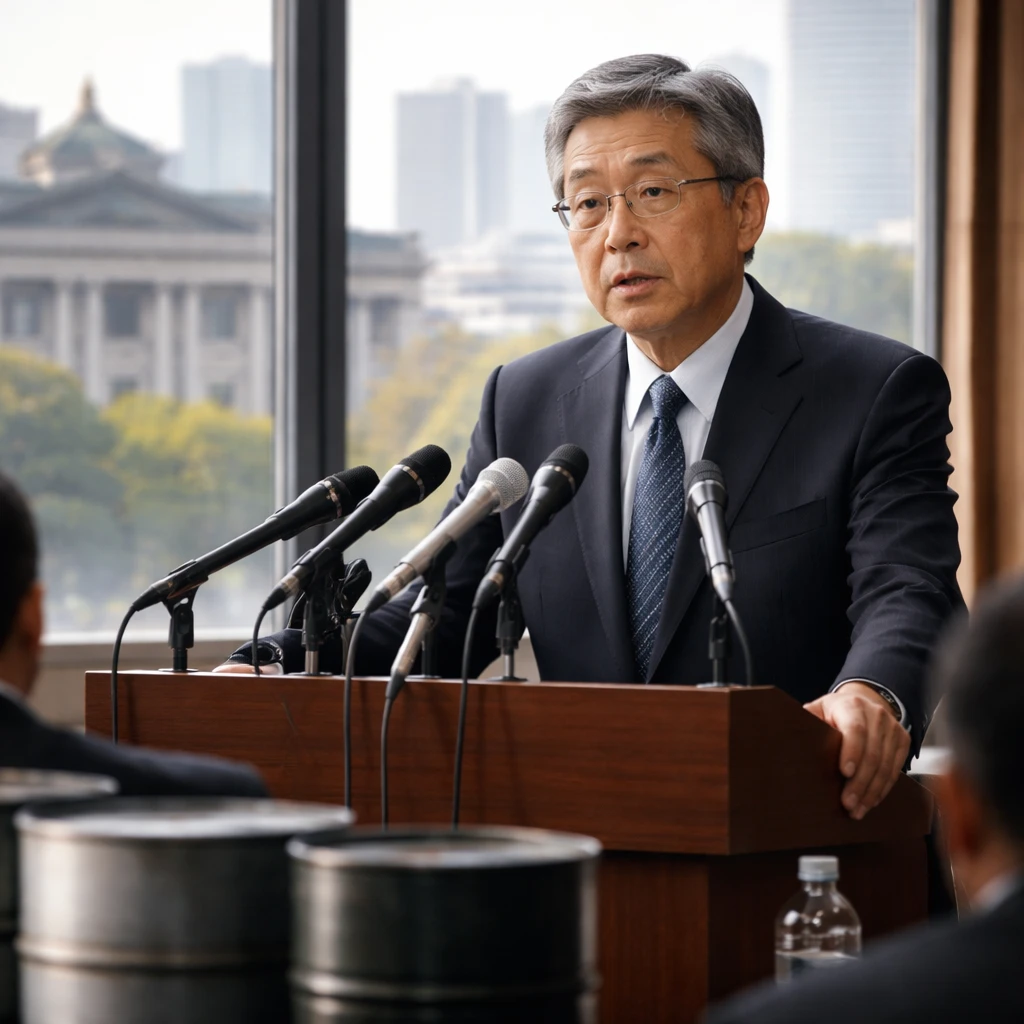
Toichiro Asada, who joined the Bank of Japan's nine-member board on Wednesday, warned that Japan faces a real risk of entering a stagflationary environment because of the Iran war and its impact on global oil markets. At his inaugural news conference, Asada said surging crude prices tied to the Middle East conflict are feeding inflationary pressures in an economy that has only recently moved out of a deflationary phase.
Asada stressed that Japan's policy challenge has shifted with the rise in inflation. "With Japan having emerged from deflation and now facing inflation, the BOJ can no longer focus solely on keeping monetary policy loose," he said, a view consistent with his reputation as an advocate for expansionary monetary and fiscal measures.
He flagged the policy trade-offs facing the central bank: while higher interest rates could be used to counter inflation driven by energy costs, such tightening risks damaging factory output and employment. "Japan could be in a stagflationary trend," Asada said, adding that "It’s hard to deal with such a situation with monetary policy."
The comments underline a dilemma for policymakers who must weigh the inflationary impact of rising commodity prices against the potential economic harm from rate increases. Asada’s remarks highlighted that a purely monetary response may be insufficient or carry unacceptable costs for Japan's industrial sector and labour market.
Context and implications
Asada spoke at his first public briefing after joining the BOJ's decision-making body. His statements emphasize that the nature of inflation has changed for Japan and that the central bank's traditional focus on maintaining an accommodative stance may need reassessment if energy-driven price pressures persist.
He cited the Iran war and the related surge in crude oil prices as the proximate factor increasing inflationary pressure, while warning that the standard tool of raising interest rates to cool inflation could harm factory output and jobs, creating a stagflationary dynamic that is difficult to manage through monetary policy alone.
Takeaways
- Asada warns the Iran conflict-driven jump in oil prices raises inflation risks for Japan.
- Raising interest rates to counter oil-driven inflation could reduce factory output and threaten jobs.
- He said a stagflationary trend would be hard to address with monetary policy alone.