
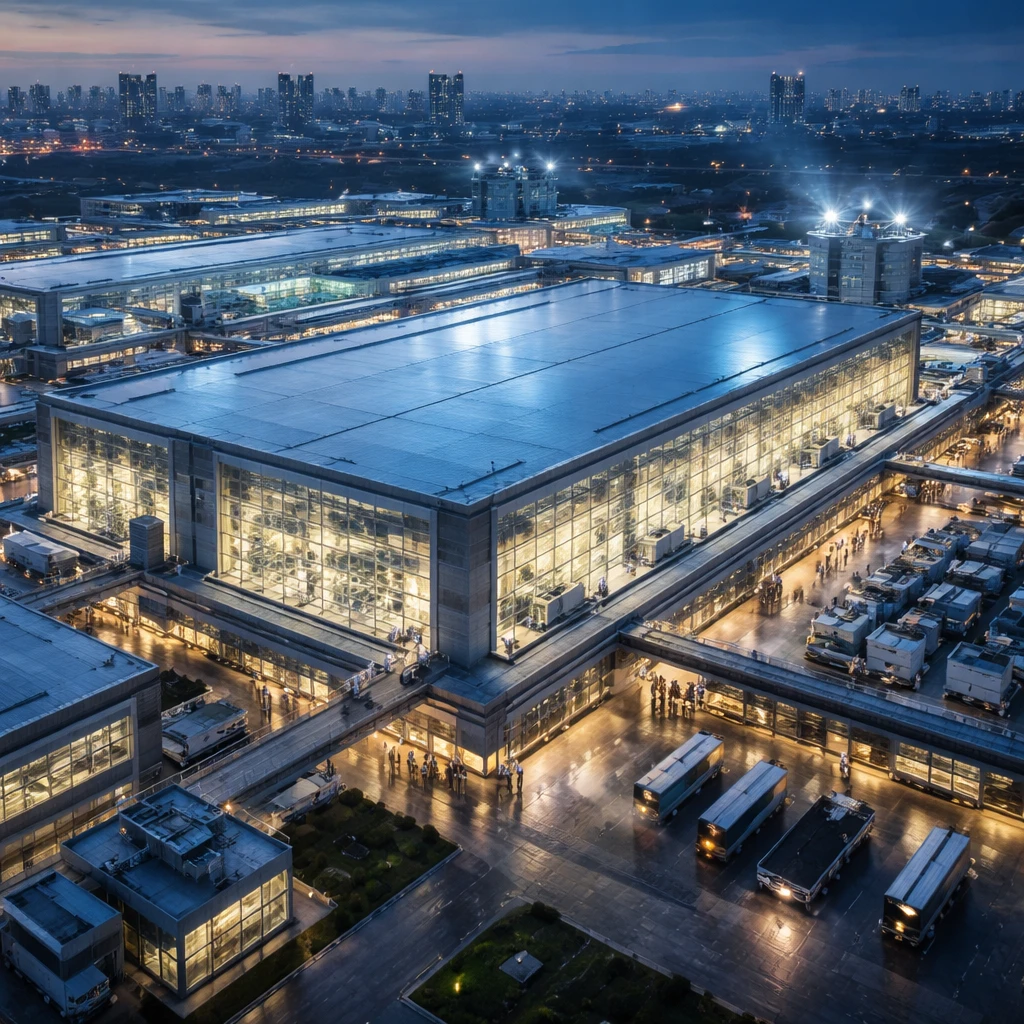
Bank of America Securities has concluded that Elon Musk’s plan for a vertically integrated semiconductor complex - dubbed 'Terafab' - is unlikely to pose a major near-term competitive challenge to Taiwan Semiconductor Manufacturing Co. (TSMC). Analysts at the bank cite a combination of execution risks, substantial expense and lengthy development timelines as the primary reasons the project would struggle to match the scale and cost efficiency of established foundries.
Musk has described Terafab as an integrated facility combining chip design, front-end wafer manufacturing and back-end packaging at a single site, intended to support advanced semiconductors for Tesla electric vehicles, Optimus robots, SpaceX systems and workloads from xAI. The proposal reflects a broader industry move toward tighter control of critical semiconductor supply chains, driven by sustained demand for advanced chips from areas such as artificial intelligence, autonomous driving and high-performance computing.
Despite market drivers that favor new capacity, BofA’s assessment emphasizes the deep technical and ecosystem gaps that a greenfield foundry faces. The analysts singled out limited in-house manufacturing process expertise and the absence of key support elements - notably electronic design automation tools and comprehensive intellectual property libraries - as structural disadvantages from the outset.
Even assuming those capability gaps are addressed, BofA estimates substantial lead times. The bank projects three to five years for the site to reach operational readiness when accounting for construction, equipment installation and product qualification. That timeline implies mass production is unlikely before the end of the decade, with 2029 identified as the earliest realistic milestone for scaled output.
Capital intensity is another central constraint. BofA estimates initial development to achieve 100,000 wafers-per-month capacity would require in excess of $60 billion in capital expenditure. Beyond the headline capex figure, the bank expects per-wafer production costs at Terafab to remain meaningfully higher than incumbents: wafer costs could be 30% to 50% above TSMC’s advanced-node economics even at full utilization.
Such a cost gap would place Terafab at a pricing disadvantage versus TSMC, which benefits from large-scale manufacturing, long-standing customer relationships and a mature supply chain and ecosystem. Those advantages contribute to lower unit costs and stronger commercial leverage for TSMC relative to a nascent foundry effort.
While BofA acknowledges Terafab as part of a wider trend toward vertical integration in semiconductor value chains, the bank concludes this initiative presents limited near-term risk to TSMC. The Taiwanese incumbent’s technological leadership, scale benefits and proven execution record remain substantial barriers for any new entrant seeking to compete at the cutting edge.
Summary
BofA Securities finds that Terafab faces material execution, ecosystem and cost challenges that make it unlikely to displace TSMC in the near term. Long build and qualification timelines, large capital requirements and higher projected wafer costs underpin the assessment.
Key points
- Terafab is proposed as a vertically integrated site combining chip design, front-end manufacturing and back-end packaging to support Tesla, Optimus, SpaceX and xAI workloads - sectors driving demand for advanced chips.
- BofA estimates at least three to five years for operational readiness and cites 2029 as the earliest realistic year for mass production.
- Initial 100,000 wafer-per-month capacity could require more than $60 billion in capital, and wafer costs may be 30% to 50% higher than TSMC’s advanced-node costs, creating a structural pricing disadvantage.
Risks and uncertainties
- Execution risk - building foundry-level manufacturing process expertise and qualifying products at scale is complex and time-consuming; this affects the semiconductor and broader technology hardware sectors.
- Cost risk - very high capital expenditure and structurally higher per-wafer costs could make pricing uncompetitive versus incumbents; this has implications for chipmakers, automotive OEMs relying on in-house chips and companies investing in AI hardware.
- Timeline risk - multi-year development and qualification schedules mean Terafab is unlikely to contribute at scale before 2029, exposing the project to changes in demand or technology during the build phase.