
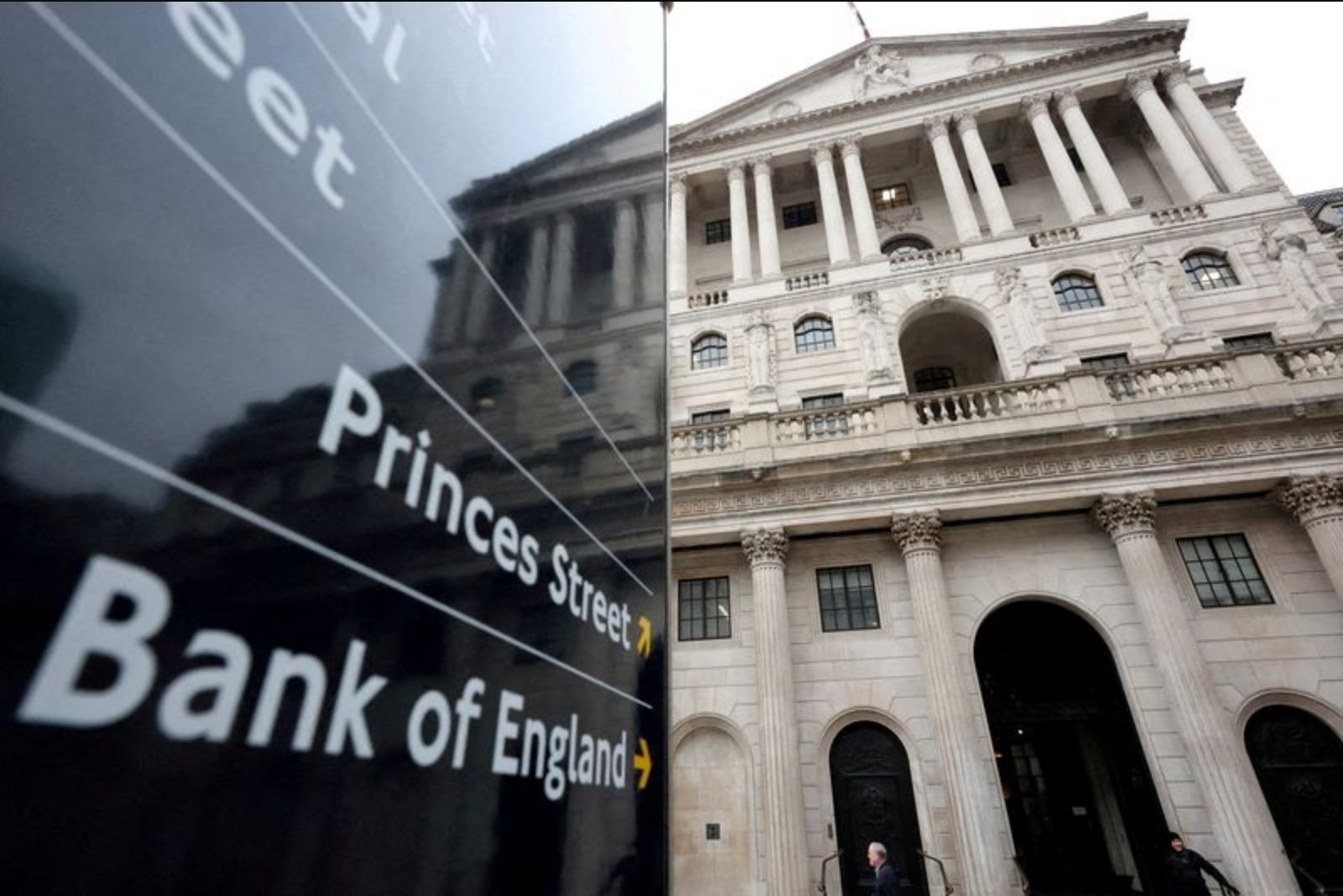
Alan Taylor, a member of the Bank of England's Monetary Policy Committee, said on Thursday that he saw a high threshold for increasing interest rates and favoured maintaining current policy until the economic implications of the war in Iran were better understood.
Taylor, who before the outbreak of the conflict had long supported lower interest rates, joined the other eight MPC members in voting this month to keep rates on hold. Some members of the committee noted that rate hikes remained a possibility, but the full panel opted to pause for now.
Explaining his stance in remarks prepared for a conference in New York hosted by Exante Data, Taylor said: "Given massive uncertainty around future energy prices, and our starting point, I currently see a high bar to hiking." He added: "Holding policy steady is preferable until the impact becomes clearer."
Taylor acknowledged recent signs of cost pressures - notably a rise in inflation expectations among consumers and a notable jump in manufacturers' input costs - but he judged the risk of inflation becoming unanchored as low at present. He pointed to two factors behind that view: a weakening labour market and the fact that the current energy shock has so far been smaller than the shock experienced in 2022.
Earlier on Thursday, Bank of England Deputy Governor Sarah Breeden offered a related assessment, saying she saw less risk of second-round inflation effects now than during Russia's full-scale invasion of Ukraine in 2022, a view she linked to greater weakness in the labour market.
Taylor likened the present upheaval to the 2011 episode when the BoE was able to look through an energy-price shock without raising interest rates and thereby avoid inflicting further damage on the economy. He suggested that if the current shock played out similarly, that scenario could open the door to rate reductions in the future if downside risks diminished.
At the same time, Taylor cautioned that a less favourable path remained possible. "If disruptions persist and the shock grows, the MPC will face a tougher choice between high inflation and weaker growth," he said. "The rate path will depend on the trade-off, and on whether risks of de-anchoring come into play."
Which stock should you buy in your very next trade? AI computing powers are changing the stock market. Investing.com's ProPicks AI includes dozens of winning stock portfolios chosen by our advanced AI. Year to date, 2 out of 3 global portfolios are beating their benchmark indexes, with 88% in the green. Our flagship Tech Titans strategy doubled the S&P 500 within 18 months, including notable winners like Super Micro Computer (+185%) and AppLovin (+157%). Which stock will be the next to soar? Pick Stocks with AI.