
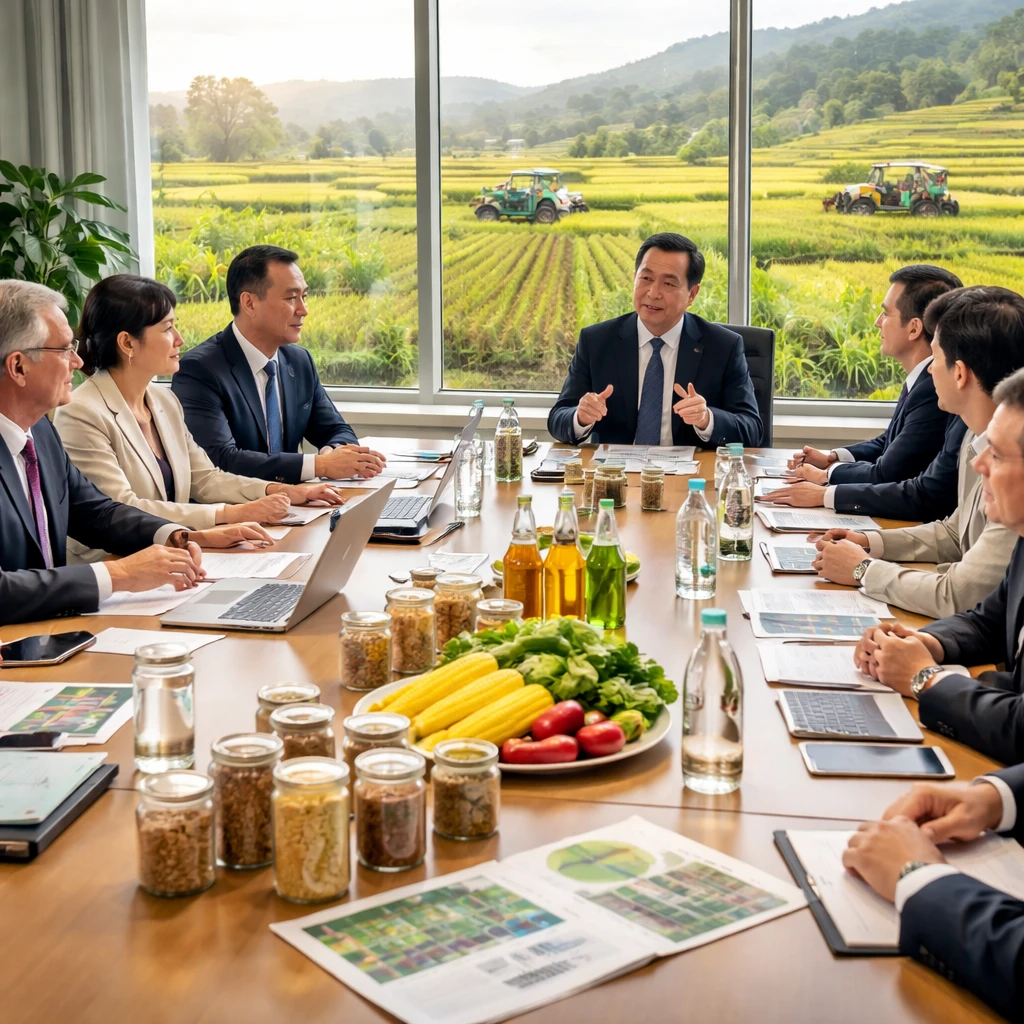
Beijing is encouraging deeper involvement by U.S. agribusiness firms in China’s domestic agricultural sector, framing the country’s rural revitalization program as a principal channel for foreign investment and technical cooperation.
The appeal came during a meeting in Beijing on Saturday with a U.S. business delegation, when Vice Agriculture Minister Zhang Zhili urged attendees to match their technical expertise to the priorities set out in China’s 15th Five-Year Plan. Zhang emphasized that U.S.-invested companies are well placed to take part in state-led initiatives tied to the plan.
Policy priorities and areas of focus
The Ministry of Agriculture and Rural Affairs has signaled that the next policy cycle will concentrate on modernizing rural infrastructure and promoting high-tech farming inputs. Officials described these areas as central to the upcoming policy agenda and singled out advanced seed technology, food processing, and agribusiness investment as specific domains where international participation could be valuable.
Zhang stated that integrating American innovation is viewed by Beijing as an important element in efforts to strengthen food security and narrow the wealth gap between urban and rural communities. At the same time, ministry commentary acknowledged that global commodity flows continue to face pressures from regional conflicts.
Trade context
The outreach to U.S. agribusiness arrives against a backdrop of uneasy U.S.-China trade relations. Certain industries, notably semiconductors and electric vehicles, have been affected by reciprocal tariffs and export controls. By contrast, agricultural trade has remained notably resilient.
Officials noted that U.S. agricultural exports to China hit record levels in 2025, supported by increased demand for soybeans, corn, and beef. That commercial linkage between U.S. producers and Chinese consumers has historically acted as a moderating influence on broader economic decoupling, creating an area of mutual economic interest that has been relatively insulated from larger geopolitical friction.
Uncertainties and outlook
Observers caution that it is not certain whether this kind of agricultural diplomacy will be robust enough to withstand the broader "risk-off" sentiment affecting global trade. Analysts point out that while Beijing’s invitation is a favorable signal for major agribusiness players, the long-term direction of such investment will be contingent on the stability of the Phase One trade deal legacies.
China’s public framing of rural revitalization as a growth engine for foreign investment creates a clear opening for U.S. agribusiness, but the durability of that opening depends on how trade policy and geopolitical dynamics evolve.
Summary
Chinese officials have publicly invited U.S. agribusiness companies to contribute to rural modernization efforts under the 15th Five-Year Plan. The Ministry plans to prioritize rural infrastructure and high-tech farming inputs, and Zhang Zhili highlighted specific opportunities in seeds, processing, and investment. Agricultural trade has remained strong even as other sectors face sanctions and controls, but the long-term trajectory of these ties depends on the persistence of previous trade deal frameworks and broader market sentiment.