
Beijing officials have publicly framed China’s swelling trade surplus as a stabilizing element for global financial markets while signaling targeted concessions aimed at easing international tensions.
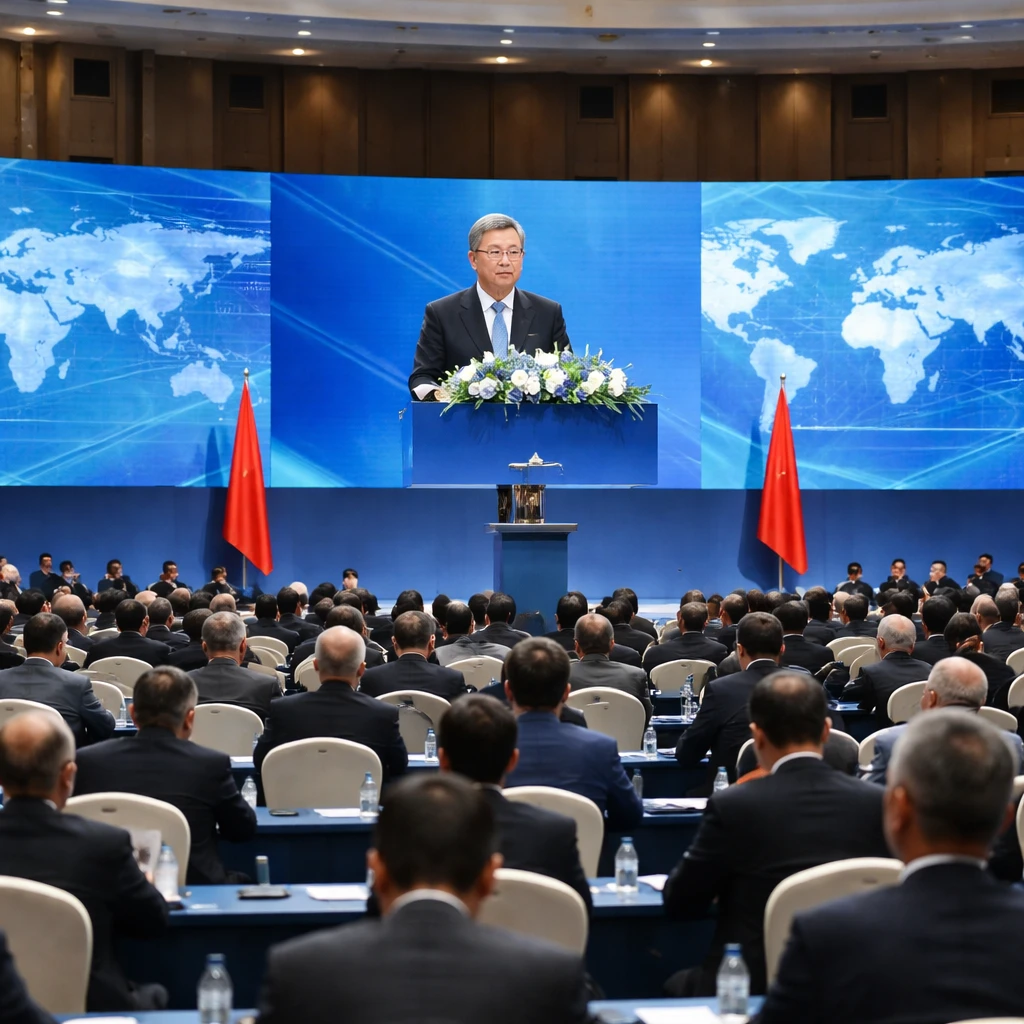
At the China Development Forum in Beijing, People’s Bank of China Governor Pan Gongsheng defended the nation’s expanding current account surplus. He argued that the surplus is, in effect, reallocated across global economies through the cross-border investments and financial activities of Chinese companies and institutions.
The comments arrive against the backdrop of a sharp jump in exports, which rose by more than 20% in the first two months of 2026. That surge has heightened concerns among some foreign trading partners about the competitive effect of low-cost Chinese shipments on domestic manufacturing sectors.
Officials pointed to the magnitude of the imbalance. China’s goods trade surplus reached a record $1.2 trillion last year. Preliminary quarterly data showed a $242 billion surplus in the most recent quarter, prompting Goldman Sachs Group Inc. to raise its forecast for China’s 2026 current account surplus to 4.3% of GDP from a prior 4.1% estimate.
Pan attributed part of the distortions to what he described as "non-economic factors," naming examples that include tariff-induced front-loading by U.S. firms and restrictive export controls. According to his remarks, such measures have altered expectations for businesses and consumers around the world.
To address growing geopolitical and trade frictions, Premier Li Qiang used the same forum to promise steps intended to broaden market access for China’s services sector and to boost imports of higher-value goods, specifically citing medical products as an example. That pledge is positioned as a partial offset to the country’s persistent goods surplus: Beijing notes that while it runs the world’s largest goods trade surplus, it also posts the world’s largest services trade deficit.
Investors and market participants are watching closely to see whether the announced concessions on services access and higher-value imports will be sufficient to defuse pressure from Western economies that have expressed concern about a flood of Chinese industrial output. The central bank governor’s framing - that outward investment and financial flows redistribute current account gains internationally - is intended to counter narratives that portray the surplus as a purely domestic accumulation of external imbalances.
Market implications are being assessed across sectors. Export-oriented manufacturing faces scrutiny from trading partners, while services providers and suppliers of high-value medical and technology goods could see altered demand dynamics if promised market openings and import increases materialize.
Summary: PBoC Governor Pan Gongsheng defended China’s record goods surplus at the China Development Forum, saying outbound investment and financial flows spread the current account surplus globally. Exports jumped more than 20% in the first two months of 2026, and the goods surplus hit $1.2 trillion last year. Goldman Sachs raised its 2026 current account surplus forecast to 4.3% of GDP after a recent $242 billion quarterly surplus. Pan pointed to "non-economic factors" such as U.S. tariff-induced front-loading and export controls as contributors to distortions. Premier Li Qiang pledged broader services market access and increased imports of higher-value goods, including medical products. Investors are watching whether these measures will avert fresh protectionist responses.