
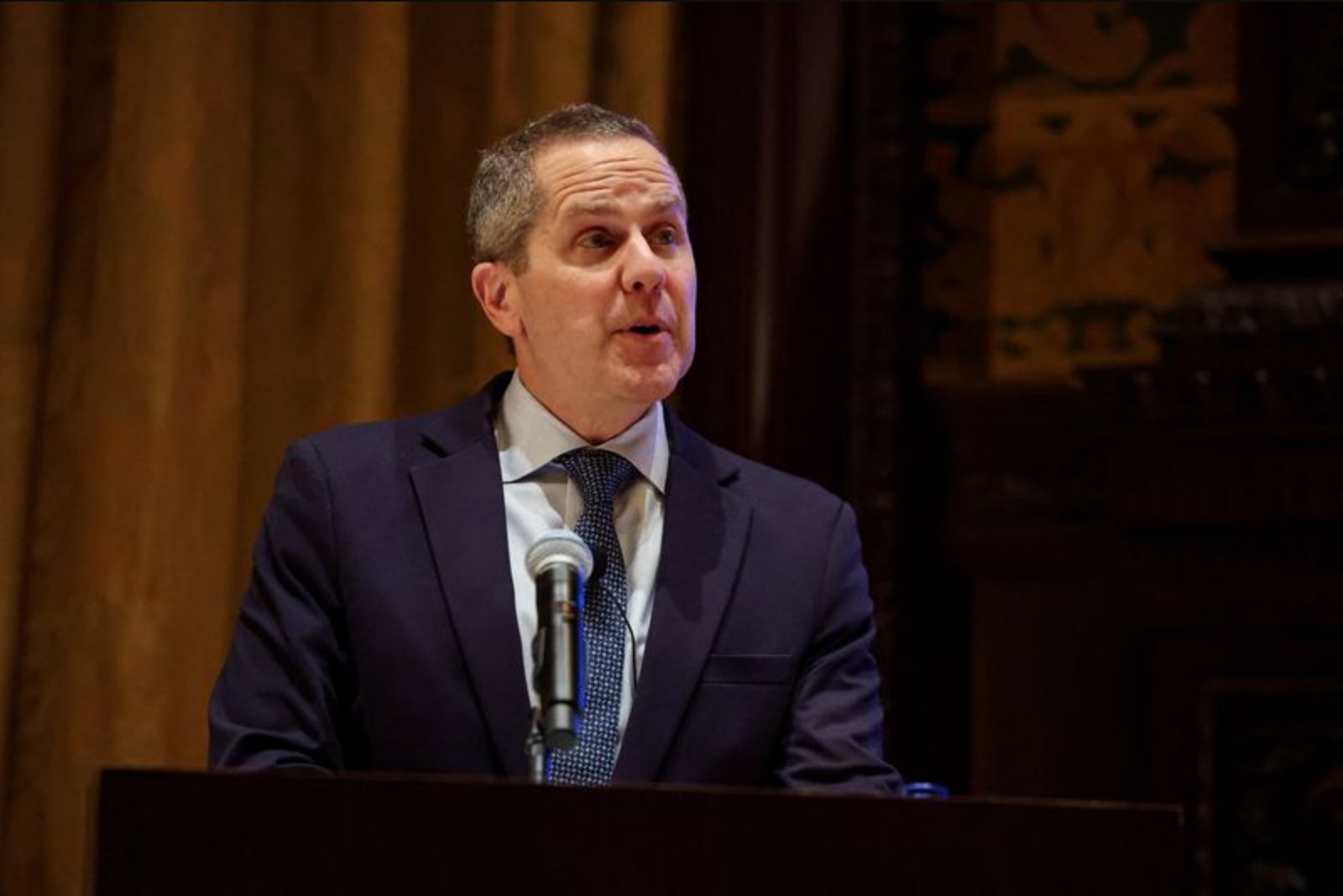
WASHINGTON, March 26 - Federal Reserve Governor Michael Barr warned on Thursday that a significant increase in oil prices could spark a rise in inflation expectations that the Fed must guard against, reinforcing his view that policymakers should proceed cautiously before cutting interest rates further.
Speaking from prepared remarks for a Brookings Institution event, Barr said that if the Iran conflict "continues for some time, the spike in energy prices and other commodities could have broader implications for both prices and economic activity." He added that such a price shock could push near-term inflation expectations higher and, with five years of elevated inflation behind the economy, he is particularly worried the shock could also feed into longer-term expectations.
"We have had five years now of inflation at elevated levels, and near-term inflation expectations have risen again, so I am particularly concerned that yet another price shock could increase longer-term inflation expectations," Barr said. He noted that rising expectations can make inflation more difficult to tame because firms and households might set wages and prices with higher inflation in mind.
Given that risk, Barr said policymakers should be "especially vigilant." He argued that, "Given the considerable uncertainty about the potential effects of developments in the Middle East on our economy, as well as the other factors I mentioned, it makes sense to take some time to assess conditions," before loosening monetary policy further.
Last week the Federal Reserve left its policy interest rate unchanged in the 3.5% to 3.75% range. Recent increases in oil prices have shifted investor expectations, with market participants now anticipating that the Fed may not cut rates at all this year and could even raise them if inflation accelerates. Policymakers, however, continue to project a single quarter-point rate reduction by the end of the year.
Barr also highlighted concerns about the banking system. He said that recent regulatory decisions and reductions in supervisory staff have, in his view, weakened the resilience of the banking sector. Those changes were pressed by his successor as the Fed's Vice Chair for Supervision, Michelle Bowman, who has advocated dialing back what she contends was overly restrictive regulation implemented after the 2007 to 2009 financial crisis.
"The safety and soundness of the banking system is built on trust, and I fear we are eroding that trust," Barr said, underscoring his worry that regulatory rollbacks and supervisory cuts could leave banks less prepared to absorb shocks.
Summary
Governor Michael Barr cautioned that a persistent spike in oil and other commodity prices tied to the Iran conflict could lift both near-term and longer-term inflation expectations, complicating the Federal Reserve's plan to cut interest rates. He recommended waiting to assess economic developments before easing policy and also warned that recent regulatory and supervisory changes have weakened banking-sector resilience.
- Key points
- Energy-driven price shocks could raise inflation expectations and make inflation harder to control - affecting consumer prices and corporate wage-setting.
- The Fed has paused policy tightening, keeping the funds rate at 3.5% to 3.75%, while policymakers still expect one quarter-point cut by year-end.
- Barr said recent regulatory decisions and supervisory staff cuts have eroded banking-system resilience, a risk for financial stability.
- Risks and uncertainties
- Prolonged disruptions tied to the Iran conflict could sustain higher oil and commodity prices, impacting inflation and economic activity - particularly in energy-sensitive sectors and consumer-facing industries.
- Rising inflation expectations could feed into wages and prices, complicating the Fed's ability to bring inflation back to target - with consequences for interest-rate markets and borrowing costs.
- Regulatory rollbacks and supervisory staffing cuts may reduce banking resilience, increasing vulnerability in the financial sector to economic shocks.
Tags: inflation, Fed, oil, banking, interest-rates