
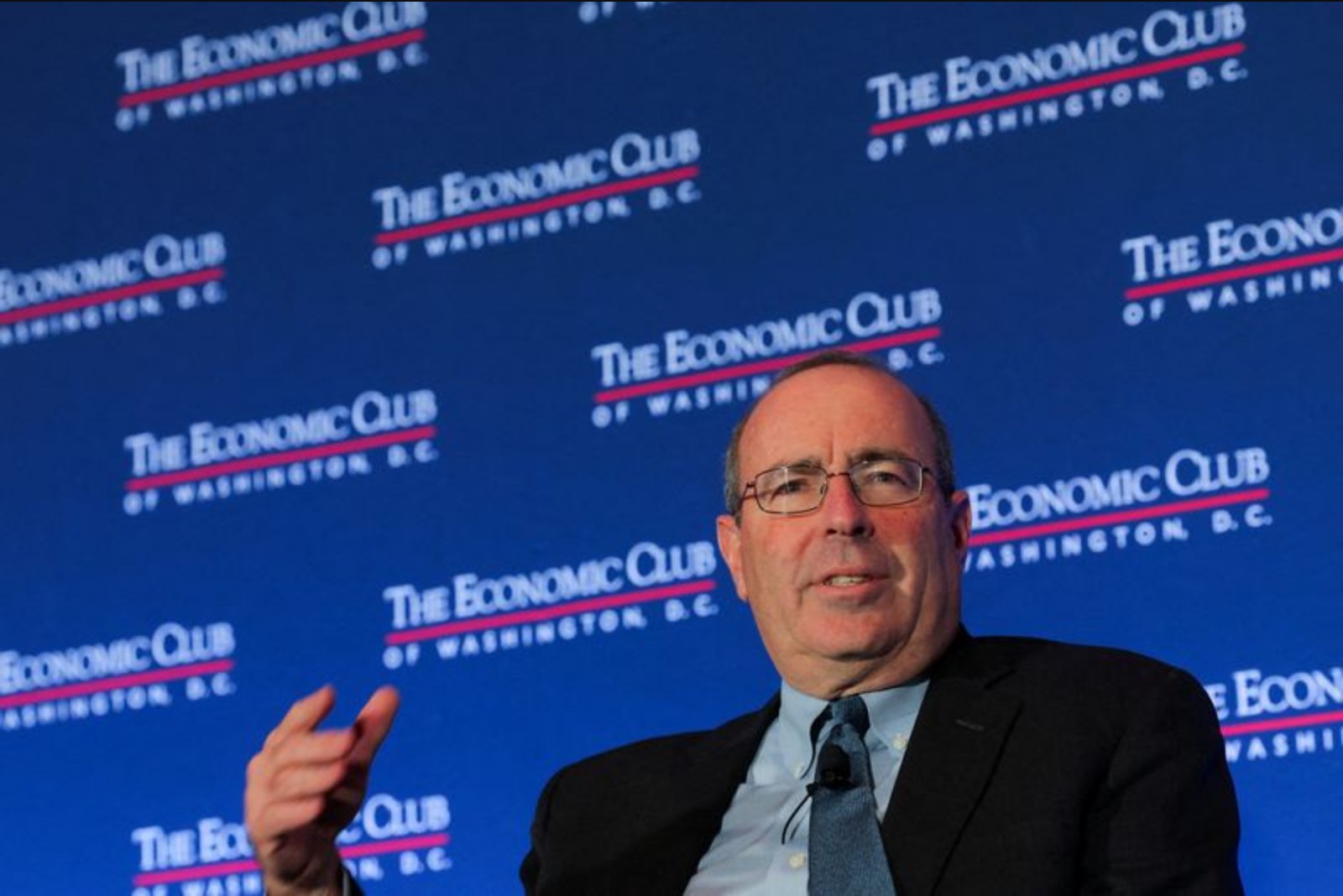
Richmond Federal Reserve Bank President Tom Barkin said he continues to see evidence that both households and businesses are treating the recent surge in oil prices as a temporary disruption rather than a lasting structural shock.
Speaking with Reuters on Tuesday, Barkin said his conclusion rests on regular checks of weekly credit card spending and ongoing conversations with executives about pricing, investment decisions and other operational matters. "My instinct is youve still got a short-term lens on this," he said, noting that while gasoline spending has risen markedly, overall consumer outlays remain broadly healthy.
"Gas spending is up a lot, obviously, but the rest of spending still looks pretty healthy," Barkin said. He added that if consumers believe the price increase will last only a few weeks, an additional $10 to $15 in gasoline costs is painful but not life changing. "If you think this is going to last for a long time thats when I think youre more likely to see pullback," he said.
The comments come amid a period of heightened uncertainty following the start of U.S. airstrikes in Iran and a subsequent jump in global oil prices. Central bankers worldwide, including the Fed, have responded with a mix of concern about the inflationary risks and caution about making premature policy moves until the persistence of the shock becomes clearer.
At its most recent meeting, the Federal Open Market Committee left the policy interest rate unchanged in the current 3.50% to 3.75% range, with officials still projecting a single quarter-point reduction by the end of the year. Barkin himself is not a voter on interest rate policy this year.
The environment has been volatile. Benchmark Brent crude briefly climbed above $119 a barrel - more than 70% higher than before the U.S. commenced bombing - then fell back toward $102 after President Donald Trump signaled that the U.S. campaign may be nearing its end. The president is scheduled to address the nation on Wednesday night.
Retail gasoline prices reflected the oil-market swings. AAA reported that the national average for a gallon of regular gasoline rose again on Wednesday to $4.06, the highest level since the summer of 2022. That prior peak coincided with pandemic-era supply disruptions and elevated consumer demand that produced the steepest surge in inflation in four decades.
Investors briefly reacted to the recent oil spike by pricing in the possibility of tighter policy, anticipating that the Fed might resume raising rates rather than proceed to the easing that markets had earlier penciled in. Barkin said the range of potential Fed moves remains wide and will depend on incoming data and any signs that inflation expectations are shifting.
"The hike case would be around inflation expectations starting to finally move," he said. "I dont have a sense that theyve broken out at this point." Were expectations to move decisively higher, he suggested, policymakers would feel compelled to demonstrate their commitment to returning inflation to their 2% objective.
Conversely, Barkin said, the argument for rate cuts would be grounded either in a fairly rapid slide of inflation back toward the Feds 2% target from its current position about a percentage point above that level, or in a weakening labor market that would justify policy support.
Attention is turning to the jobs numbers for further guidance. The employment report for March, due Friday, will be watched closely to determine whether the job losses recorded in February were a one-off occurrence or the beginning of a broader softening in labor-market conditions. Absent clear weakness, Barkin suggested the Fed may remain on hold, with only slow progress toward the inflation goal given the sequence of price shocks under the current administration that began with tariffs and continued with the recent oil move.
Barkin described an emerging split between the goods and services sectors in terms of pricing power. In conversations with retailers and other executives, he said suppliers of physical goods increasingly find their ability to pass through higher costs limited by consumer pushback, particularly among lower- and middle-income shoppers.
After meeting with one retailer focused on lower- to middle-income customers, Barkin said he came away with the impression that consumers are nearing their tolerance for price increases. "I had the strong sense that consumers are exhausted by price increases," he said. "Theyre pushing back. I walked out with the lens that 1% to 2% (of price increases) ... that would be about as much as they could handle."
By contrast, he said, some service-sector firms - particularly those that sell to higher-income households - appear to have greater latitude to raise prices. "Where theres more vulnerability is on the services side, particularly selling to high-end customers," Barkin said. "Goods suppliers whove been through the drill multiple times with trying to pass on tariffs and trying to pass on oil shock costs, they just dont feel theyve got much left. I dont have the same feeling on services."
The practical implication, Barkin said, is that progress back to the Feds inflation target will likely be slow rather than rapid. That view is mirrored in market expectations that have largely removed near-term rate hikes from the table while viewing the Fed as likely to remain paused well into 2027 before cutting rates.
"I see a gradual path, not a quick path. Thats my instinct," he said.
Key takeaways
- Households and businesses appear to be treating the recent oil-driven jump in energy costs as a temporary shock rather than prompting large-scale pullbacks in spending.
- Barkin cites weekly credit card spending data and recurring conversations with executives as evidence supporting a short-term lens on the shock.
- Pricing power looks weaker in goods than in services, with retailers serving lower- and middle-income consumers facing pushback on further price increases while some service providers feel freer to raise prices.
Outlook
Barkin emphasized that the Feds next moves hinge on the durability of the oil price shock and whether inflation expectations begin to move higher. If expectations remain anchored, the case for further tightening is diminished. If they begin to drift upward, policymakers would face pressure to demonstrate their commitment to the 2% inflation goal.