
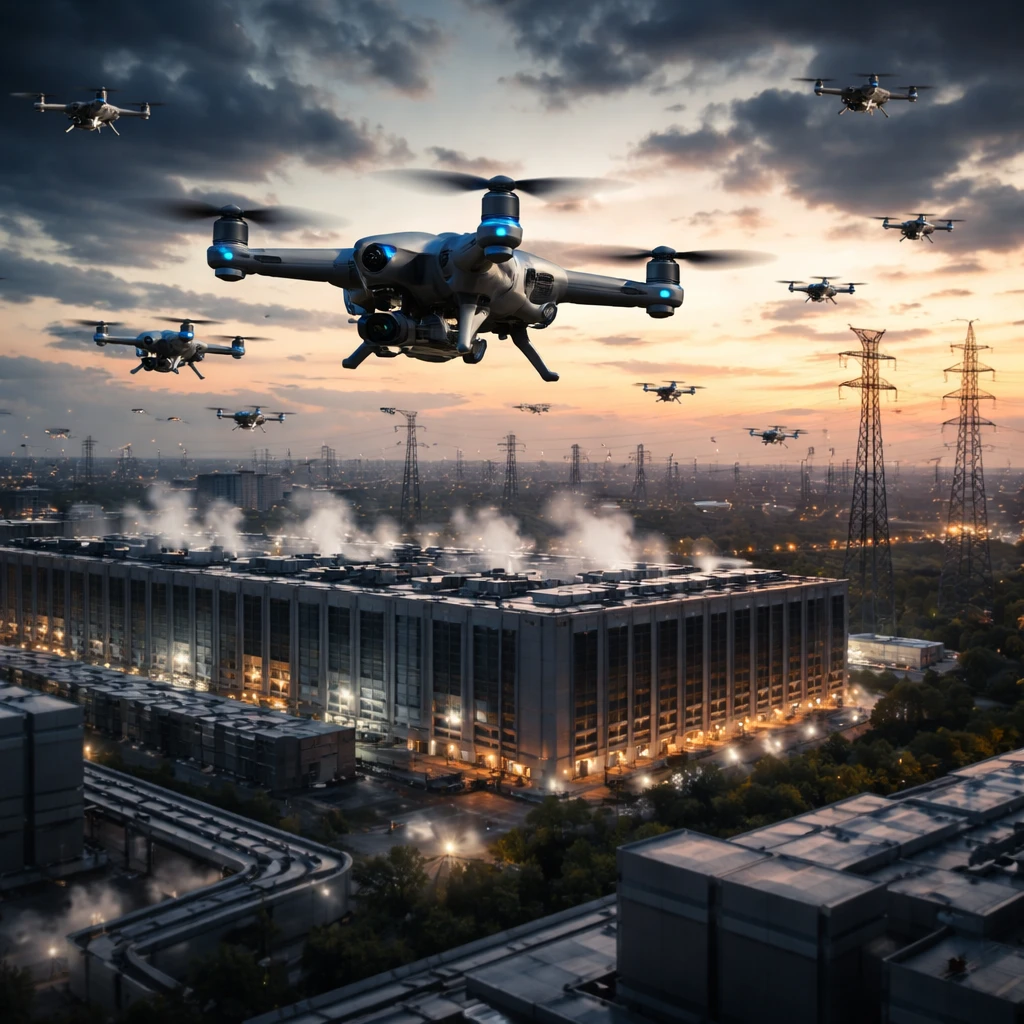
A Barclays (LSE: BARC) special report concludes that the worldwide market for drones is poised for a major expansion, reaching an estimated $250 billion by 2035. The firm attributes this growth to the increasing integration of artificial intelligence into unmanned aerial systems, a development Barclays refers to as "Physical AI."
The report emphasizes that individual, single-use drone units remain comparatively inexpensive in isolation, frequently priced under $50,000. However, Barclays draws a distinction between the cost of standalone units and the broader, higher-cost ecosystem needed to field large-scale autonomous swarms. That ecosystem - spanning software, compute infrastructure, and data processing - is the primary engine driving the market's projected expansion.
Barclays analysts note a recent acceleration in the sector's size, with the market roughly doubling from about $20 billion in 2020 to more than $40 billion in 2025. This growth trajectory positions drone technology as one of the largest engines of expansion within the technology sector, second only to autonomous vehicles according to the report's assessment.
The report outlines a structural shift in where value is concentrated. As AI capabilities become central to drone operations, investment emphasis moves away from hardware manufacturing and toward compute resources, software platforms, and data center capacity. That shift means defense contractors and other manufacturers will need competencies conventionally associated with technology firms, particularly in robotics and real-time AI processing.
Barclays characterizes several constraints that could shape the path of deployment. Beyond traditional defense budgets, future scaling of autonomous drone systems will increasingly depend on AI-related capital expenditure, availability of energy to power substantial compute loads, and access to critical minerals needed for specialized components. The report highlights that the significant power requirements for AI data centers and the demand for certain components could become limiting factors for innovation over the coming decade.
On operational economics, Barclays suggests that the "Physical AI" movement could lower long-term operating costs by reducing the need for human personnel in hazardous environments. At the same time, the firm warns that the front-loading of investment into software and autonomous decision-making systems will shift expenditures up-front, effectively turning some defense contractors into companies with sizable technology and software commitments.
Finally, the report points to the geopolitical dimensions of widespread autonomous deployment. The capacity to field low-cost, high-impact systems at scale is described as a tactical advantage that conventional platforms may find difficult to match, intensifying the strategic importance of the drone industry.
Key points
- Barclays projects the global drone market will reach $250 billion by 2035, driven by the integration of AI into unmanned systems.
- The industry's value is shifting from hardware manufacturing toward compute, software, and data centers as drones become increasingly autonomous.
- Scaling deployment will depend on AI capital expenditure, energy capacity, and access to critical minerals, affecting sectors such as defense, technology, energy, and mining.
Risks and uncertainties
- Energy and mineral bottlenecks: High power demands for AI data centers and competition for specialized components could slow progress and limit deployment scale.
- Front-loaded software and compute costs: The need for substantial up-front investment in software and autonomous decision systems may strain traditional defense budgets and alter contractor business models.
- Geopolitical implications: The strategic advantage of scalable, low-cost autonomous systems raises uncertainty about how states will respond, which could affect market dynamics.