
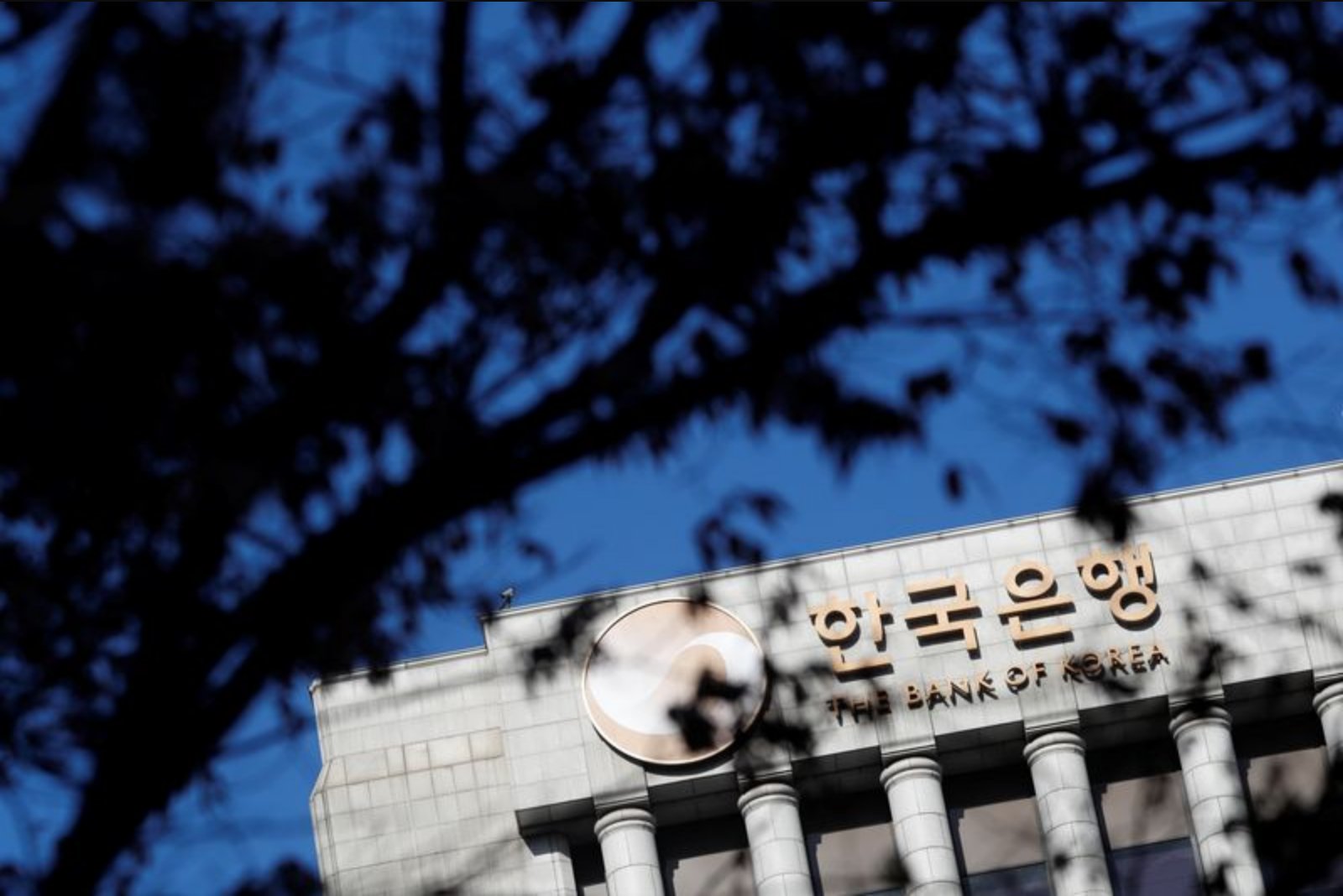
Seoul - South Korea's central bank opted to maintain its policy interest rate on Friday, leaving the benchmark unchanged at 2.50% as concerns grow that the conflict in Iran could push inflation higher and weigh on economic growth in a country reliant on Middle Eastern energy supplies.
The Bank of Korea's seven-member monetary policy board voted to keep the rate steady, a decision that matched the expectation of all 31 economists polled by Reuters.
Analysts said the combination of a rebound in inflation driven by higher energy costs and a softer won has reduced room for additional policy easing. At the same time, officials are assessing whether domestic demand is robust enough to justify any tightening.
On the fiscal side, President Lee Jae Myung has been advocating for a 26.2 trillion won additional budget intended to relieve households and businesses from rising fuel bills, after the Dubai crude benchmark more than doubled in March.
In a separate poll of longer-term views, 30 economists offered forecasts through 2026: 26 of them expected no change in the policy rate through 2026, three projected a year-end rate of 2.75%, and one forecast a rate of 3.00%.
Cho Yong-gu, an analyst at Shinyoung Securities, noted the trade-offs policymakers face. "There certainly are downside risks to growth from the Middle East conflict but momentum seems to be solid for now thanks to brisk exports and a planned extra budget," he said. "I expect the BOK to stay more neutral than excessively hawkish, given we have a major supplementary budget coming."
Governor Rhee Chang-yong will hold a press conference at 0210 GMT, which will be live-streamed via YouTube. This will be his last policy decision news conference as Shin Hyun-song, an Oxford-educated economist, has been nominated to lead the Bank of Korea after Rhee's term ends on April 20.
The market reference for the exchange rate is noted at $1 = 1,478.4000 won.
Context and immediate outlook
The central bank's unanimous vote to stand pat reflects concern that external shocks tied to the Middle East could lift energy prices and import-driven inflation, while a weaker currency tightens domestic financial conditions. Policymakers are balancing those external pressures against support for growth, including a sizeable supplementary budget proposed by the government to offset fuel-cost pain for households and businesses.