
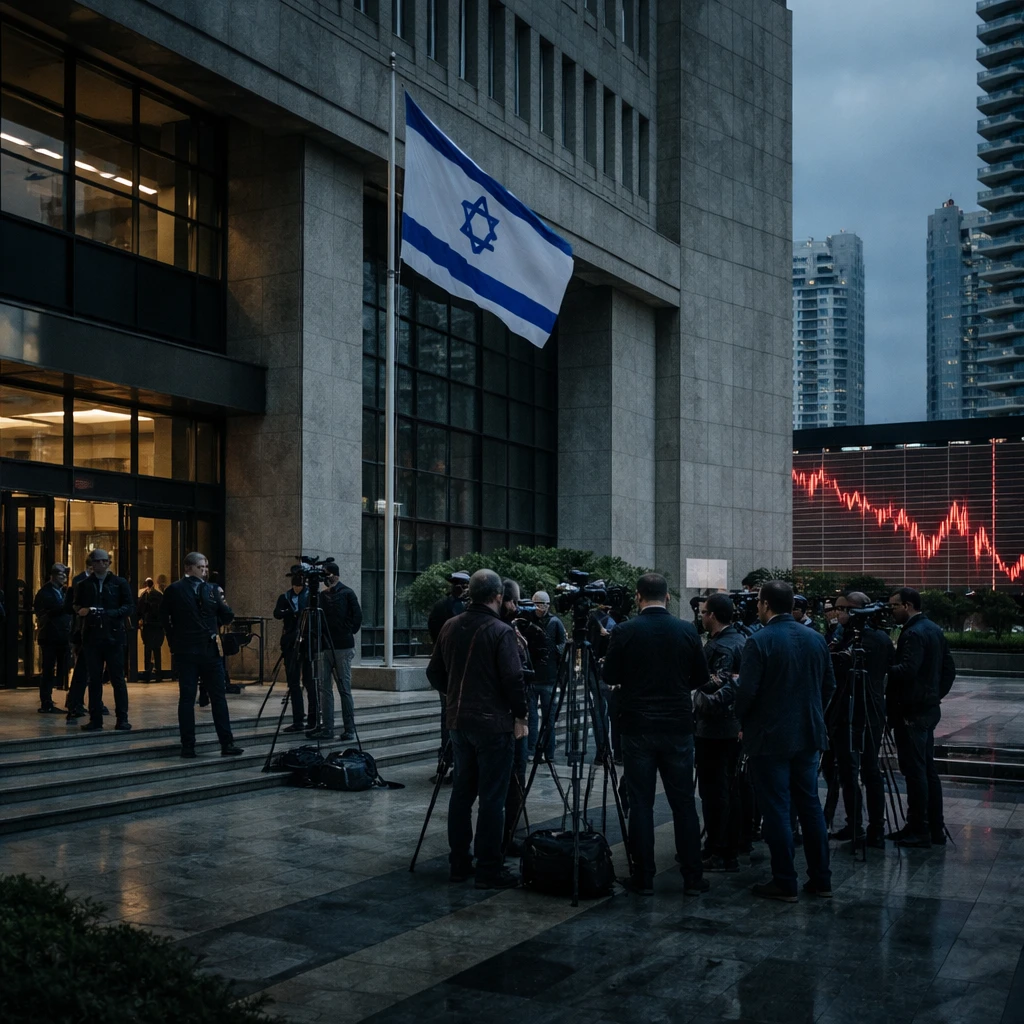
The Bank of Israel announced on Monday that it would keep its main interest rate steady at 4%, aligning with the expectations of all economists polled by Bloomberg. The decision underscores a deliberate, cautious approach as policymakers contend with elevated uncertainty tied to the ongoing conflict with Iran.
Central Bank Governor Amir Yaron is scheduled to hold a press conference after the rate announcement, where he is expected to outline the bank's assessment of current conditions and the rationale for maintaining the policy rate.
In the run-up to the decision, Israeli financial markets experienced volatility. The Tel Aviv Stock Exchange 35 Index fell for a third consecutive session, extending its losing streak to the longest run since the war with Iran began in late February. The selling pressured market sentiment ahead of the central bank's move.
Officials framed the rate pause as a balancing act - maintaining a stance intended to support economic stability while remaining attentive to inflationary impulses that have been amplified by the military conflict. The central bank's position reflects sensitivity to both domestic and global inflation concerns linked to the geopolitical situation.
Observers noted that the decision to hold rates steady did not signal a relaxation of the central bank's vigilance toward price pressures. Instead, it conveyed a preference for waiting for further information as uncertainty persists, particularly given the ties between the conflict and inflationary developments mentioned by policymakers.
Summary
The Bank of Israel kept its key rate at 4% on Monday, matching Bloomberg survey expectations. The move reflects caution as the conflict with Iran continues to influence inflation concerns both domestically and internationally. Markets showed pre-announcement volatility, with the TA-35 posting a three-day decline.
- Key points
- The policy rate remains at 4%, in line with economists' forecasts.
- Geopolitical tensions with Iran are cited as contributing to inflationary concerns.
- Market volatility was evident, with the TA-35 falling for a third straight day, marking its longest losing streak since the conflict escalated in late February.
- Sectors impacted
- Financial markets and equities, reflected in TA-35 movements.
- Broader economy through inflation dynamics and monetary policy transmission.
- Risks and uncertainties
- Persistent inflationary pressures linked to the conflict with Iran - could affect monetary policy decisions and real incomes.
- Elevated economic uncertainty from geopolitical developments - contributes to market volatility and may complicate planning for businesses and investors.
- Continued declines in equity indexes, as seen in the TA-35's recent streak, pose downside risks to market confidence.
The central bank's choice to pause on tightening or loosening policy reflects a judgment that current conditions warrant stability while officials monitor inflation trends and economic signals in the context of an ongoing geopolitical shock. Governor Yaron's forthcoming press conference will provide further detail on the bank's outlook and potential future moves.