
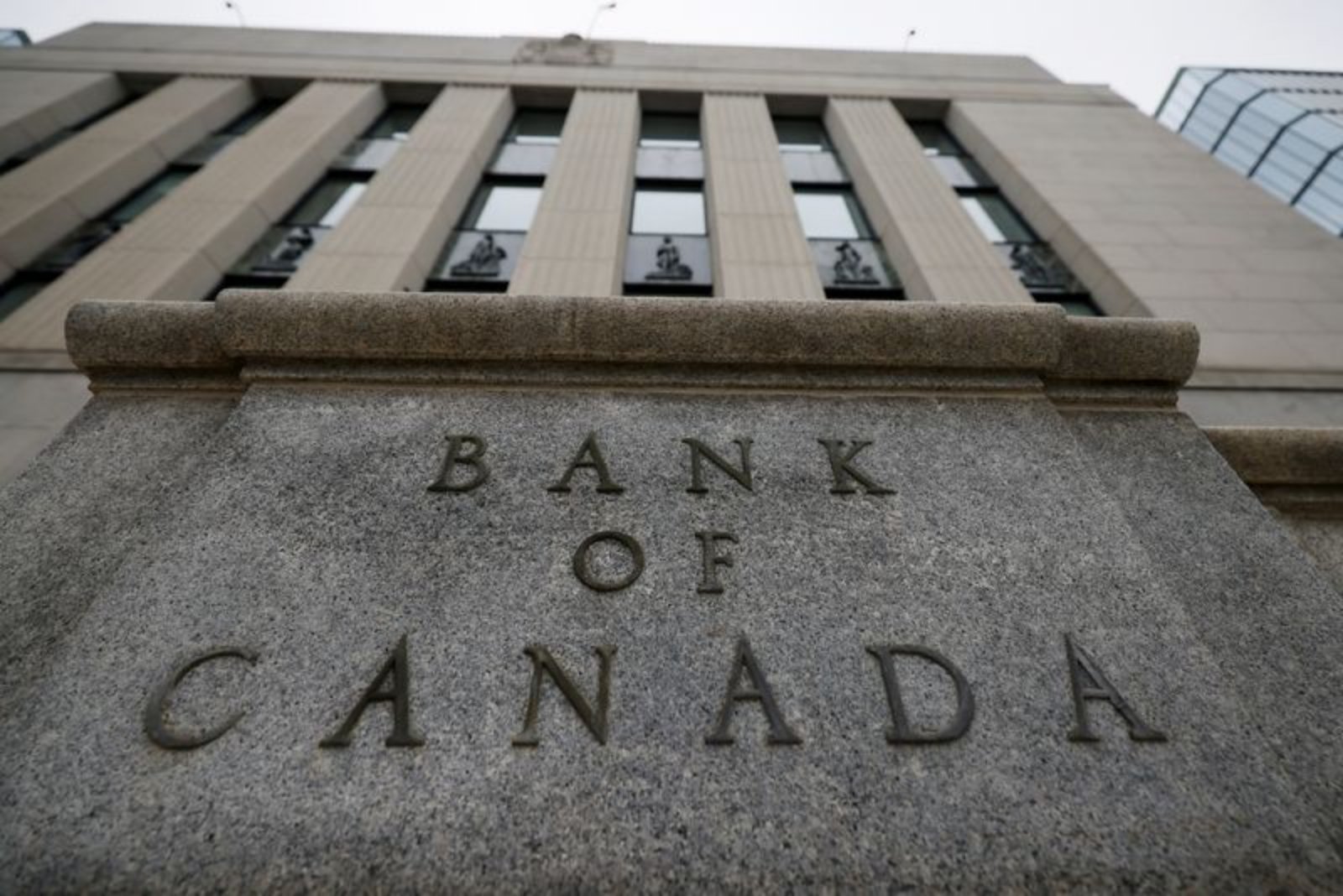
The Bank of Canada is widely expected to maintain its key interest rate when it issues its decision on Wednesday, after a series of recent data releases showed the Canadian economy has been broadly stable and largely tracking the central bank's prior outlook despite the effects of U.S. tariffs.
After cutting its policy rate by 25 basis points in late October, Governor Tiff Macklem said borrowing costs were "at about the right level" and that the bank would keep the benchmark rate on hold if the economic outlook remained largely unchanged. The BoC left its policy rate at 2.25% last month, which it describes as the lower end of the neutral range - the level at which policy neither stimulates nor restricts the economy.
Economists and market participants have interpreted the recent flow of information as consistent with a period of policy inaction. "They will be content to see where things are headed before moving again," said Pedro Antunes, chief economist at the Conference Board of Canada, an independent think tank. Antunes added that the central bank is likely to remain on the sidelines and would only resume cutting rates if adverse economic news warranted further easing.
The negative impact of U.S. tariffs on Canadian imports has, to date, been mostly confined to the steel, lumber and auto sectors, while the broader North American trade framework has remained intact. A poll of 35 economists released on Friday showed nearly 75% forecast that the central bank will keep rates steady through 2026, a larger share than the just over 60% who expected that outcome in December.
Money markets currently price Canadian monetary policy as likely to remain on hold or tilt modestly toward easing through mid-2026, with expectations shifting toward modest tightening in the final quarter of that year. The bank's announcement is scheduled for 9:45 a.m. EST (1445 GMT).
The Bank of Canada will also publish its quarterly Monetary Policy Report alongside the rate decision. In that report it will resume its prior practice of providing single-point forecasts for the economy and inflation. The report is expected to include an updated assessment of the economic impact of the federal budget announced by Prime Minister Mark Carney's government in November, along with the BoC's latest view on underlying inflation and refreshed forecasts for the economy and the job market.
Market strategists note a subtle shift in what policymakers may emphasize. "We anticipate that central bankers will sound less concerned about upside inflation risks and more concerned about downside growth risks," Royce Mendes, managing director and head of macro strategy at Desjardins Group, wrote in a note. Mendes added that such a tone could boost market expectations for a rate cut later this year, should downside risks materialize.
For now, both the public guidance from the central bank and the majority view among economists point to a period of policy stability, with potential for change only if new economic developments alter the outlook materially.