
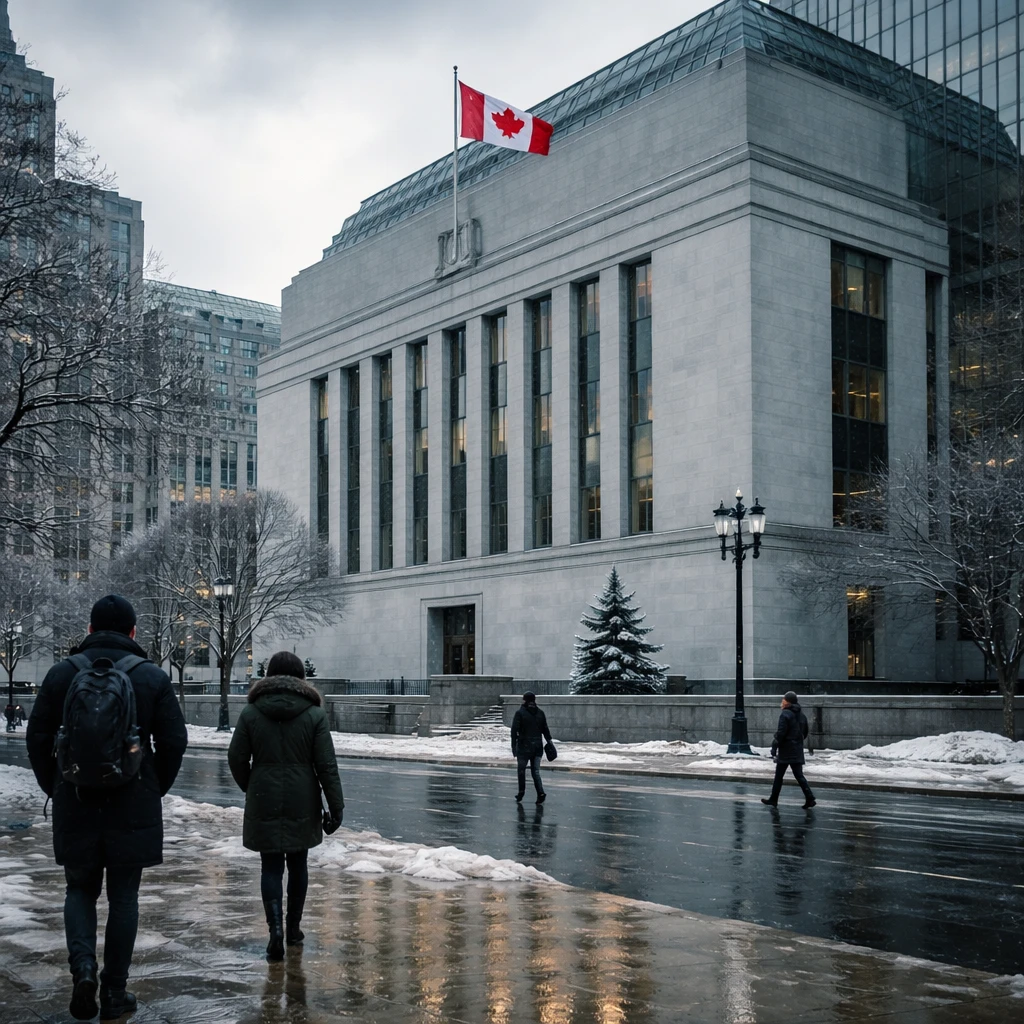
OTTAWA, Jan 28 - The Bank of Canada announced on Wednesday that it was maintaining its policy interest rate at 2.25%, a move that matched broad expectations. In its quarterly monetary policy report, the bank reiterated its view that inflation will track around the 2% target over the projection horizon and left its growth forecasts for the later years of the outlook largely intact.
Uncertainty complicates policy guidance
Governor Tiff Macklem emphasized that Council judged the current policy rate appropriate given the central bank's outlook, but added that the high degree of uncertainty made it difficult to forecast when or in what direction the next policy shift would occur. The bank noted this uncertainty during its opening remarks following the rate announcement.
The decision marks the second consecutive meeting in which the bank has held rates steady. The central bank's language and its report underline a cautionary stance: while some key indicators offer support for continued moderation of inflation, external and domestic factors cloud the path forward.
Outlook for growth and inflation
In the report, the Bank of Canada maintained its outlook for modest growth in 2026 and 2027. The bank said 2025 growth was 1.7%, revised up from the 1.2% projection published in October. The growth projection for 2026 remains at 1.1%, while the projection for 2027 was trimmed slightly to 1.5% from the 1.6% previously projected.
Inflation, the bank noted, is expected to hover around the 2% target across the projection period, with elevated uncertainty around that path. Governor Macklem pointed to offsetting forces related to tariffs and supply conditions that make the inflation outlook less clear.
Tariffs, supply and business adjustment
The bank said the economy continues to adjust to the effects of U.S. tariffs, which hit critical sectors including steel, autos and aluminum. It flagged that hiring intentions remain soft and that businesses will take time to adjust to the new trade environment. Macklem reiterated that upward pressure on prices from tariffs could be counterbalanced by downward pressure from excess supply arising as the economy restructures.
Household spending is expected to continue growing modestly, supported by prior rate cuts and rising disposable incomes, and the central bank anticipates a modest pickup in business investment as firms adapt to the changing trade landscape. The bank expressed hope that the ongoing restructuring related to tariffs will, over time, support some recovery in productive capacity, but stressed that the process will take time.
Markets, FX and risks
Economists and market participants remain divided on the path of monetary policy. Some economists project another easing to support the economy in the face of tariffs, while money markets are pricing in no cuts through 2026 and in fact tilt toward a hike late in that year. Money market positions showed little reaction to the announcement.
The Canadian dollar strengthened modestly after the decision, trading up 0.28% at C$1.3535 to the U.S. dollar, equivalent to 73.88 U.S. cents.
Macklem also flagged elevated geopolitical risks and singled out the upcoming review of the Canada-United States-Mexico Agreement as an important risk to the economic outlook.
Bottom line
The Bank of Canada left its policy rate unchanged at 2.25% and maintained a cautious outlook. With inflation near target and growth seen as modest in the medium term, the central bank emphasized that elevated uncertainty - from tariffs to geopolitical developments - makes the timing and direction of the next rate move hard to predict.