
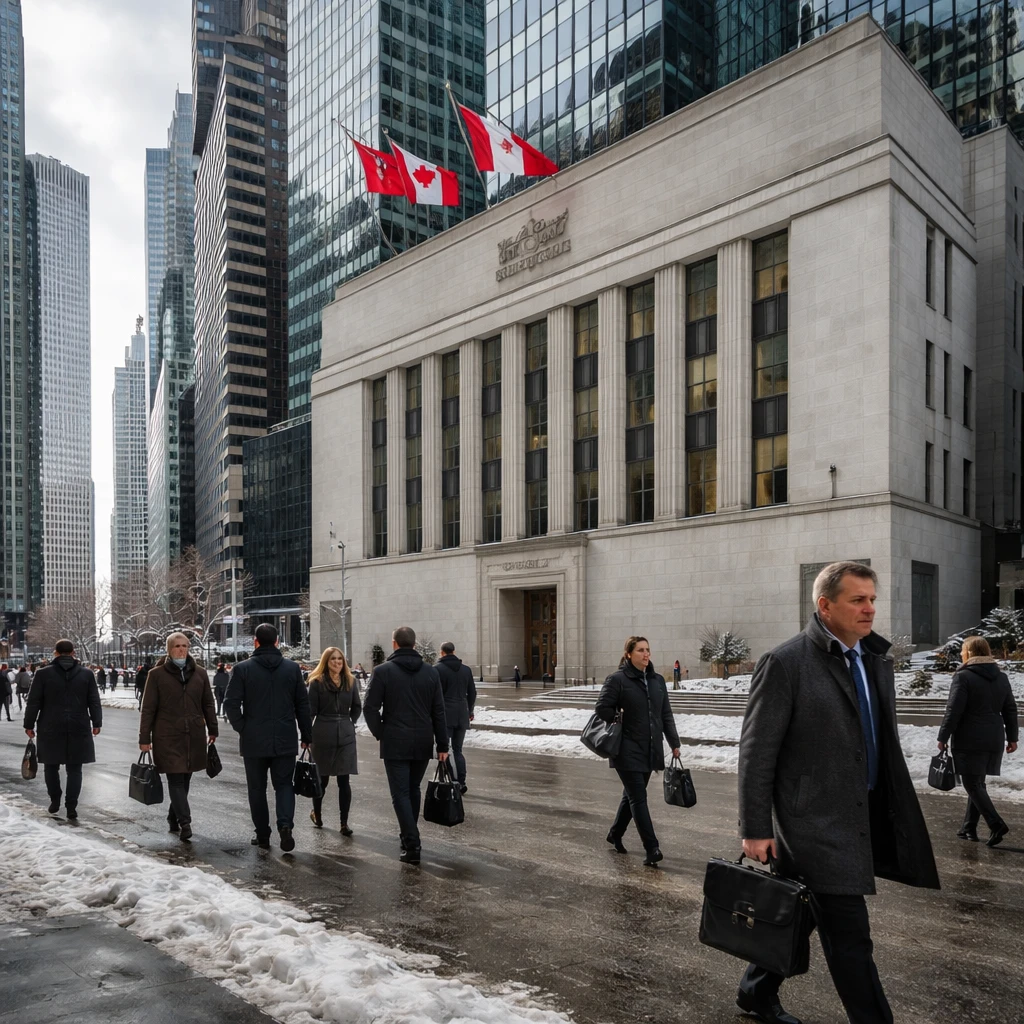
The Bank of Canada is projected to maintain its overnight rate at 2.25% through 2026, according to a Reuters survey of 35 economists conducted between January 20-23. This consensus reflects a stronger majority than last month, with approximately 75% of respondents now anticipating no rate changes during the period, compared with just over 60% in December. Economists attribute this steady stance to mixed economic signals and emerging risks to the outlook.
Following a period of aggressive rate cuts totaling 275 basis points between June 2024 and October 2025—a move that positioned Canada among the most proactive central banks within the G10—the Bank of Canada has signaled an extended pause. Recent economic indicators present a nuanced picture: December saw a halt in job growth after three consecutive months of increases, resulting in an uptick in the unemployment rate. Concurrently, inflation edged above expectations, though key core inflation measures remained subdued.
Some economists warn that potential trade friction with the United States, Canada’s principal export partner, warrants caution. The looming review of the U.S.-Mexico-Canada Agreement (USMCA) scheduled for July introduces uncertainty. Should tariffs expand beyond current sectors—autos, lumber, aluminum, and steel, which have seen U.S. duties as high as 50%—economic growth could falter further, possibly necessitating additional rate cuts by the central bank.
Economist Avery Shenfeld from CIBC Capital Markets describes the current tone as one of cautious observation, noting that any monetary policy changes within the year would more likely involve rate reductions than hikes. Despite current rates sitting at the lower bound of the central bank’s neutral range (2.25%-3.25%)—implying neither stimulative nor restrictive impact—there remains considerable slack in the labor market and ambiguity regarding expansion velocity.
Canada's economic performance has demonstrated resilience amid sustained U.S. tariffs on key industries. The prevailing assumption among economists is that existing free trade conditions will persist through either a renegotiated agreement or prolonged negotiations maintaining the status quo. However, growing risks have prompted Canadian leadership efforts to diversify trade relations, evidenced by recent tariff reductions with China and strategic initiatives targeting partnerships in the Middle East aimed at reducing dependence on the U.S. market.
The latest forecast from the Reuters poll indicates that Canada’s GDP growth slowed sharply to an annualized 0.3% rate in the last quarter, down from 2.6% in the previous period. Nonetheless, growth is expected to rebound, accelerating gradually toward approximately 2% by late 2026. Median projections suggest average GDP growth of 1.2% in 2026 and 1.8% in 2027, compared to 1.7% growth recorded last year.
RBC senior economist Claire Fan highlights the economy as nearing a turning point, supported by prior substantial interest rate cuts that continue to stimulate activity. Furthermore, inflation is projected to remain near the mid-point of the Bank of Canada's 1%-3% target range, providing some assurance regarding price stability.