
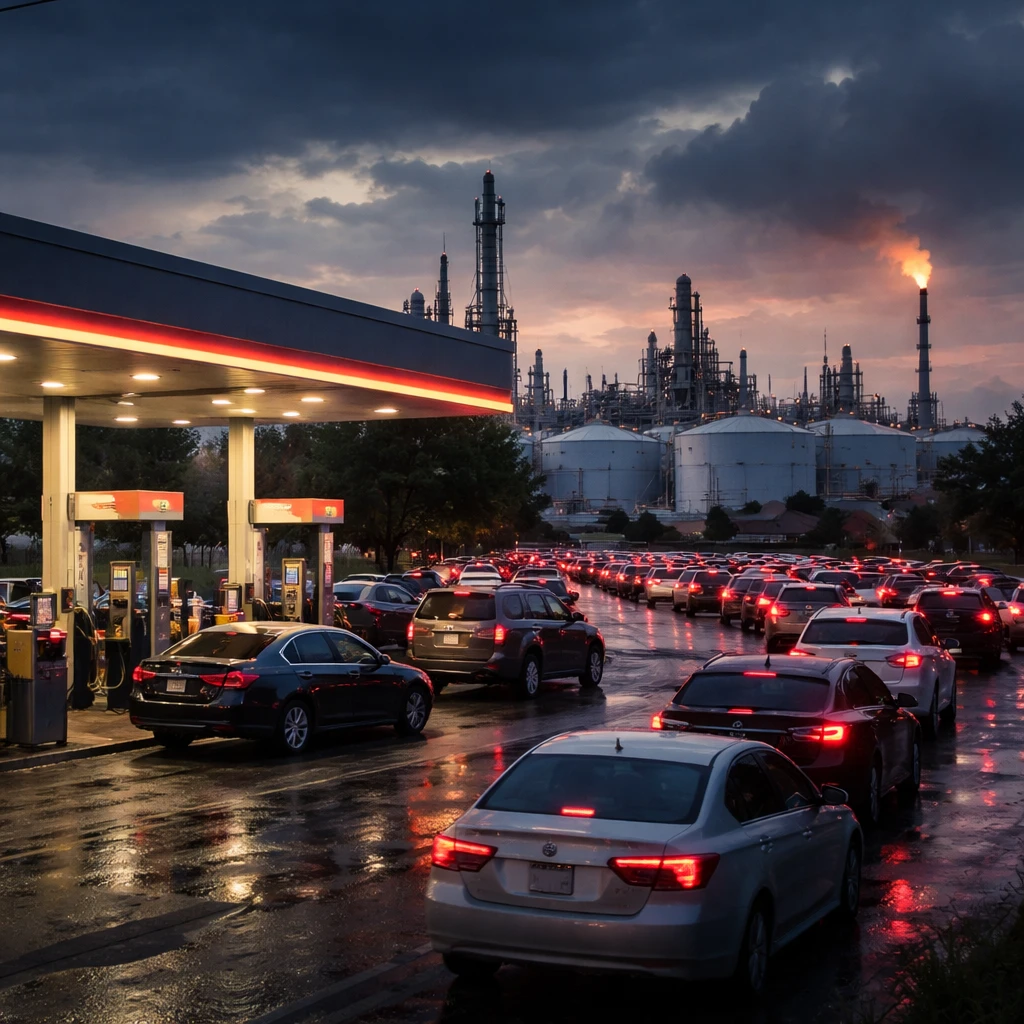
Bank of America has adjusted its inflation outlook after an internal update to its oil price projection, saying the jump in energy costs will lift U.S. headline inflation close to 4% in the coming months. The bank's U.S. economist, Stephen Juneau, revised the firm's macroeconomic forecast to reflect the higher oil assumption.
As a result of that update, headline PCE inflation is now projected to peak close to 4% this quarter. "We expect soaring energy prices to push headline inflation to nearly 4% y/y in coming months," Juneau wrote, summarizing the effect of the oil-price revision on the bank's inflation path.
BofA anticipates the spike in headline inflation will not be long-lasting. The bank's view is that headline inflation will decline relatively quickly next year as oil prices retrace from their recent highs. That projected retracement underpins the expectation of a subsequent drop in headline inflation.
Despite the expectation of a short-lived energy-driven surge, the bank cautioned that its overall price-level outlook has worsened compared with its prior forecast. BofA now sees price levels at the end of next year standing roughly 50 basis points above where it previously expected. The bank attributes that upward revision to higher food inflation anticipated in 2027, which it links to persistent fertilizer supply disruptions and continuing global supply-chain problems.
On the persistence of pressures, Juneau added that, "Sticky and broad-based supply disruptions are likely to keep inflation above target next year as well." That assessment points to more entrenched sources of price pressure beyond the immediate energy shock.
The revised inflation outlook adds to the challenges facing the Federal Reserve as policymakers weigh the path for interest rates. The combination of a near-term energy-led inflation spike and a higher-than-expected price level at the end of next year presents a more complicated backdrop for monetary policy decisions.
Key points
- BofA projects headline PCE inflation to peak close to 4% this quarter after updating its oil price forecast.
- The bank expects the energy-driven surge to be short-lived, with headline inflation falling next year as oil prices retrace.
- Price levels at the end of next year are now seen about 50 basis points above BofA's prior forecast, with higher food inflation in 2027 linked to fertilizer supply disruptions and ongoing global supply-chain problems.
Sectors affected
- Energy - direct impact via rising oil prices.
- Food and agriculture - exposed to fertilizer supply disruptions and higher food inflation.
- Financial markets and monetary policy - complications for the Federal Reserve's outlook and interest-rate considerations.
Risks and uncertainties
- Uncertain path of energy prices - if oil does not retrace as expected, headline inflation could persist longer than projected. (Impacts energy and consumer sectors.)
- Fertilizer supply disruptions - ongoing constraints could sustain higher food inflation into 2027. (Impacts agriculture and food sectors.)
- Broader supply-chain problems - persistent and wide-ranging disruptions may keep inflation above target next year. (Impacts manufacturing, trade-exposed industries, and consumers.)
The bank's revised outlook underscores the interplay between commodity price swings and broader supply-side frictions, and how these forces complicate the inflation outlook and the policy environment for the Federal Reserve.