
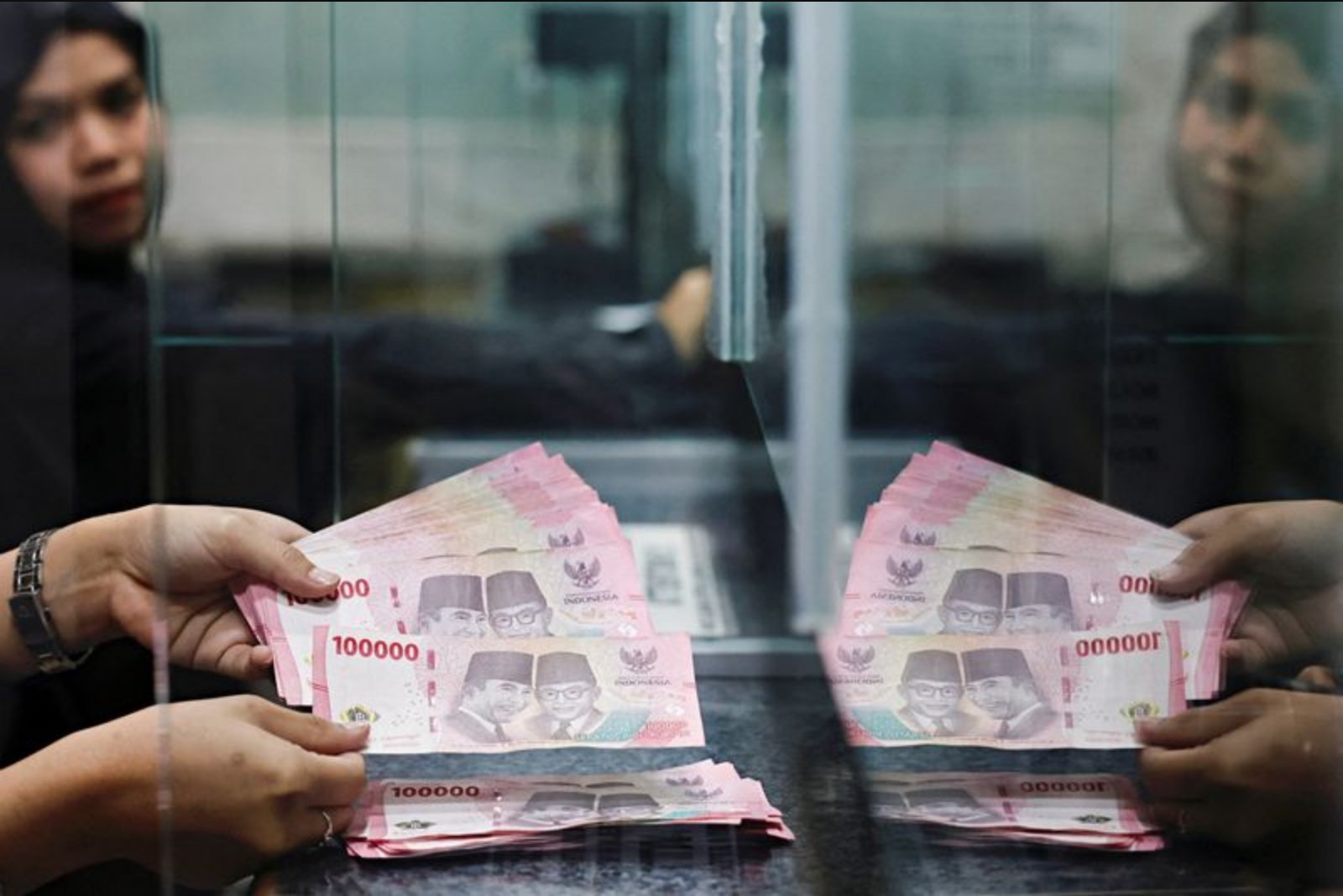
JAKARTA - Bank Indonesia left its benchmark rate unchanged at 4.75% on Thursday, marking a fifth straight policy review without a change as authorities concentrate on stabilising the rupiah following recent market turmoil and weakening investor confidence.
Governor Perry Warjiyo told an online press conference that the central bank views the rupiah as "undervalued" relative to Indonesia's economic fundamentals and plans to intensify intervention in currency markets, both onshore and offshore. He attributed the currency's recent slide largely to global market uncertainty.
"Of course, if we look at exchange rate movements, there are two main factors ..., namely fundamental factors such as inflation indicators, economic growth, yields, and other indicators, all of which show that the rupiah should be more stable and tend to strengthen," Warjiyo said. "The question, of course, is about technical factors, risk premium factors, especially those occurring globally, which do appear to be causing short-term pressure on the exchange rate," he added.
The central bank's decision kept the 7-day reverse repurchase rate at 4.75%, a result that matched the expectations of all but two of the 29 economists polled by Reuters. Bank Indonesia had eased policy by a total of 150 basis points between September 2024 and September 2025, but that easing cycle was interrupted as the rupiah depreciated.
Warjiyo said the bank would resume cutting rates only once the pressure on the currency had eased.
Market and policy backdrop
Investor sentiment toward Indonesian assets soured amid concerns that President Prabowo Subianto's high-growth agenda could strain fiscal metrics and the independence of the central bank, as well as amid warnings about transparency in the stock market. The rupiah fell to a record low against the dollar last month and has remained close to that trough, leaving it among the poorest-performing emerging Asian currencies so far this year.
Thursday's policy decision was the first since Thomas Djiwandono, the president's nephew, joined the Bank Indonesia board as a deputy governor. His nomination last month coincided with capital outflows that pushed the rupiah to its record low.
Since those episodes, index provider MSCI has warned it could downgrade Indonesian equities on governance concerns, and credit rating agency Moody's has moved Indonesia's rating outlook to negative. Those developments have contributed to further capital flight and unease in markets.
At the press conference, Djiwandono said Bank Indonesia was coordinating with the government to better explain the country's economic growth strategy to investors and rating agencies and to allay their concerns.
Forecasters and central bank outlook
Economists voiced differing views on how the currency and inflation path would shape Bank Indonesia's future policy moves. DBS Bank economist Radhika Rao said: "Rupiah underperformance amid a pickup in 1Q26 inflation and a steady growth impulse will keep the BI from lowering rates in at least first half of the year."
Jason Tuvey of Capital Economics said: "Officials clearly want to provide some more support to the economy and, so long as the rupiah stabilises and inflation falls back, we expect 75bps of cuts to 4.00% this year."
Indonesia's economy expanded by 5.11% in 2025, the fastest pace in three years, according to data released earlier this month. Bank Indonesia's growth projection for the current year ranges from 4.9% to 5.7%, and the central bank expects inflation to remain within its target band through 2027.
Warjiyo noted that growth in the first quarter would receive support from fiscal incentives, a relatively accommodative monetary stance, and seasonal spending associated with Chinese New Year and Eid al-Fitr celebrations.
Implications for markets and policymakers
The combination of a perceived undervalued currency, ongoing global risk-off episodes, and domestic governance concerns has left policymakers balancing the desire to support growth with the need to stabilise the exchange rate. The central bank's approach emphasizes active FX intervention in the near term while keeping the door open to future rate easing when external and technical pressures on the rupiah lessen.
Policymakers and market participants will be watching developments in capital flows, inflation data and signs of rupiah stability to judge whether and when the central bank will resume cutting the policy rate.