
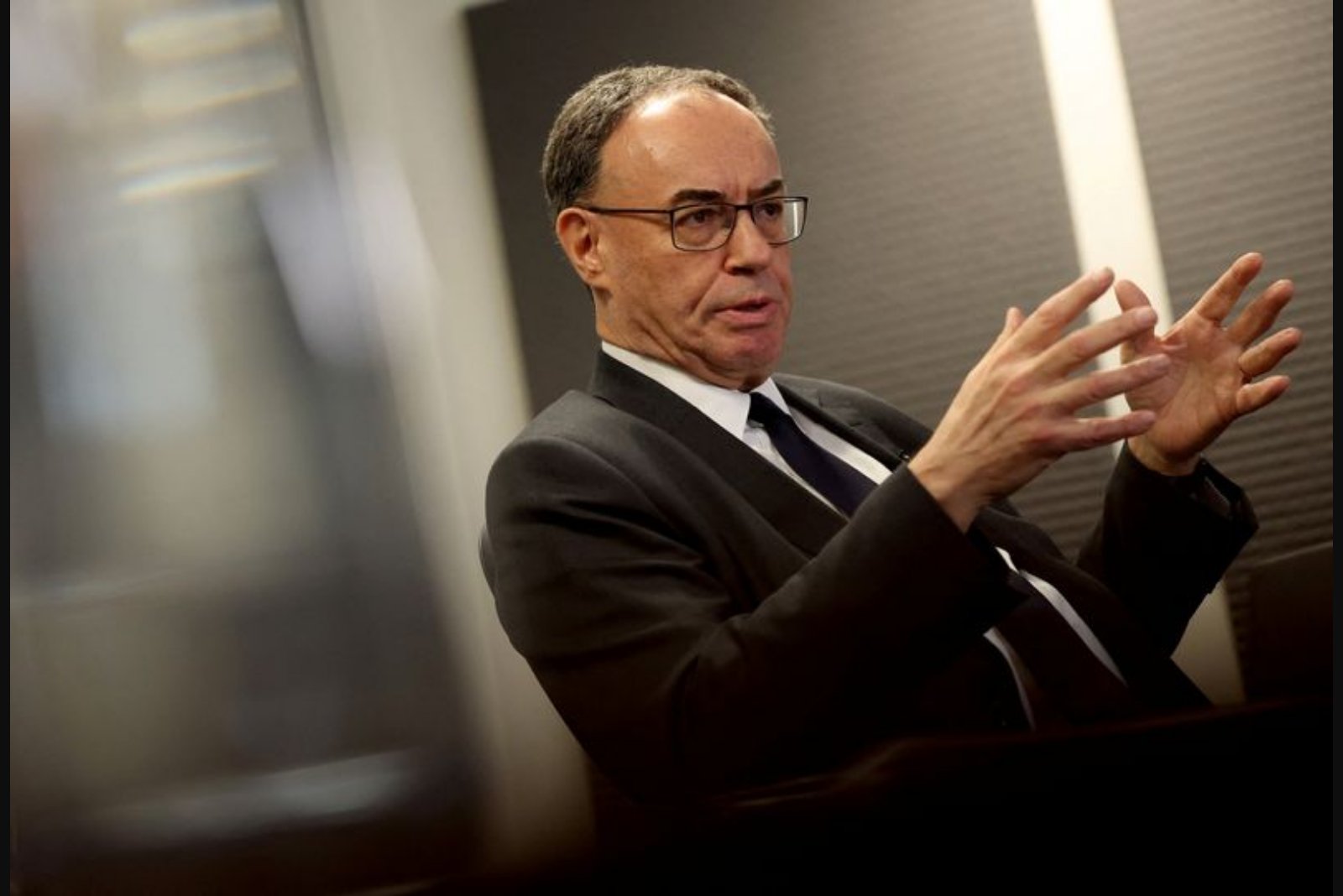
Bank of England Governor Andrew Bailey said markets are presuming a greater degree of monetary tightening than the central bank sees as likely, given the economic impact of the Iran war.
Speaking at the central bank's London headquarters, Bailey said the Bank will have to keep a clear focus on risks to growth and jobs as well as on inflation when it makes its next decisions on interest rates. "We will have to, obviously, act on monetary policy if we think it’s appropriate to do so. But it strikes me, and it still strikes me today, that the most important thing to do is to tackle the source of the shock," he said.
He added that the Bank must manage incoming shocks in a way that minimizes harm to economic activity and employment. "Of course, we have to deal with the shocks that come our way. But our remit is very clear on this that ... we have to do so in a way that ... causes the least damage in terms of activity in the economy and in terms of jobs," Bailey said.
Financial market pricing currently implies two Bank of England rate hikes this year, and at earlier points markets had priced as many as four increases. By contrast, most economists surveyed by Reuters expect the Bank to hold policy rates steady. Bailey characterised the market view as a judgment for investors to make but said he believed markets were getting ahead of themselves: "(The market)’s still pricing us to raise rates. I would still say that is a judgment markets have to make but I think they’re getting ahead of themselves."
Before the crisis, the United Kingdom's inflation trajectory had been expected to move back toward the Bank's 2% target, and the Bank had signalled that cutting interest rates further was likely. That outlook changed sharply with the onset of the Iran war, Bailey said.
On inflation expectations, Bailey said the Bank was watching a sharp rise "very carefully." At the same time, he reported that the message he had been receiving from firms was that they do not have much room to increase prices. "Businesses consistently say to me that they’re operating in a context of an absence of pricing power," he said.
The governor's remarks underscore the Bank's dual focus: addressing inflation pressures while also limiting damage to growth and employment. They also highlight a divergence between market expectations for policy tightening and the Bank's current assessment of how best to respond to the economic shock coming from the Iran war.
As policy decisions are weighed, the Bank will continue to monitor inflation expectations, business pricing behaviour and the broader implications for activity and jobs, according to Bailey's statements at the central bank's London base.