
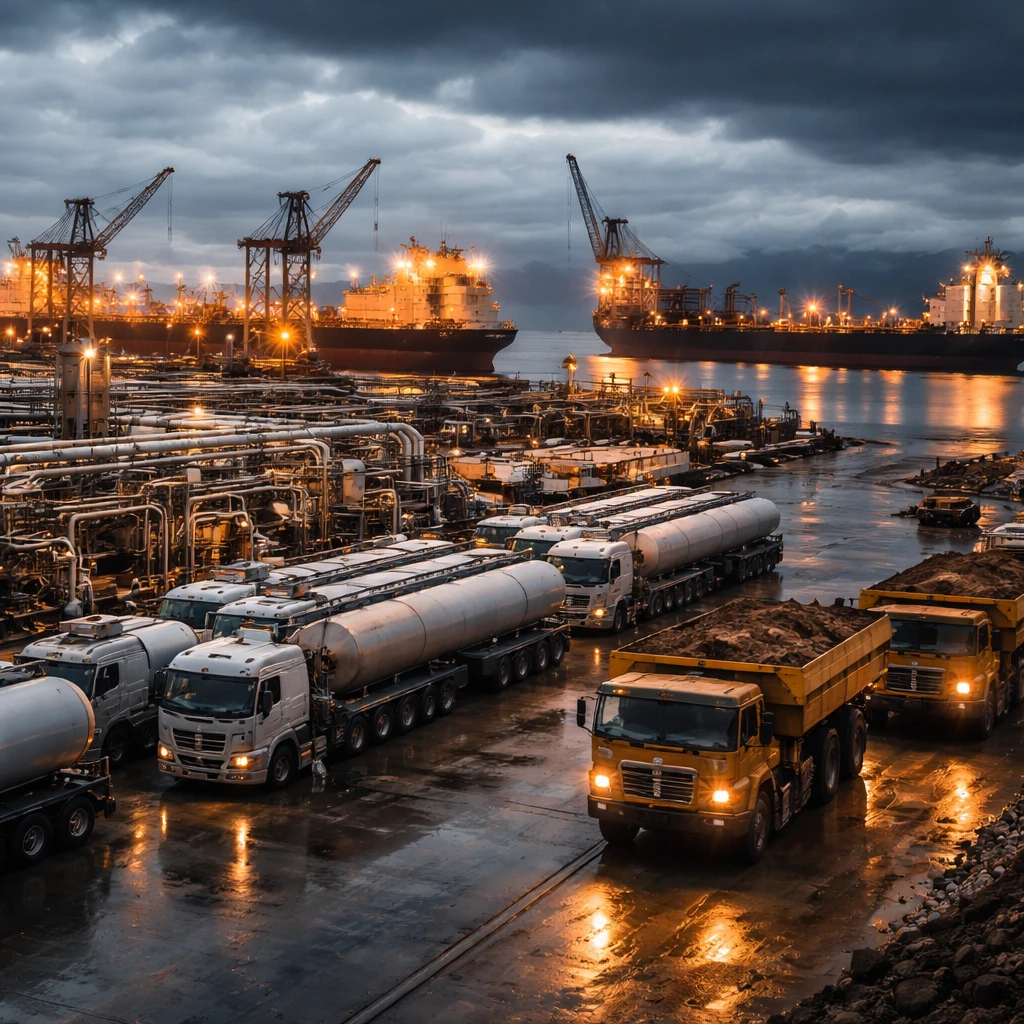
Australia is confronting an elevated risk of diesel shortages that could produce broad economic fallout in 2026, according to a new analysis from Morgan Stanley. The report highlights the country's unusually low "days cover" for that year and rising instability among major import sources as the foundation for what analysts describe as a precarious supply position.
The firm warns that markets should prepare for material activity shortfalls and greater earnings volatility across sectors if a supply squeeze forces a move from price-driven dynamics to hard volume rationing. In that scenario, industry prioritization and the release of strategic fuel reserves would become central policy tools.
Sector vulnerabilities and the nature of the risk
Morgan Stanley identifies Mining, Agriculture and Consumer-facing businesses as particularly exposed to diesel constraints. The report stresses that the primary challenge is volume availability rather than only higher fuel costs - a distinction with significant operational consequences.
High import costs and reduced availability amplify the vulnerability of tightly timed, just-in-time supply chains. Physical interruptions in fuel supply could halt critical logistics and production processes, creating downstream disruptions in output and distribution.
Those supply-side pressures are also expected to feed into household inflation dynamics, which could weigh on retail spending sentiment. The bank note that heightened inflationary pressure and reduced activity could, in turn, affect the commercial loan exposures on banks' balance sheets, as corporate cash flows come under stress.
Policy options under consideration
To blunt the immediate economic impact, authorities are reportedly examining several forceful policy responses. Proposed measures include public transport fare relief and work-from-home guidance aimed at curbing non-essential diesel use. In parallel, officials are drafting protocols for the targeted release of strategic fuel reserves and strict prioritization rules to ensure essential services and high-value export operations remain active.
Policymakers are prioritizing continuity for key export sectors such as iron ore and LNG, but Morgan Stanley cautions that the speed and effectiveness of those interventions remain uncertain given the global nature of the supply shock.
Market implications and broader repercussions
Investors and corporate managers are focused on how long the energy disruption may last and how secondary effects will alter corporate profitability. For industrial firms, the capacity to operate under rationing regimes will be a central determinant of equity valuations through the remainder of the 2026 fiscal year.
Morgan Stanley notes that what was once described as a domestic "diesel dividend" has the potential to transform into a structural headwind if volume constraints persist. Diesel's role as the logistical link between extraction activities and export throughput means that sustained shortages could create congestion at Australian ports, with the potential to tighten global commodity supplies.
Market participants are watching the balance between government-directed interventions and market-led price adjustments. The eventual mix of policy action versus free market response will be pivotal for the resilience of the Australian dollar and the long-term appeal of industries with heavy energy intensity.
Conclusion
With Morgan Stanley placing Australia at the forefront of this emerging energy risk, the coming months will test both operational resilience across energy-dependent sectors and the effectiveness of contingency policies crafted to avert severe economic disruption.