
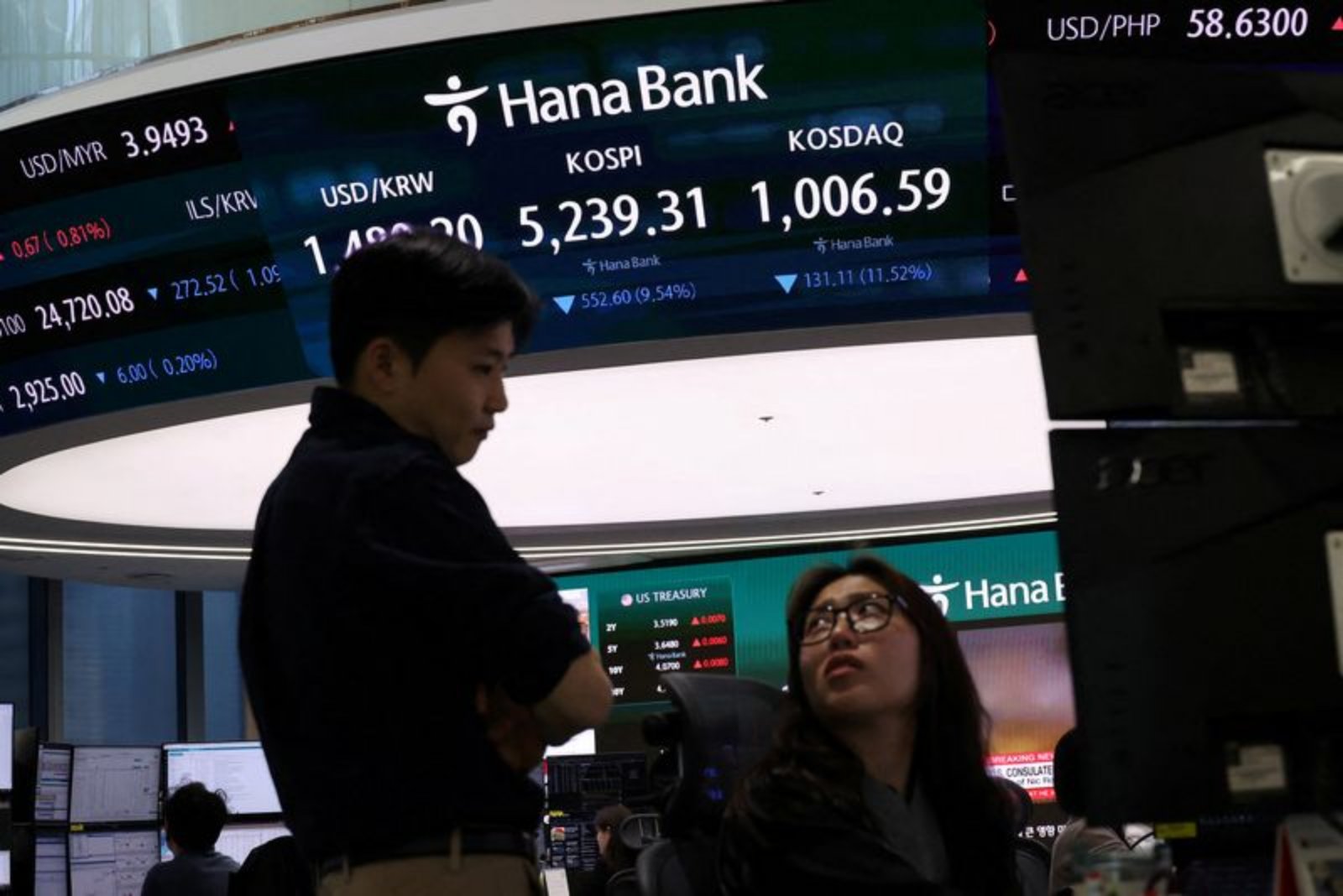
Asian monetary authorities took coordinated, if distinct, steps on Thursday to calm markets and limit the domestic fallout from surging oil prices tied to the U.S.-Israel war on Iran. The actions reflected the heightened sensitivity of economies that import most of their energy needs and the growing risk that higher fuel costs could transmit into broader inflation and slower growth.
In Seoul, the government and central bank moved to inject liquidity into local bond markets through a targeted buyback. Authorities said they will repurchase 5 trillion won in government bonds in two equal tranches - 2.5 trillion won on March 27 and a further 2.5 trillion won on April 1 - with the stated purpose of capping rising yields and adding market liquidity after three-year treasury yields climbed to levels not seen since the middle of 2024. The operation was accompanied by an increase in the price cap on fuel, effective Friday at midnight, and an expansion of fuel tax breaks designed to prevent sharp international oil spikes from being fully passed through to consumers by local retailers.
South Korea's bond-market intervention was presented as a targeted, short-term liquidity measure to blunt what officials portrayed as an abrupt market reaction to energy-supply disruption. Market participants are responding to the country’s dependence on imported oil, and pricing now implies more than 100 basis points of interest rate hikes over the coming 12 months.
In the Philippines, the Bangko Sentral ng Pilipinas (BSP) surprised markets by convening an off-schedule policy review, the first such unscheduled meeting in Asia in the recent episode. The central bank left its key policy rate unchanged at 4.25% but framed the review as part of an ongoing assessment of the unfolding situation. BSP Governor Eli Remolona said the review, held less than a month before a scheduled April 23 meeting, was meant to "reassure the market that we are assessing the situation constantly." He added that with inflation expectations still well anchored there was no need for an immediate rate increase, cautioning that tighter policy could "delay the recovery" of an economy that the central bank now sees growing at 4.4%, down from an earlier projection of 4.6%.
Remolona also signaled the BSP's readiness to adjust policy should conditions deteriorate, describing the environment as "very uncertain" and "very unusual." He warned that "If inflation expectations de-anchor, then we would have to be more aggressive in terms of monetary policy." The statement underscored the trade-off facing the central bank: weigh the risks of allowing inflation expectations to drift higher against the potential cost of tightening too soon and slowing a fragile recovery.
The Philippines has already faced visible social pressure from rising fuel costs. Transport workers and drivers have staged street protests, saying that the leap in fuel prices has severely eroded their daily incomes. On Tuesday, President Ferdinand Marcos Jr declared a state of national energy emergency to speed up the government response and fast-track oil procurement. Officials noted that national fuel inventories covered only 45 days as of March 20, a factor cited in the decision to accelerate energy sourcing measures.
Both Seoul and Manila emphasized that their measures aimed to shield households and markets from immediate shocks while leaving policymakers free to respond to evolving inflation dynamics. In Korea, the combination of bond purchases, fuel price caps, and tax relief was presented as a package to limit contagion to broader financial conditions and consumer prices.
Thursday's moves form part of a wider set of policy reactions across Asia as the region assesses the economic cost of the conflict. Japan is also watching the developments closely; a former top economist at the Bank of Japan said on Thursday that an interest rate hike by June has become more likely as higher oil costs raise the danger of acting too late against inflation.
The Manila-based Asian Development Bank on Thursday offered a stark scenario analysis of the conflict's potential economic impact. It warned that developing Asia's growth could be cut by up to 1.3 percentage points over 2026 to 2027, and that inflation across the region could rise by as much as 3.2 percentage points if energy market disruptions persist for more than a year. Those projections were presented against the bank's December outlook, which had forecast 4.5% growth and 2.1% inflation for the region.
The policy adjustments announced on Thursday thus reflect two complementary goals: stabilizing short-term market functioning and signaling readiness to address sustained inflationary pressures if they emerge. For economies heavily exposed to imported fuel, the immediate priority has been to limit the pass-through of global oil shocks to domestic prices and financial conditions, while retaining the ability to tighten policy should inflation expectations weaken.
Currency markets were also in focus. For reference in assessing the scale of Korean measures, the authorities noted $1 equals 1,504.8000 won.
Summary - Asian authorities moved to calm markets as higher oil prices tied to the U.S.-Israel war on Iran threatened to push up inflation and weigh on growth. South Korea announced a two-tranche, 5 trillion won bond buyback and fuel measures, while the Philippines held an unscheduled policy meeting and kept its policy rate at 4.25%, warning it stands ready to act if inflation expectations slip.