
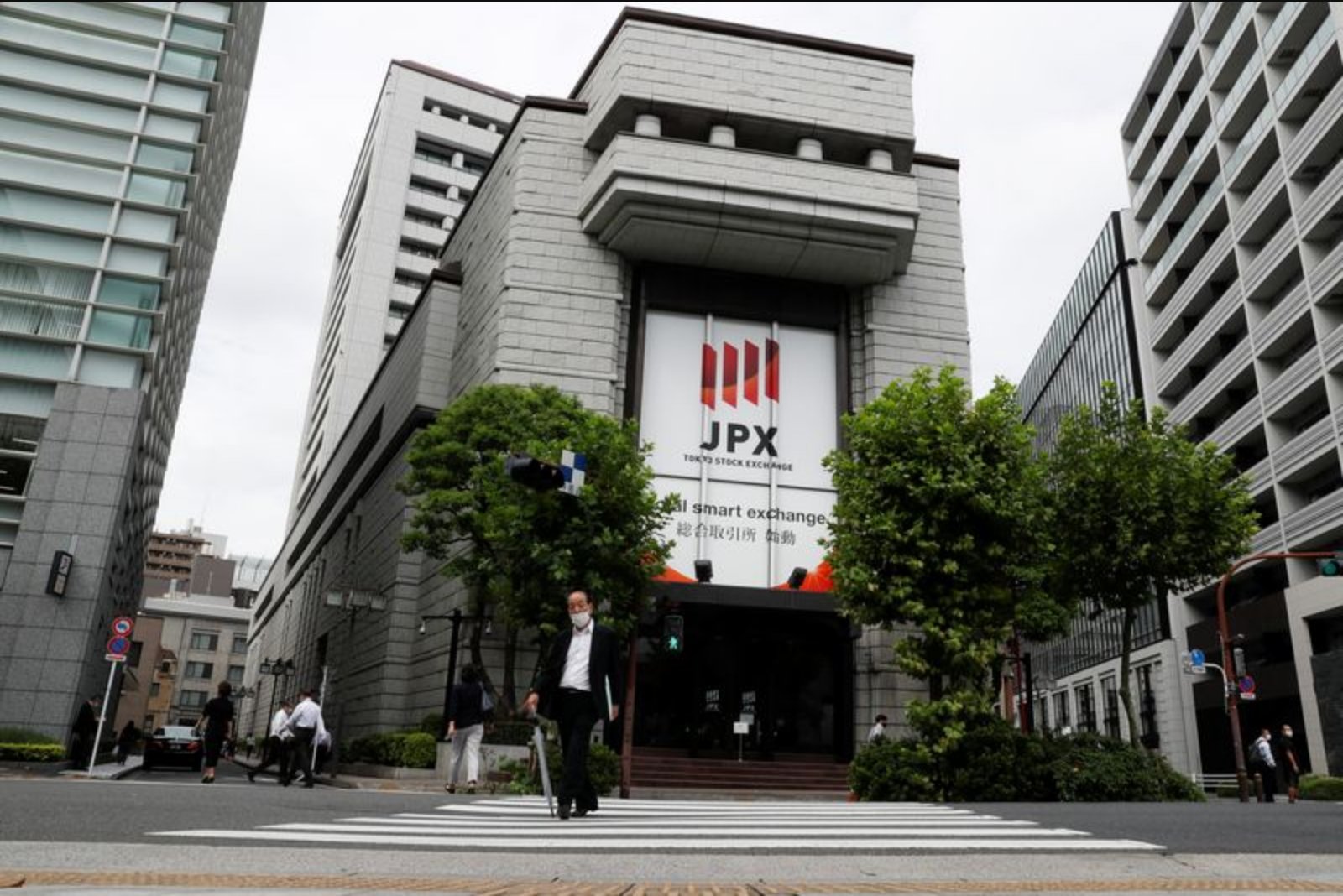
Asian equity markets were drawn into a broad risk-off move on Friday, mirroring losses on Wall Street as investors weighed the prospect of a prolonged energy shock out of the war-torn Middle East. The rout coincided with a rise in borrowing costs and a flow into safe-haven assets as geopolitical uncertainty persisted.
Market participants noted a tentative easing of immediate pressure after U.S. President Donald Trump extended his ultimatum to strike Iranian power plants by 10 days, following an earlier five-day postponement of an initial 48-hour deadline. Nonetheless, reports that Trump was considering deploying additional troops to the region underlined the potential for the conflict to escalate into a ground confrontation, and left open the question of when or if the Strait of Hormuz could be safely reopened to shipping.
Brent crude futures were trading lower on the day, down 1% at $107.07 a barrel after jumping nearly 6% overnight. Traders described the movement in oil as relatively modest on balance, even as the episode renewed worries about supply disruptions. Iran publicly rejected a U.S. proposal to end the confrontation, calling it "one sided and unfair," a comment that further clouded prospects for a diplomatic resolution.
In Asia, futures tied to U.S. equities showed a slight recovery, with Wall Street futures up 0.2% at one point. That small bounce followed a sharp overnight decline in U.S. markets: the Nasdaq Composite fell 2.4% and remained nearly 11% below its record close on October 29, marking an ongoing correction that has persisted since that peak.
"The Middle East headlines won’t stop for the weekend so the weight of money leans towards assuming another risk-off week ahead as the U.S. continues to add military resources to the region," said Sean Callow, senior FX analyst at ITC Markets. "Many see the Iranian regime as holding the upper hand and doubt that there are indeed productive negotiations with the U.S. in process... Underlying pressure towards higher oil prices, USD and yields along with weaker equities appears intact."
Regional equity indices registered notable declines. MSCI’s broadest index of Asia-Pacific shares outside Japan fell 1.4% on the day and was on track for a weekly drop of about 3%. Japan’s Nikkei slid 1.3%, leaving it down 0.9% for the week, while South Korea’s KOSPI tumbled 3%, widening its weekly loss to 8.5%. Mainland Chinese blue chips lost 1%, and Hong Kong’s Hang Seng index dipped 0.4%.
Citi analysts cautioned that more severe trajectories for the Middle East conflict could meaningfully damage global economic prospects. In a client note they said such scenarios could push global growth below 2% for the year, lift headline inflation above 4% and increase recession risks. Their commentary highlighted specific vulnerability in Asia, noting that "Asia, particularly Korea, Japan, and India, faces the most intense headwinds due to heavy reliance on imported fuel and direct exposure to disruptions in the Strait of Hormuz."
Bond markets reacted sharply as well. Norway’s Norges Bank emerged as the latest central bank to flag rising inflation risks and the possibility of interest rate increases as a result of the conflict. Although the bank left policy unchanged on Thursday, it said it now expects to raise rates this year, a marked reversal from an earlier outlook that envisaged three cuts by the end of 2028.
The prospect of higher inflation from rising oil costs contributed to a fresh jump in global government bond yields. Japan’s 10-year government bond yield climbed 4 basis points to 2.31%, while Australia’s 10-year benchmark surged 7 basis points to 5.076%. The two-year U.S. Treasury yield held at 3.9714% on Friday after a 10 basis-point rise overnight as traders increased the odds of an additional Federal Reserve rate hike this year; markets currently price roughly a 50% chance of such a move.
Currency markets reflected the risk-off environment as well. The U.S. dollar strengthened for a third consecutive session as investors sought shelter from market volatility. The Australian dollar, a proxy for risk appetite, bore significant pressure and fell 0.2% to a two-month low of $0.6872 following a 0.8% drop overnight. The euro was steady around $1.1533 after a 0.3% decline the previous session, while the Japanese yen hovered near 159.70 to the dollar. Market participants noted that authorities are likely to intervene if the yen reaches 160 per dollar.
Precious metals were also volatile. Gold recovered 0.6% to $4,405 an ounce after an almost 3% fall overnight, reflecting the tug-of-war between safe-haven demand and wider moves in global markets.
Bottom line - The combined move across equities, bonds, oil and currencies illustrates how heightened geopolitical tensions in the Middle East can quickly feed through to financial markets, lifting inflation concerns and reshaping expectations for monetary policy and growth, particularly for economies with heavy fuel import dependence.