
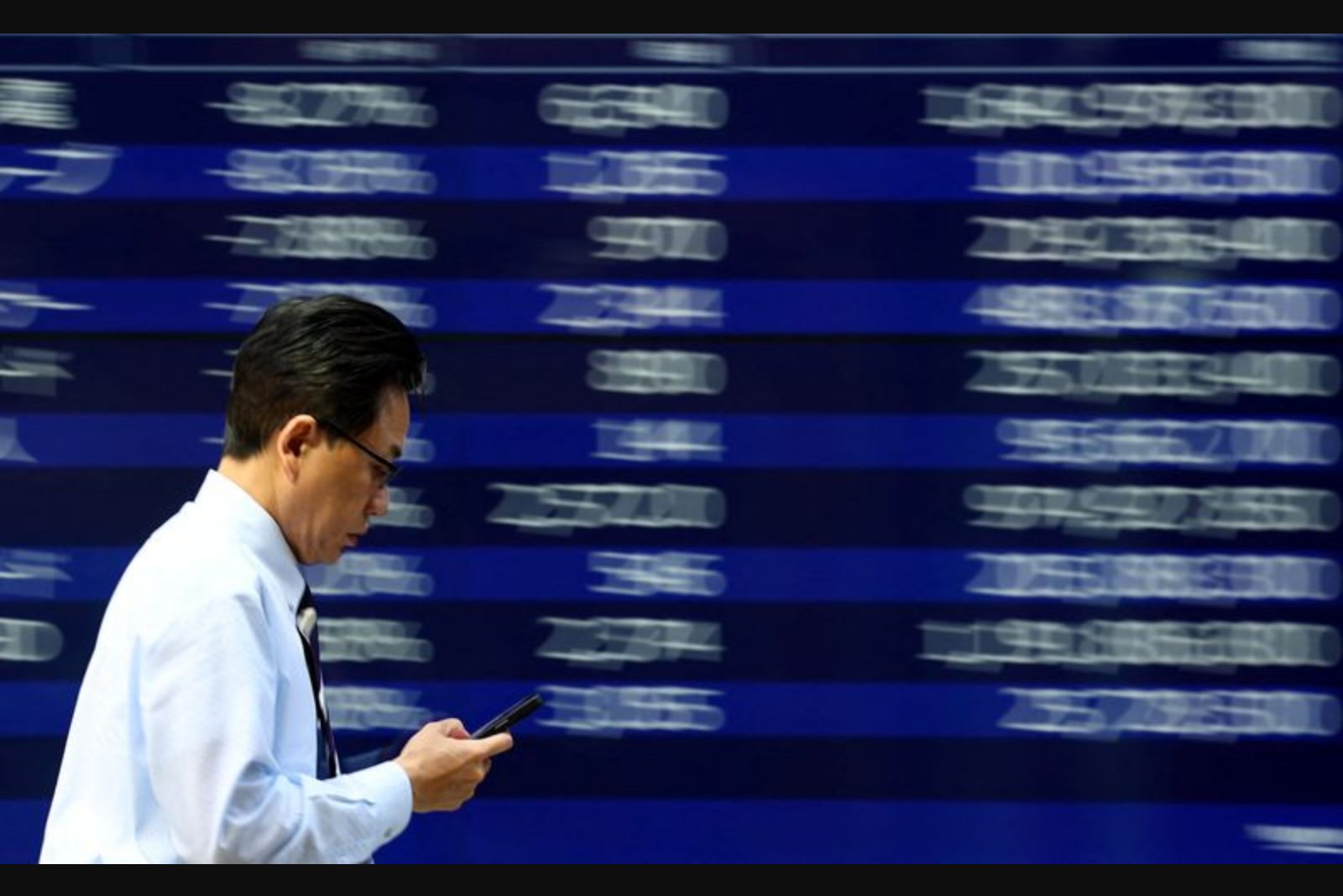
Asian equities and precious metals rallied on Tuesday as markets settled following recent, abrupt moves in commodity and currency markets. Investors cited a firmer tone after U.S. factory activity unexpectedly expanded in January, and attention turned to a central bank decision in Australia and a busy run of corporate earnings in the United States.
Tokyo's Nikkei index rose 2.5%, recouping losses from the prior session, while South Korea's KOSPI climbed 4%. Futures signaled a rebound for Hong Kong stocks and S&P 500 futures were trading 0.3% higher, with traders focused on upcoming quarterly reports.
Precious metals recovered sharply after a dramatic sell-off. Gold gained about 3% in Asian trading to around $4,800 an ounce, representing a bounce of nearly 9% from Monday's lows. Silver also recovered, trading roughly 5% higher at $83.34 an ounce.
Recent volatility in metals, stocks and the U.S. dollar followed U.S. President Donald Trump’s nomination of Kevin Warsh to lead the Federal Reserve, a development that pushed some market participants to reassess monetary policy expectations. Warsh is viewed as likely to shrink the Fed's balance sheet, a move that tends to lift bond yields and weighs on non-yielding assets such as precious metals.
Market participants said the drop in metal prices during the prior sessions went beyond what fundamentals alone would explain. The declines on Friday and Monday triggered liquidations of leveraged positions, which rippled through commodity and equity markets as investors sold other holdings to meet margin calls.
"(It was) a flushing out of leverage in the system which has built up," said Christopher Forbes, head of Asia and the Middle East at CMC Markets. "The bigger question is really on the true pain point from the gold and silver unwind...I’m not sure everyone will have made it."
Bond markets were little changed overall after the U.S. factory report. Benchmark 10-year Treasury yields were steady at 4.275% in Tokyo, while two-year yields held at 3.57% after jumping four basis points in New York.
On Wall Street, chipmakers and other companies tied to artificial intelligence led gains, helping the S&P 500 rise about 0.5% overnight. Alphabet shares reached a record high ahead of the company's earnings due later in the week. Not all U.S. stocks participated in the rally: Disney shares plunged 7.4% after the company warned of a drop in international visitors to its U.S. theme parks and a sharp fall in earnings at its television and film operations.
Investors are also watching corporate schedules closely: chipmaker AMD and server-equipment vendor Super Micro Computer were listed to report after the market on Tuesday.
Currency markets found firmer footing after last week’s dramatic moves. The euro traded near $1.18 in Asian hours, down from peaks above $1.20 touched late in January. The Japanese yen was around 155.54 per dollar, having given back roughly half the gains it recorded during speculation about possible U.S.-Japan joint intervention to support the currency.
In Australia, markets were preparing for a central bank meeting later in the day. A tight jobs market and an unexpectedly hot reading on fourth-quarter inflation have pushed market odds toward a 25 basis point rate hike. Australian equities traded higher in early trade - Australian shares rose about 1.3% - while the Australian dollar held at roughly $0.6958 after a turbulent run that nonetheless produced its largest monthly gain in three years in January.
Political developments in Japan also featured in investor calculus. Polls showed Prime Minister Sanae Takaichi’s Liberal Democratic Party poised for a commanding victory in the weekend election, a result that could increase pressure on government bond markets and the yen by strengthening the mandate for fiscal loosening.
On trade and geopolitics, a U.S.-India trade agreement announced by President Trump overnight was reported to reduce tariffs in exchange for New Delhi pausing purchases of Russian oil; the accord was likely to support the Indian rupee, according to market commentary.
Commodity markets were mixed but calmer overall. Brent crude ended the session lower, settling about 6% down at $66.30 a barrel amid easing tensions between the United States and Iran.
Overall, Tuesday's trading illustrated a partial unwinding of the abrupt moves from earlier in the week. Market participants continue to parse the implications of central bank policy expectations, political developments and corporate earnings flows as they reassess positions that were strained by recent margin-driven liquidations.
Summary
After a period of sharp, liquidity-driven moves, Asian stocks and precious metals recovered on Tuesday, supported by stronger U.S. factory activity and a stabilizing tone in currency and bond markets. Focus shifted to an Australian central bank meeting and a heavy slate of U.S. earnings, while political and trade developments continued to influence regional markets.
Key points
- Asian equities rose, led by a 2.5% gain in the Nikkei and a 4% advance in South Korea’s KOSPI; futures pointed to gains in Hong Kong and the U.S. S&P 500.
- Gold and silver rebounded strongly after sharp falls - gold around $4,800/oz (up ~3% in Asia), silver near $83.34/oz (up ~5%).
- Markets watched central bank moves and corporate earnings: an Australian meeting with odds of a 25 bp rate hike and U.S. firms such as AMD and Super Micro scheduled to report.
Risks and uncertainties
- Leverage-related liquidations: forced selling tied to margin calls remains a risk for metals, equities and other assets if volatility resumes.
- Policy and political shifts: nomination of a Fed chair seen as likely to shrink the Fed’s balance sheet and a potential Japanese election landslide raise uncertainty for bonds, the yen and precious metals.
- Geopolitical and trade developments: shifting agreements such as the U.S.-India trade deal and changes in U.S.-Iran tensions can move oil and currency markets abruptly.