
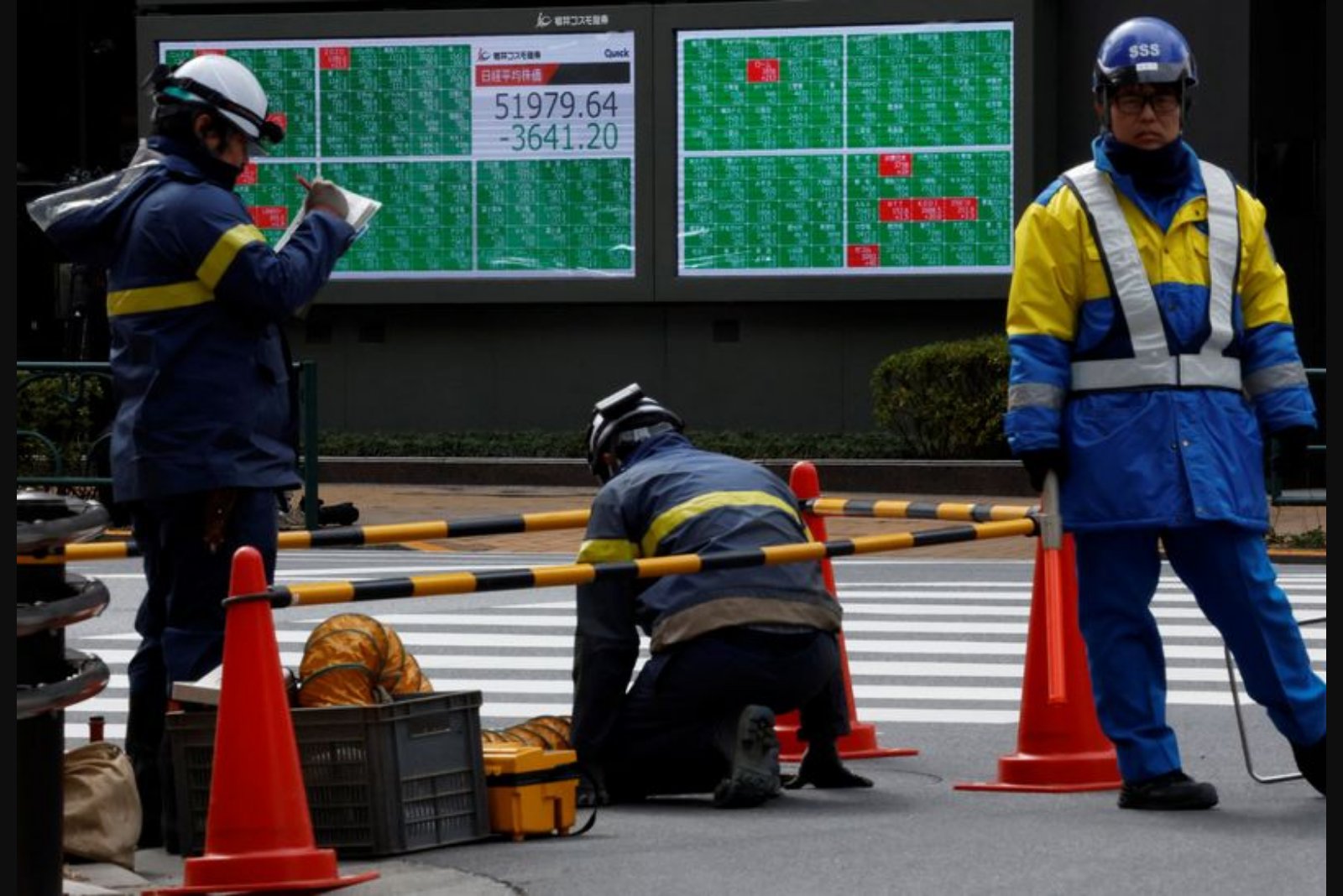
Share markets across Asia opened lower on Monday and the U.S. dollar gained as the conflict in the Gulf escalated, with states exchanging threats and Israel preparing for further operations lasting several weeks. The rising geopolitical tensions sent oil prices through renewed bouts of volatility and added pressure to transport and input costs in the region.
Iran warned on Sunday it would target the energy and water infrastructure of neighbouring Gulf states if U.S. President Donald Trump carried out a threat to hit Iran's electricity grid within 48 hours - a development that dimmed hopes for a quick resolution to the conflict now in its fourth week. Trump said on Sunday Iran had 48 hours to reopen the vital Strait of Hormuz, which is effectively closed for most vessels and offers little prospect of naval protection for shipping.
Markets in Australia and New Zealand were weaker in early trade, down 1.7% and 1.1% respectively, while Japan's Nikkei futures were quoted at 50,850, compared with a cash close of 53,372 on Friday. In U.S. equity derivatives, S&P 500 futures were 0.1% lower and Nasdaq futures had dropped 0.2% as investors weighed the direct and indirect effects of the conflict on energy prices and economic prospects.
Shane Oliver, head of investment strategy at fund manager AMP, cautioned that the situation could persist. "The war could still go on for many weeks yet and see oil prices rise say to $150 a barrel," he said. "And the steady destruction of energy infrastructure means it will take longer to get supply back to normal." He noted as well that past oil shocks unfolded over extended periods as the full impact became apparent.
Oil markets were choppy through the Asian session. Brent briefly gained before giving back early advances and was down 0.3% at $111.82 a barrel - still about 55% higher on the month so far. U.S. crude eased 0.2% to $98.01. Analysts at HSBC highlighted the scale of fuel price moves in the region: Singapore jet fuel has climbed 175% this year to a multi-decade high, while Asian liquefied natural gas has risen 130%.
Those energy moves have fed directly into the cost of moving goods and inputs. Bunker fuel used in shipping has surged, increasing the cost of transportation for global trade. Rising fertiliser prices were also cited as likely to push up food prices.
The inflationary pressure linked to the energy shock has led markets to abandon hopes of further monetary easing in many economies. Futures markets have removed expectations for 50 basis points of easing from the Federal Reserve this year and even leave a small probability that the next Fed move could be an increase. That shift has been damaging for bonds, sending yields substantially higher and adding to borrowing costs for governments already managing large deficits and debt burdens.
Last week saw double-digit jumps in bond yields in many markets as the energy shock combined with higher defence spending pressures on fiscal budgets. Ten-year U.S. Treasury yields stood at 4.3856%, having risen 42 basis points since the conflict began.
The spike in market volatility favoured the U.S. dollar, which benefits as a store of liquidity in times of stress. The United States' status as a net energy exporter also gives it a relative advantage versus Europe and much of Asia, which are net importers. The dollar was trading 0.2% firmer at 159.44 yen, just under a 20-month high of 159.88, as investors remained cautious that a move above 160.00 could prompt intervention from Japan.
The euro slipped to $1.1545, trading near key supports at $1.1409 and $1.1392. In commodities, gold strengthened 0.4% to $4,511 an ounce after a pullback last week amid rising expectations for higher global interest rates.
The combination of higher energy costs, tighter financial conditions and increased defence spending casts a cloud over corporate profit prospects and makes equity valuations look more stretched as yields climb. For transport and logistics sectors, elevated bunker fuel prices and disruptions in shipping lanes present immediate cost and capacity challenges, while agriculture and food supply chains face higher input costs from surging fertiliser prices.
Summary and implications:
- Escalation in the Gulf has intensified oil price volatility and raised costs for shipping and fuels used across the supply chain.
- Markets have adjusted to a higher-inflation, higher-yield environment, with futures markets moving away from priced-in rate cuts and bond yields jumping.
- Sectors most affected include energy, shipping and transport, agriculture through fertiliser costs, and interest-rate sensitive sectors facing higher borrowing costs.
Market participants face several near-term uncertainties tied directly to the developments now underway in the Gulf and their knock-on effects for prices and policy. How long the conflict continues, the extent of damage to energy infrastructure, and the response of central banks to rising inflation are all open questions that will shape market outcomes in the coming weeks.