
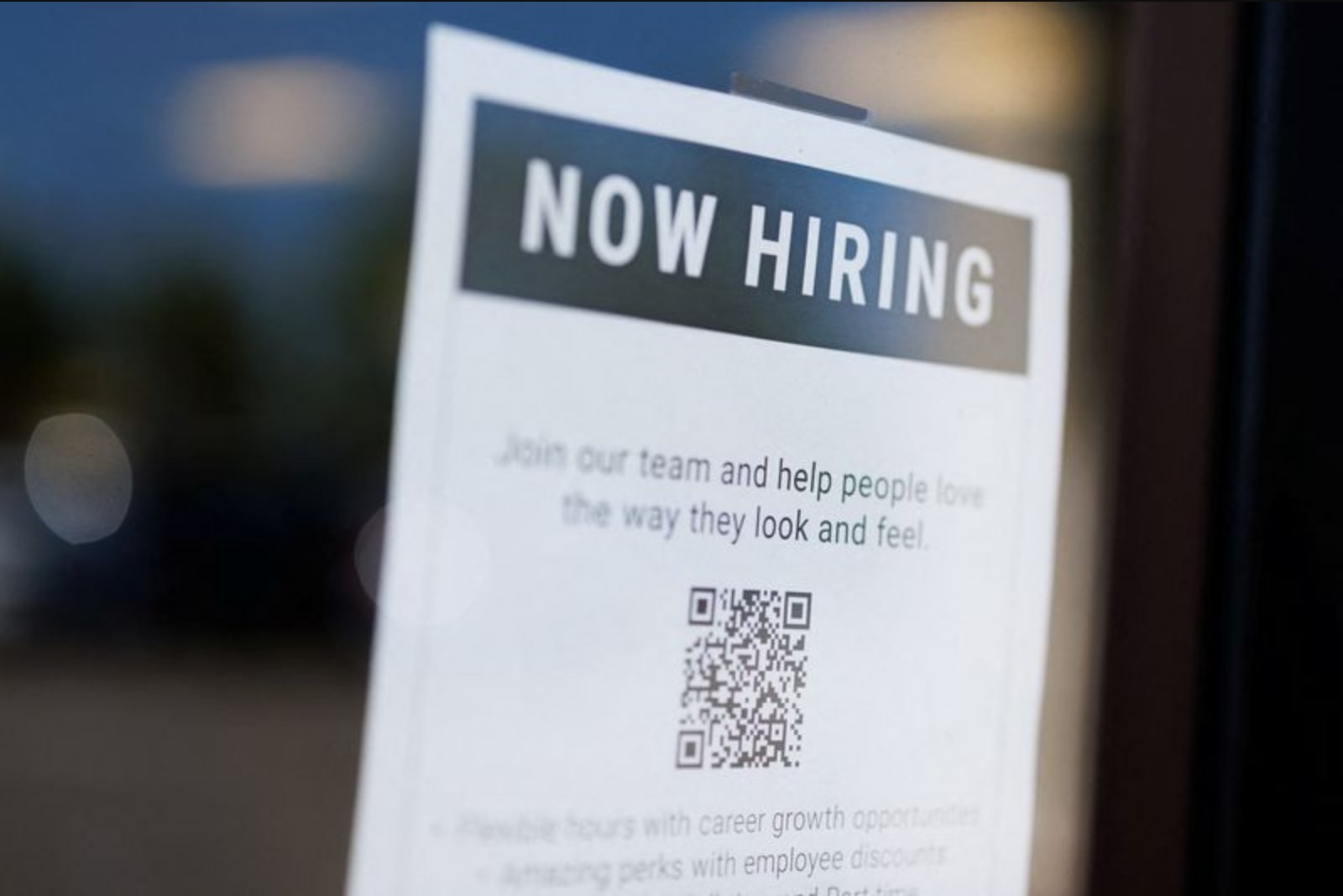
NEW YORK, May 8 - U.S. employment expanded by more than economists anticipated in April, with the unemployment rate unchanged at 4.3%, signaling a labor market that remains resilient and reinforcing the view that the Federal Reserve is likely to maintain its current policy stance for an extended period.
The Labor Department's Bureau of Labor Statistics reported that nonfarm payrolls increased by 115,000 in April. March's headline was revised up to a 185,000 gain from the initially reported 178,000. Economists surveyed by Reuters had been forecasting a 62,000 rise in payrolls for April following the previously reported March rebound of 178,000.
Market participants interpreted the report as strengthening the expectation that the Fed will keep interest rates unchanged into 2027. The U.S. central bank, citing lingering concerns about inflation, left its benchmark overnight rate in the 3.50% to 3.75% range in a policy decision announced last week.
Immediate market response
Equity futures climbed after the employment release. Futures tied to the Nasdaq composite rose 0.8%, while those tracking the S&P 500 gained 0.5% following the data. In the fixed income market, benchmark Treasury yields moved lower: the yield on the two-year note fell 3 basis points to 3.89%, and the 10-year note slipped 2 basis points to 4.37%. The dollar softened as well, with the dollar index down 0.3% to 97.94.
Analysts and strategists weigh in
Brian Jacobsen, chief economist at Annex Wealth Management in Menomonee Falls, Wisconsin, highlighted two months of job gains during a period of elevated energy prices as evidence of persistent demand from businesses. He said: "Two months in a row of job gains during the months where energy price spikes were most acute reveals a latent demand by businesses to grow and hire."
Molly Brooks, U.S. rates strategist at TD Securities in New York, described the market's reaction as muted relative to the higher headline payrolls, noting that a more dovish outcome - such as a rise in unemployment or a headline payrolls decline close to zero or negative - would have prompted a stronger move. She added: "The report made it so that the Fed’s mandates are not in tension with each other and we’re going to be continuing to focus on the inflation mandate in the near term, as that’s the one that’s more at risk from being further from target."
Adam Sarhan, chief executive of 50 Park Investments in New York, characterized the report as a "goldilocks" outcome: not so hot as to spark fresh inflationary pressure for the Fed, but strong enough to ease fears of stagflation and sharply slower growth. "The market can now check the box for unemployment staying low for the Fed... the unemployment rate held steady. The market can breathe a collective sigh of relief that unemployment is not going higher," he said.
Alex Shahidi, co-CIO at Evoke Advisors in Los Angeles, emphasized that while payroll growth of 115,000 might previously have raised recession concerns, in the current context that pace is enough to keep the unemployment rate steady, which signals a labor market that is cooling but remains fundamentally stable. He observed that such an outcome likely argues for continued Fed patience rather than an immediate policy shift, particularly with inflation still above target.
Sam Stovall, chief investment strategist at CFRA Research in New York, called the figures reassuring for consumers, saying the solid labor market supports resilient consumer spending patterns while the unemployment rate at 4.3% does not force the Fed to pivot toward tighter policy. He warned, however, that prolonged elevated oil prices could eventually damage consumer confidence and spending, increasing risk to economic growth the longer those prices persist.
What this means for markets and the economy
The combination of modest payroll gains and a steady unemployment rate appears to have reduced near-term pressure on the Fed to change its policy course. Equities rose modestly, bond yields eased, and the dollar weakened, reflecting the view that the report eases recession anxiety without materially increasing inflationary risk. Observers noted that elevated energy prices remain a factor to watch, as they could pose a growing headwind for consumer sentiment if they persist.
The data and market moves point to continued focus on inflation by policymakers and market participants. With hiring sufficient to prevent a rise in the unemployment rate but not so strong as to rekindle immediate inflation concerns, the labor market outcome for April supports expectations of stable interest rates in the period ahead.