
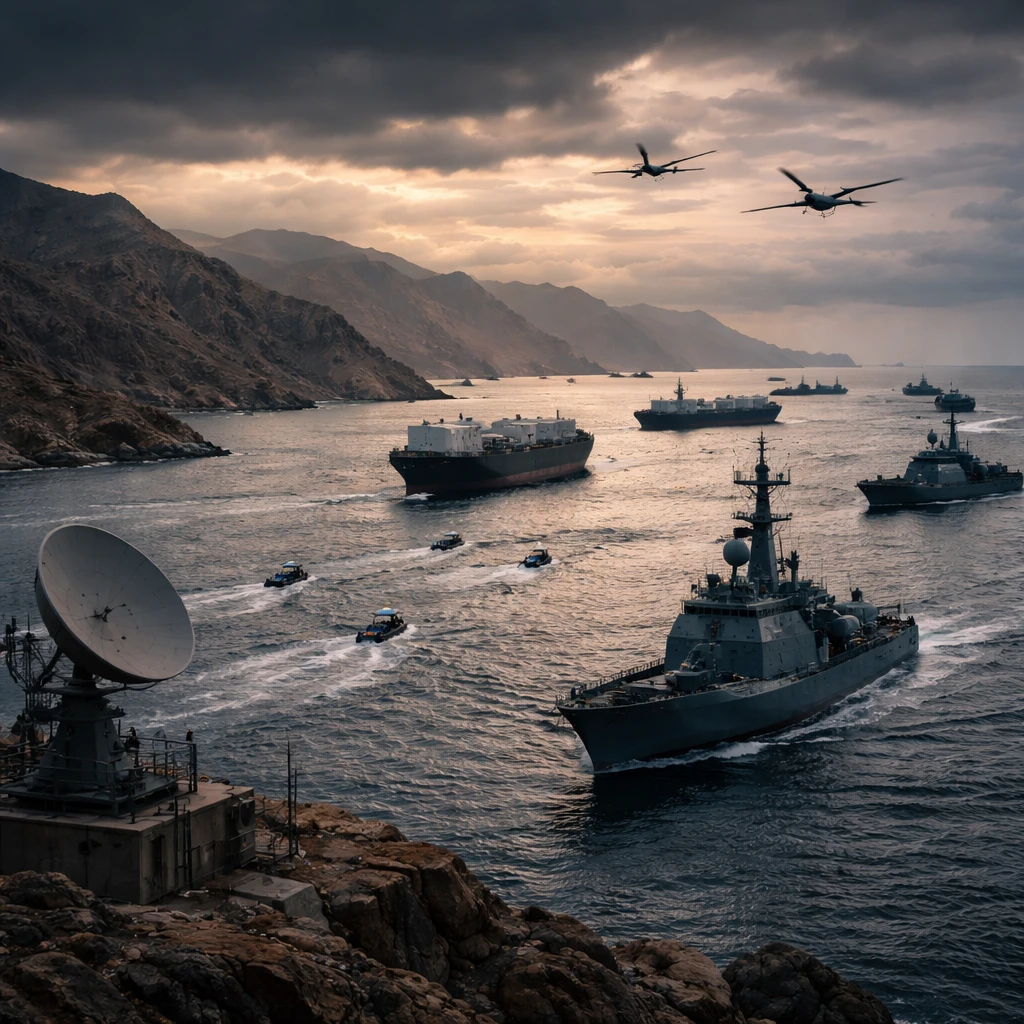
Calls from Washington for a coalition to forcibly reopen the Strait of Hormuz have met growing skepticism from allied capitals and maritime security analysts. Senior European officials and naval experts contend that relying solely on military measures would be unlikely to bring maritime traffic back through the strategically vital channel without broader diplomatic and legal steps.
U.S. proposals envision multinational naval operations to counter what American officials describe as an effective Iranian blockade of a waterway critical to global oil flows. But several allied representatives have told regional and defense analysts that the threat environment in and around the 20-mile-wide chokepoint has evolved in ways that make traditional escort models risky and potentially ineffective.
Even after U.S. and Israeli strikes that have degraded elements of Iran's conventional navy, experts stress that the primary danger to merchant shipping remains in place. Iran's Integrated Coastal Defense system incorporates a dense array of land-based anti-ship missiles, armed suicide drones, and high-volume "swarm" tactics carried out by hundreds of small, fast-attack craft. These assets are frequently hidden in mountain tunnels and salt caves along Iran's roughly 1,000-mile coastline and on Qeshm Island, meaning attacks can be launched with minimal warning against transiting tankers.
That mix of concealed launch points and inexpensive, distributed attack platforms has led some European leaders to warn that naval escorts could reproduce vulnerabilities seen in prior decades. French President Emmanuel Macron and U.K. Foreign Secretary Yvette Cooper have both cautioned that ship escorts similar to those used during the 1980s Tanker War may not be adequate to protect modern maritime commerce. During that earlier conflict, over 30 million tons of cargo were damaged despite the presence of naval protection. Analysts note that today's Revolutionary Guard Corps capabilities are more advanced, and that even a layered defense combining satellite surveillance and maritime patrols may not be sufficient to persuade commercial insurers and shippers to resume normal operations.
Maritime security specialists say the initial step toward reopening the strait is more likely to be diplomatic and legal rather than purely military. The prevailing view among these experts is that a United Nations resolution or comparable international mandate would be needed to provide the political and legal framework for safe resumption of transit.
Christian Bueger, a professor at the University of Copenhagen, suggests a multinational maritime presence should prioritize incident response and rebuilding confidence among shipping firms instead of focusing narrowly on individual ship escorts. Such an approach would require an intricate communications network linking merchant vessels with coalition naval forces to detect and respond to mine-laying, missile launches, and other hostile activity.
Beyond military and operational considerations, a salient economic obstacle remains Tehran's stated demand for reparations. Iranian authorities have indicated they could continue to control exports of fuel, chemicals, and fertilizer until they secure compensation for damage suffered during the recent five-week conflict. That stance raises the prospect that, absent a negotiated settlement, key commodity flows could remain constrained.
For markets and industry, the persistence of combat operations in the Strait of Hormuz keeps an energy risk premium in place, which in turn is likely to pressure industrial input costs and consumer inflation across Western economies. Maritime, shipping, energy, and insurance sectors are among those most directly affected while the strait remains contested.
Key context and takeaways
- Allied leaders and naval experts view a solely military effort to open the Strait of Hormuz as impractical given Iran's layered coastal defenses and asymmetric tactics.
- Even with degradation of Iran's conventional naval fleet, Iran's Integrated Coastal Defense - including missiles, suicide drones, and swarm boats - poses an acute risk to transiting tankers.
- Maritime security specialists recommend a diplomatic and legal path, likely beginning with a United Nations resolution and focusing on incident response and industry reassurance rather than simple ship escorts.