
Economy May 9, 2026 07:31 AM

Allies Anticipate Further U.S. Troop Reductions in Europe After German Withdrawals

Diplomats say additional cuts, exercise pullbacks and redeployments to pro-administration partners are under consideration

By Sofia Navarro

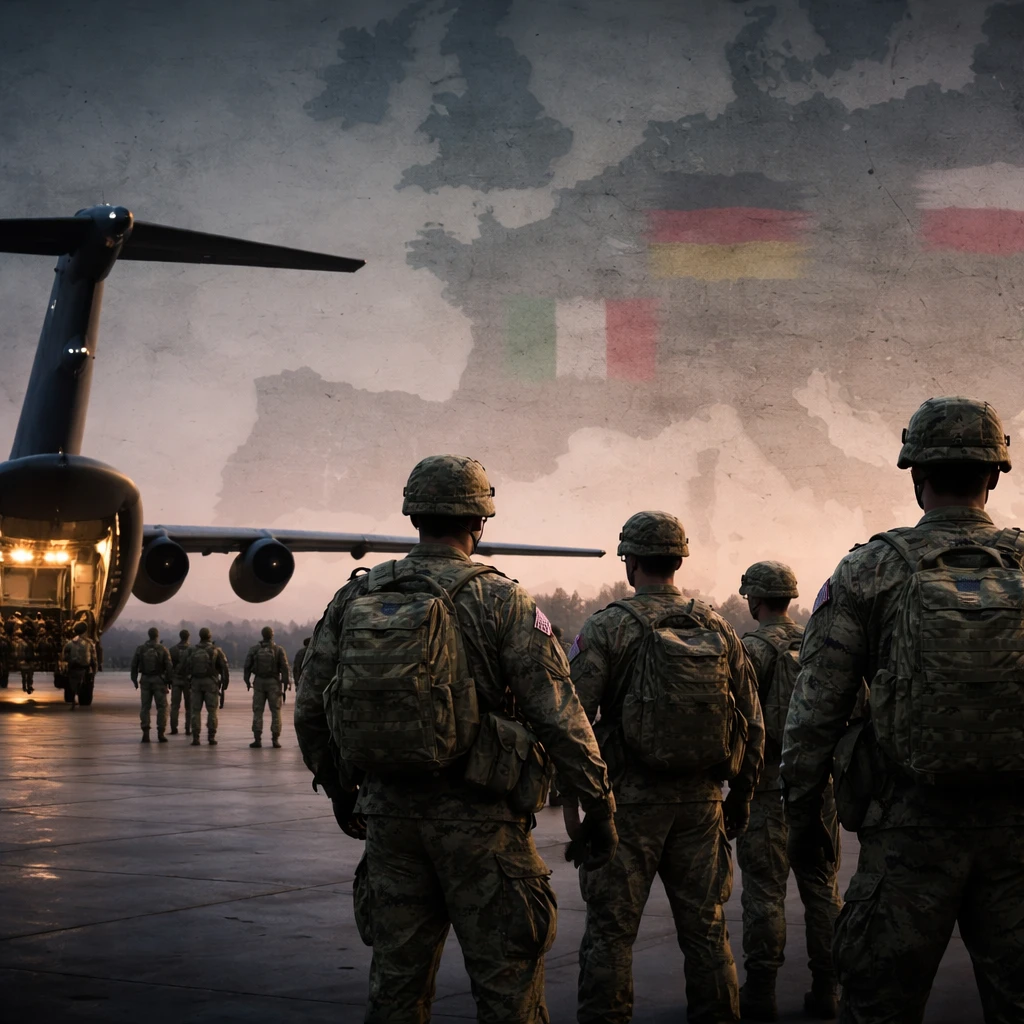
European governments are preparing for the possibility that U.S. President Donald Trump will announce more troop withdrawals from the continent following an order to remove 5,000 personnel from Germany. Diplomats and officials cited options that include cuts in Italy, cancellation of planned missile deployments in Germany, reduced participation in exercises and redeployments toward countries viewed as more supportive of the U.S. administration.

Allies Anticipate Further U.S. Troop Reductions in Europe After German Withdrawals

Key Points

  • European allies expect additional U.S. troop withdrawals after an order to remove 5,000 troops from Germany - sectors affected include defense and European security markets.
  • Options under consideration include cutting forces in Italy, canceling planned long-range missile deployments in Germany, reducing participation in exercises, and redeploying troops to countries like Poland - this could affect defense contractors and regional military infrastructure.
  • U.S. Secretary of State Marco Rubio said Washington must reassess whether current troop deployments align with U.S. strategic interests, underscoring potential shifts in alliance posture that could influence defense spending and security planning.

European governments are bracing for additional U.S. troop reductions on the continent after Washington ordered the withdrawal of 5,000 troops from Germany, according to people familiar with the matter. Allies expect further announcements affecting the U.S. military presence across Europe.

NATO diplomats say U.S. officials are weighing a range of options. Those options include a potential reduction of forces stationed in Italy and the abandonment of plans from the previous U.S. administration to deploy long-range missiles in Germany.

Officials outlined other measures under discussion that go beyond base closures and unit withdrawals. Among these are scaling back U.S. participation in multinational military exercises in Europe and shifting units toward countries perceived as more aligned with the U.S. administration's policy priorities - with Poland cited as a likely destination for redeployments.

Speaking in Italy on Friday, U.S. Secretary of State Marco Rubio said Washington needs to reassess whether its current troop deployments in Europe remain consistent with U.S. strategic interests. The comment echoed the broader reassessment reportedly underway in Washington about the size, posture and location of U.S. forces on the continent.

Diplomats and officials said the potential moves would highlight growing friction between President Trump and several NATO allies over burden-sharing and foreign policy alignment. Germany and Spain were specifically mentioned as countries where tensions over defense spending and support for U.S. policy in the Middle East have intensified.

The U.S. currently stations roughly 85,000 troops across Europe, a footprint that has been the subject of periodic review and debate. Any significant reallocations or force reductions would alter the distribution of that force presence and could affect future NATO planning and exercises.


Implications and context

The developments under discussion involve both force numbers and the nature of U.S. engagement - from permanent stationing to participation in exercises and missile deployments. Allies are monitoring decisions closely as they evaluate defense commitments and diplomatic relationships.

Risks

  • Rising tensions with NATO allies, particularly Germany and Spain, over defense spending and Middle East policy - this could strain diplomatic relations and cooperation on joint defense initiatives.
  • Potential reductions in exercises and deployments may weaken interoperability and readiness among allied forces - impacting defense planning and contractors that support multinational drills.
  • Redeployment of forces to countries perceived as more supportive of the administration, such as Poland, could prompt strategic imbalances in regional security arrangements and require adjustments in military basing and infrastructure investment.

More from Economy

USDA Bans Ten Lenders from Rural Development Program Over Compliance Issues May 12, 2026 Consumer Financial Protection Bureau Prepares to Recall Staff Following Headquarters Closure May 12, 2026 Trump Says He Will Discuss Iran with Xi in China Visit, But Says He Doesn’t Need Beijing’s Help May 12, 2026 U.S. Posts Reduced $215 Billion April Surplus as Refunds and Outlays Rise May 12, 2026 Bundesbank's Nagel Says Iran Conflict Could Force ECB to Raise Rates May 12, 2026