
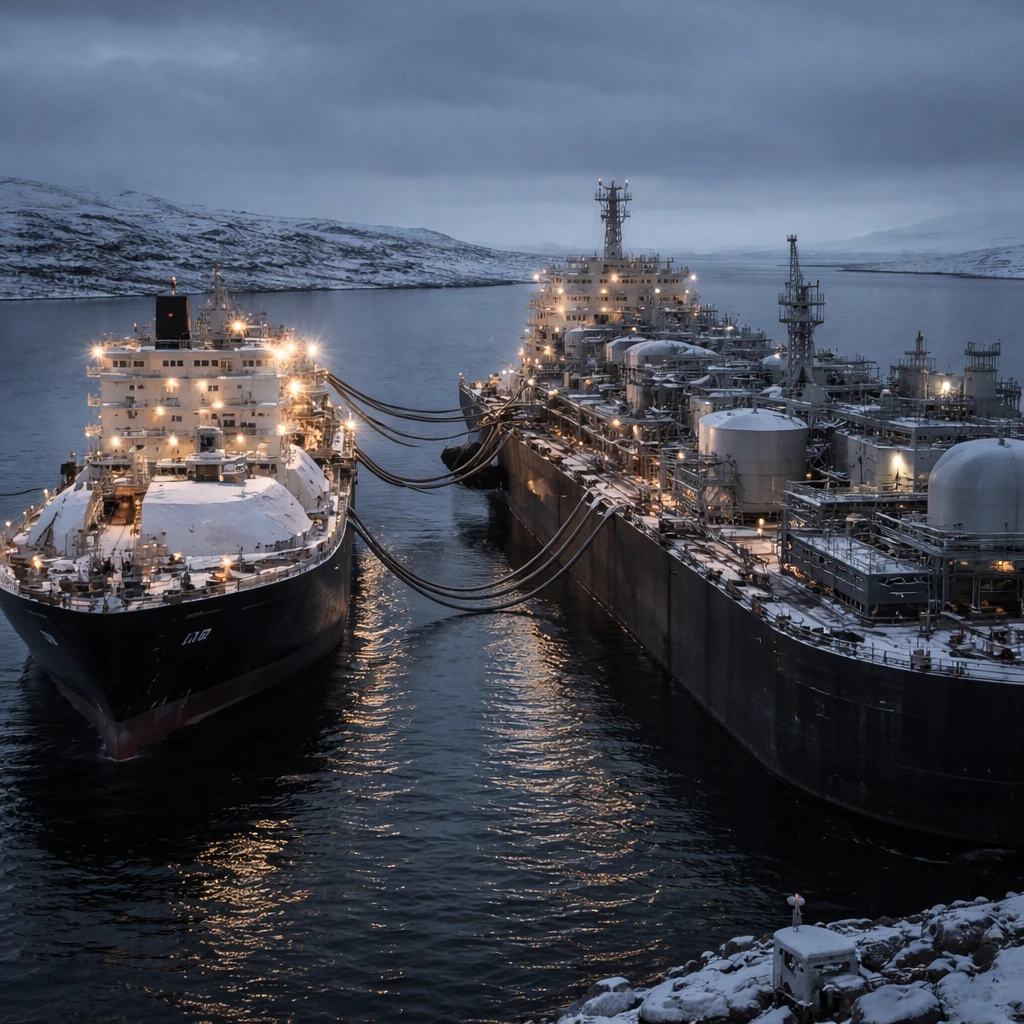
Ship-tracking information compiled by Kpler and reported by Bloomberg indicates the LNG tanker Merkuriy recently shifted to a Russian flag and moored next to the Saam floating storage unit located near Murmansk in western Russia.
The Saam installation is a blacklisted floating storage and regasification unit used to hold LNG from the Arctic LNG 2 development, a project currently subject to intensive Western restrictions intended to limit revenue flows from Russian energy exports.
Observers describe the Merkuriy's deployment as a notable intensification of efforts to assemble an alternate, less transparent shipping network - often described as a 'dark fleet' - that could be used to move sanctioned cargoes. The vessel displays traits commonly associated with such operations, including an advanced age for an LNG carrier and a recent change in ownership to Celtic Maritime & Trading SA, a company with little prior visibility in the sector.
Previously under the management of Oman Ship Management Co., the Merkuriy is one of at least four former Omani-flagged tankers that have switched to Russian registrations and repositioned toward the Arctic in recent weeks, according to the ship-tracking records cited.
Those movements coincide with a period of acute disruption in global energy flows. The closure of the Strait of Hormuz has removed roughly one-fifth of world gas supplies from usual trade routes, lifting prices and prompting Asian importers to seek alternative sources of fuel. In that context, reports indicate Moscow has been offering sanctioned shipments at deep discounts to spot-market benchmark levels to attract buyers.
Western restrictions have notably curbed production at newer facilities such as Arctic LNG 2, but the growth of a dedicated, opaque shipping network could allow cargoes to bypass some conventional barriers and increase deliveries to eastern trading partners. The expansion of such a network would represent a challenge for regulators intent on enforcing energy blockades.
Beyond the Merkuriy, the ship-tracking data points to three additional tankers with similar characteristics either en route to or already in the Arctic region. Taken together, these deployments suggest the logistics for a secondary, less transparent LNG market are taking shape while global supply conditions remain tight.
Context and implications
The appearance of the Merkuriy at the Saam unit brings into focus how older vessels, ownership transfers to little-known firms, and flag changes are being used in concert to move sanctioned commodities. If sustained, these practices could alter the way sanctioned energy cargoes reach buyers and complicate enforcement efforts by Western authorities.
Limitations
The available information stems from ship-tracking data and reporting; it establishes the vessel's recent flag change, its berthing next to the Saam FSU, and the unit's status as a blacklisted storage asset linked to Arctic LNG 2. The material does not provide exhaustive details on cargo manifests, the identities of eventual buyers, or the precise commercial arrangements for the shipments.