
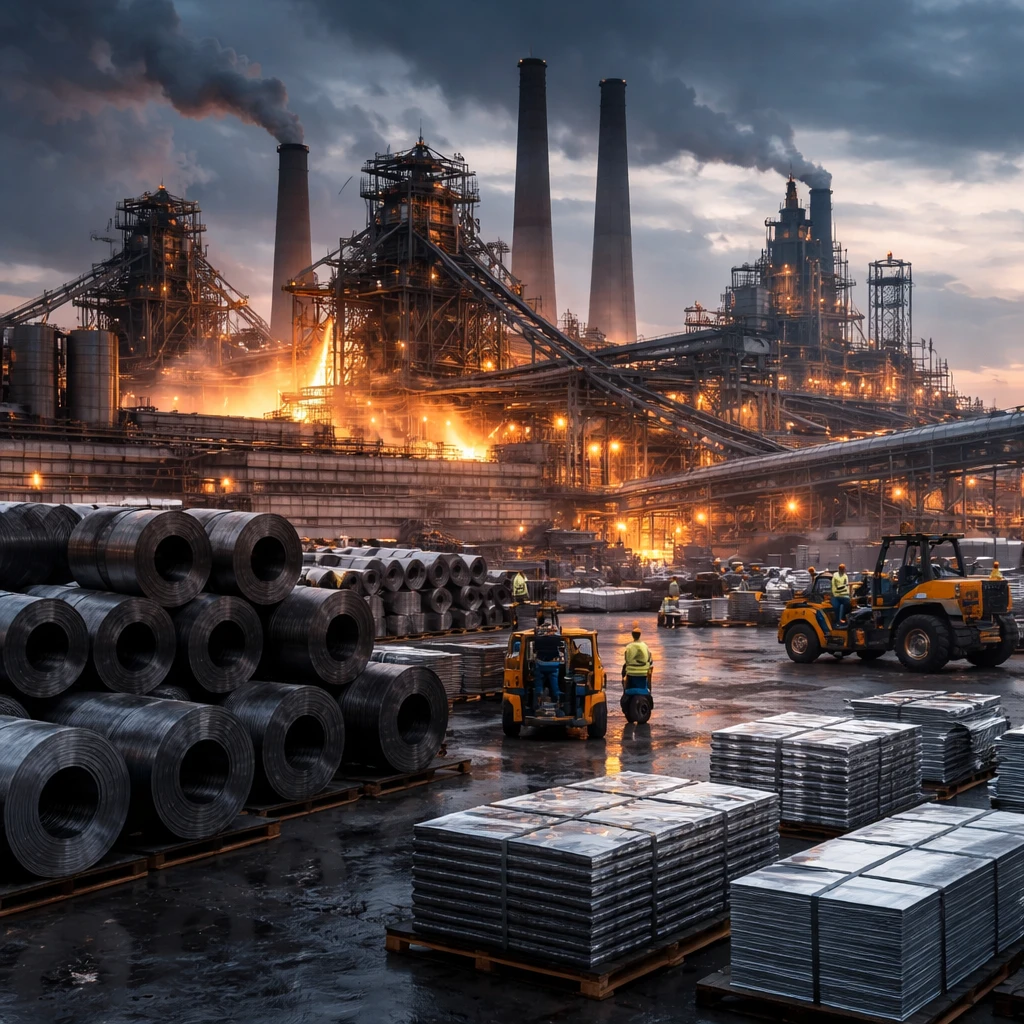
President Donald Trump signed a proclamation on Thursday that reshapes tariffs on imported steel, aluminum, and copper under Section 232, citing national security concerns. The measure changes how duties are calculated - shifting to the full value of imported goods - and sets a series of rate tiers tied to how much of a product is composed of the covered metals and where those metals originate.
Under the new rules, articles that are entirely or nearly entirely composed of steel, aluminum, or copper will be assessed a flat 50% tariff calculated on the full value of the finished product. The proclamation lists examples of such products, including steel coils and aluminum sheet, as falling into this highest rate category.
Products that are substantially made from the covered metals but are not almost entirely metal will face a 25% tariff on their full value. A separate category covers metal-intensive industrial machinery and electrical grid equipment, which will be charged a 15% tariff through 2027; the administration presented this rate as a way to support industrial expansion across the country while maintaining protection for domestic metal producers.
The proclamation carves out lower duties for goods that use American metals in production overseas. Items manufactured abroad using steel, aluminum, and copper that are entirely of U.S. origin will be subject to a reduced 10% tariff. At the same time, products that contain 15% or less of these metals by composition will no longer fall under Section 232 metals tariffs and thus will be exempted from the program.
The policy change follows a notable increase in U.S. metals production. In 2025 the United States moved to become the third largest steel producer in the world, a shift occurring amid the Section 232 tariffs program. The proclamation notes that new steel plants are under construction in West Virginia, Arkansas, and South Carolina, and that more than 4 million tons of new crude steelmaking capacity are expected to start operations within the next two years.
On the aluminum side, a joint venture announced earlier this year between Century Aluminum and Emirates Global Aluminum aims to build the first new U.S. aluminum smelter in decades in Oklahoma. The copper supply chain is also expanding domestically: companies including Highland Copper, Ivanhoe Electric, Rio Tinto, and Wieland are increasing mining, smelting, and fabrication capacity in the United States.
The proclamation builds on prior actions. Section 232 tariffs on steel and aluminum were first implemented during the president's initial term. In February 2025 a proclamation removed product-specific and country-specific exemptions. In June 2025 steel and aluminum tariff rates were raised to 50%, and in July 2025 copper was added to the program at the same tariff rate.
Key points
- The proclamation sets a 50% tariff on articles made entirely or almost entirely of steel, aluminum, or copper; examples include steel coils and aluminum sheet.
- Tiered rates apply: 25% for substantially metal articles, 15% for metal-intensive industrial and grid equipment through 2027, and 10% for goods made abroad with entirely American metals; items with 15% or less metal content are exempt.
- The changes coincide with expanded U.S. metal production and new domestic steel and aluminum capacity coming online, as well as copper sector investment.
Risks and uncertainties
- Trade-exposed manufacturers and supply chains that rely on imported metals may face higher input costs under the new full-value tariffs, affecting industrial producers and downstream manufacturers.
- Exporters and foreign suppliers could see demand shifts if buyers adjust sourcing to avoid higher duty categories, with implications for trade flows in metals and metal-intensive goods.
- The 15% rate applying through 2027 to grid and industrial equipment introduces time-limited policy uncertainty for capital investment decisions in those sectors.