
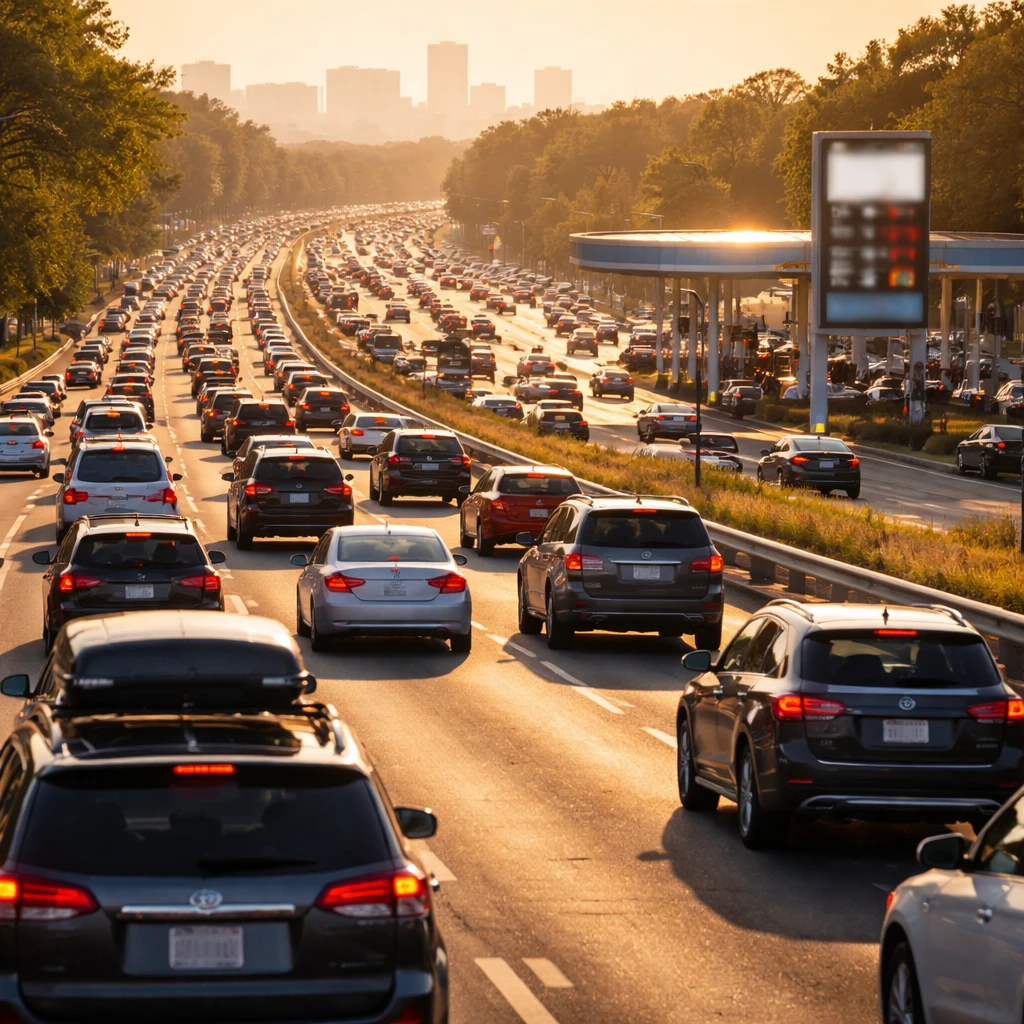
The American Automobile Association is forecasting that 39.1 million Americans will travel by car this Memorial Day weekend, a new high for holiday road travel despite gasoline prices hovering above $4.50 per gallon. The figure represents a modest rise from the roughly 39 million road travelers recorded in the same holiday period last year.
This year’s increase is the slowest rate of growth in auto travel in a decade outside of 2020, when AAA did not issue a forecast because of the COVID-19 pandemic. AAA projects total Memorial Day travel across all modes - including driving, air, and other transport - will reach 45 million people between Thursday, May 21 and Monday, May 25.
Within that broader total, AAA expects 3.66 million air travelers and 2.2 million people using buses, trains, or cruise ships. Driving is the dominant mode, accounting for 87% of projected travelers, while air travel represents 8% of the overall total.
Gas prices are a notable element of this year’s travel picture. Current average gasoline prices sit roughly $1.35 higher than last year’s Memorial Day average of $3.17 per gallon and are at their highest seasonal level on record. AAA data show those prices are about 50 cents below the all-time highs set in June 2022. The organization links the elevated fuel costs to the Iran war, noting that the conflict has effectively shut the Strait of Hormuz as it approaches the three-month mark, which has pushed crude oil and refined product prices higher globally.
On consumer behavior, AAA Vice President of AAA Travel Stacey Barber said: "Travel demand remains strong, and despite higher fuel prices, many people are prioritizing leisure travel during holiday breaks." That statement underscores the continued willingness of many households to undertake leisure trips even with fuel expenses elevated.
Airfare trends provide an additional angle on travel costs. Domestic flight prices are running about 6% cheaper than a year ago, with average roundtrip tickets costing $800 based on bookings made before subsequent increases in jet fuel prices affected fares.
Traffic projections from transportation analytics firm INRIX indicate the heaviest congestion will occur on Thursday and Friday between 3pm and 6pm and again on Monday afternoon, while Sunday is expected to be the least congested day of the holiday period.
In terms of destinations, Orlando ranks as AAA’s top domestic choice, followed by Seattle, New York, Las Vegas, and Miami. Among international destinations, Rome tops the list.
Context and market relevance
The mix of strong travel demand and higher fuel costs has implications for consumer spending patterns, travel and hospitality operators, and energy markets. While many consumers appear willing to absorb higher gasoline prices for leisure travel, continued pressure on crude and refined product prices could influence both transportation costs and discretionary spending decisions as the summer travel season progresses.