
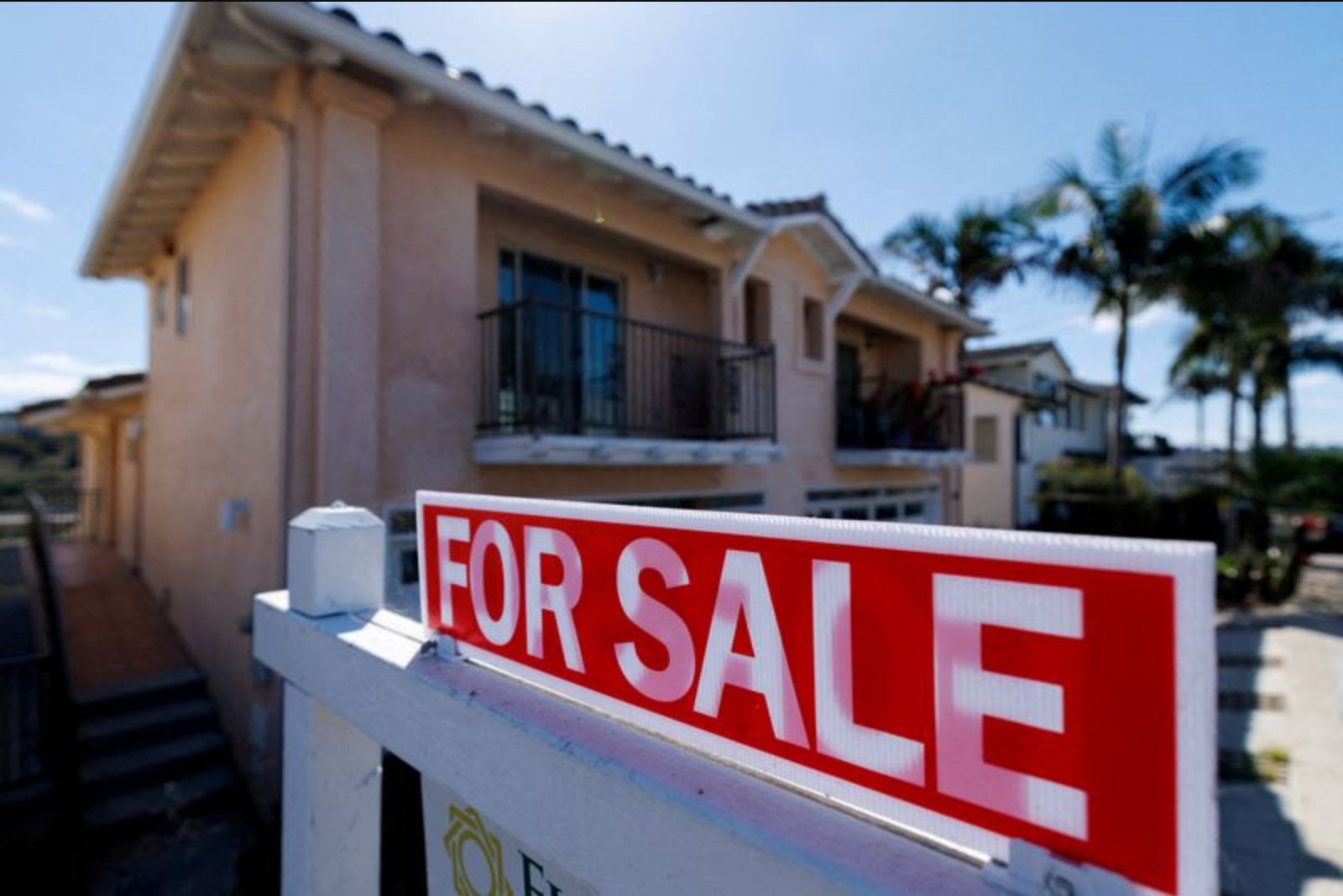
The interest rate on the most commonly used U.S. mortgage rose sharply last week, reaching 6.57% on the 30-year fixed mortgage in the week ended March 27, the Mortgage Bankers Association (MBA) reported. That 14 basis point increase was the largest weekly rise since an earlier period of market disruption tied to a surprise tariff announcement - the last time the weekly increase was larger occurred in the immediate aftermath of President Donald Trump’s "Liberation Day" announcement of larger-than-expected global tariffs.
The MBA noted that mortgage rates have advanced 48 basis points since the United States and Israel launched the war on February 28. The association reported a steep decline in refinancing demand, with applications to refinance falling 17.3% in the latest week. Applications for loans to purchase homes showed a smaller decline, down 2.6% over the same period.
Analysts and the MBA attribute the rise in mortgage rates to a broader move higher in Treasury yields, driven in part by a jump in oil prices as fighting in the Middle East has effectively closed the Strait of Hormuz - a key passage for global oil shipments. The MBA tied that oil-driven inflation risk to increased yields on the government securities that lenders commonly use as benchmarks when setting mortgage rates.
Benchmark global crude oil prices are trading near $118 a barrel, the MBA said, a gain of more than 50% from levels before the start of the Iran war. That increase in oil costs is being watched as a potential inflationary pressure that can push benchmark yields and, by extension, consumer borrowing costs higher.
The 10-year U.S. Treasury note - the government bond most closely linked to mortgage pricing - rose substantially over the month, though it eased over the last two trading days on hopes of a possible diplomatic or operational off-ramp to the hostilities. Even after that pullback, the 10-year yield was still up about 35 basis points on the month, finishing late Tuesday at 4.32%.
"The headwinds of higher rates are being offset somewhat by the buyer’s market in many parts of the country - there are more homes for sale than buyers have seen in some time," said Mike Fratantoni, MBA’s chief economist. "However, the shocks of the jump in rates and the increase in overall economic uncertainty are likely having an impact on buyer confidence."
The combination of higher borrowing costs, rising oil prices, and elevated Treasury yields has produced a sharper recalibration of mortgage-related activity, with refinances particularly affected as homeowners face less incentive to replace existing loans at higher rates. Purchase activity, while less affected in the most recent week, has also softened as the market adjusts to higher financing costs and heightened uncertainty.
Market participants will be watching both developments in the Middle East and movements in oil and Treasury markets for further cues on the path of mortgage rates and housing demand.