
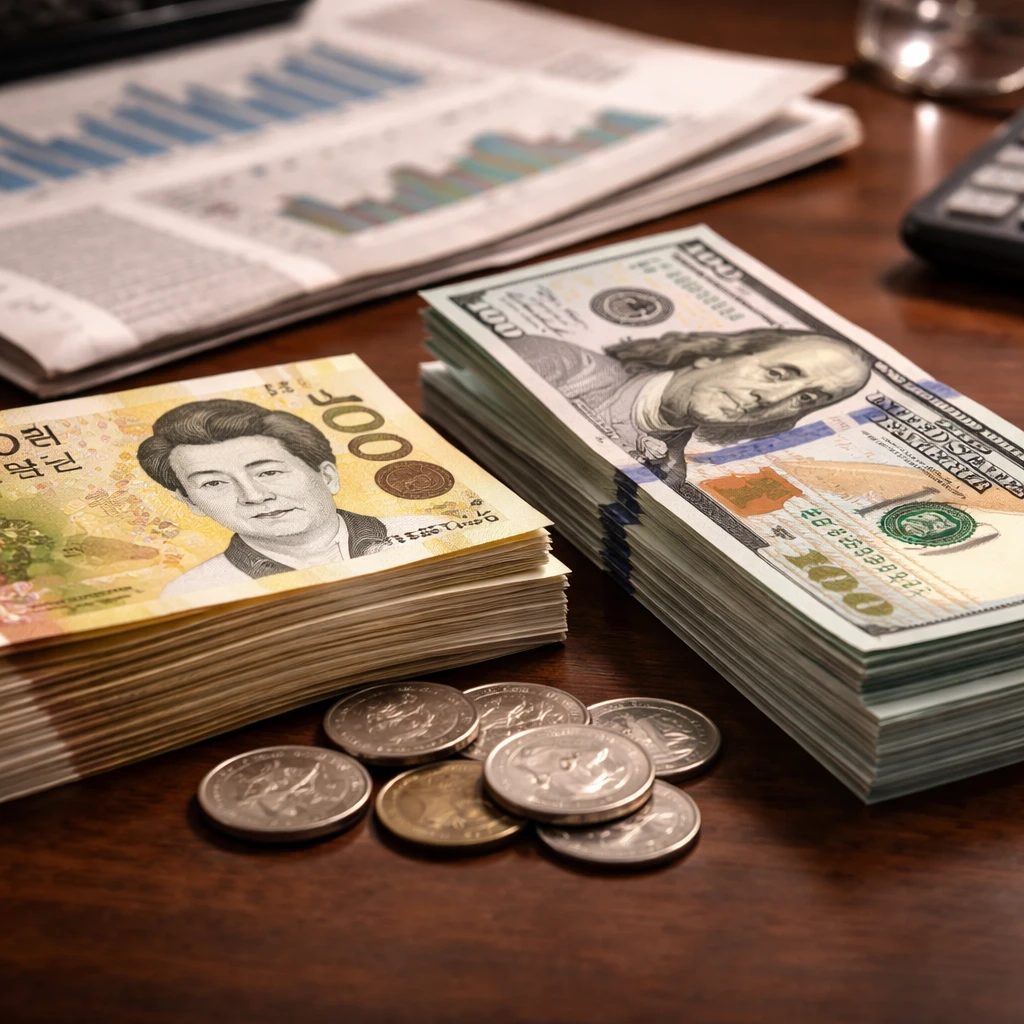
During a meeting in Washington on January 14, U.S. Treasury Secretary Scott Bessent conveyed concerns regarding the recent slide of the Korean won, emphasizing that this depreciation does not correspond with the robust economic fundamentals of South Korea. His remarks coincided with a notable recovery in the currency's value, which climbed up to 1.15% stronger against the U.S. dollar, reaching 1,462.0 won per dollar, following ten consecutive sessions of declines that had driven the currency to its lowest point since late December.
Secretary Bessent and South Korean Finance Minister Koo Yun-cheol convened earlier in the week, focusing on strategic discussions involving critical mineral resources and initiatives to further solidify economic ties between the United States and South Korea, as detailed by the Treasury Department.
The Treasury Department underlined Bessent's position that excessive fluctuations in foreign exchange markets are undesirable, highlighting South Korea's significant role as a partner to the United States, especially given its strong performance in vital industrial sectors that underpin the American economy. This sentiment was reinforced by Bessent through a message posted on social media platform X.
In tandem, the South Korean finance ministry confirmed the discussions on currency market conditions. Minister Koo, addressing attendees at a virtual forum centered on foreign exchange policy, pledged measures to counter growing volatility in the local currency market and outlined intentions to balance the supply and demand dynamics of the U.S. dollar.
The backdrop to these discussions includes a trade agreement finalized in November between Seoul and Washington, resulting in lowered U.S. tariffs on imports from South Korea. In exchange, South Korea has committed to investing $350 billion in strategic sectors within the United States. This agreement was the product of extended negotiations, particularly concerning the foreign exchange ramifications tied to the investment proposal.
Bessent expressed optimism about the seamless execution of this trade deal, stressing its "full and faithful" implementation during his exchanges with Minister Koo.