
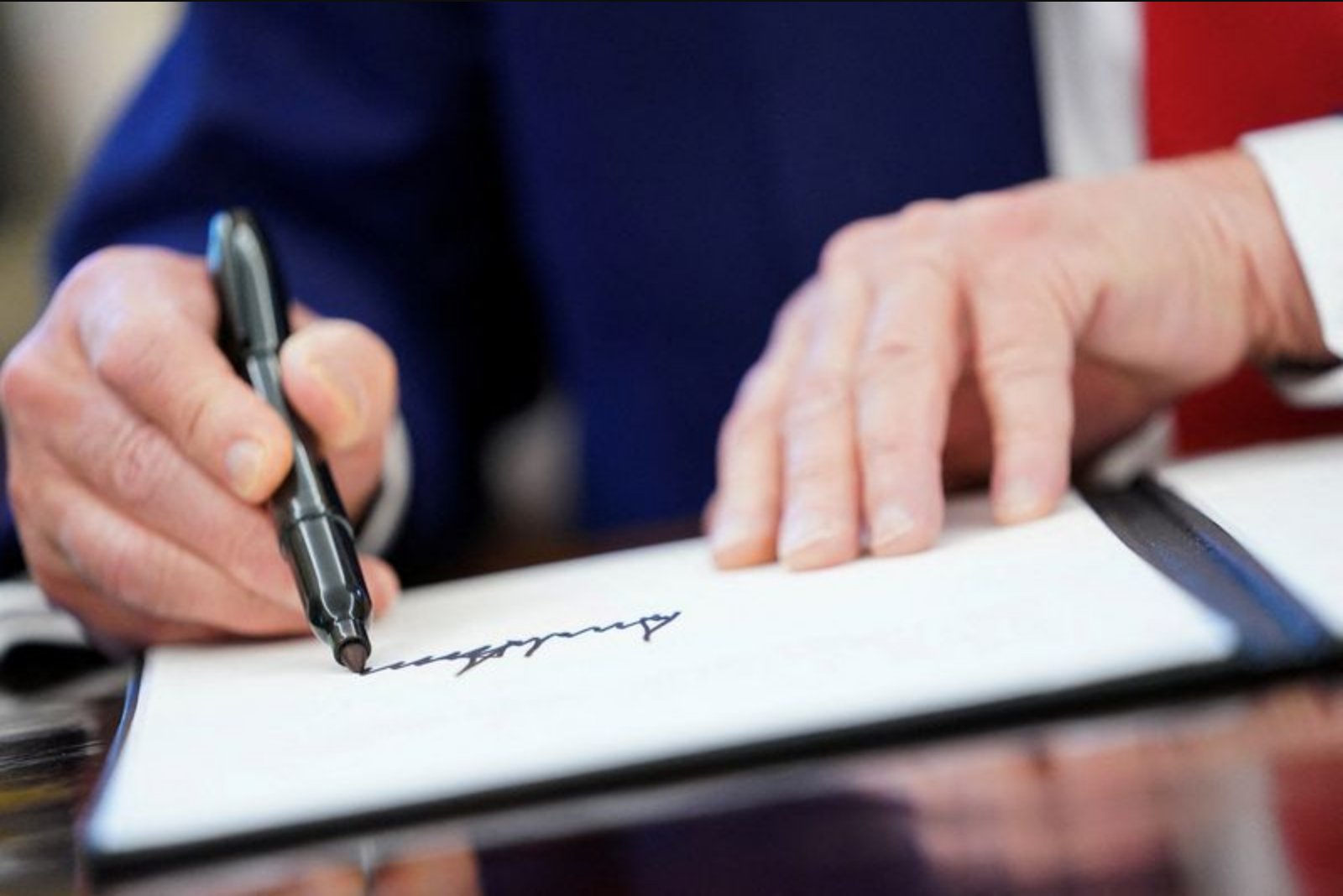
The U.S. Treasury said on Thursday that paper currency will carry President Donald Trump’s signature as part of observances for the nation’s 250th anniversary. The department described the move as a first: no sitting president has previously had his signature appear on federal paper money.
Alongside that change, the Treasury will remove the signature of the Treasurer of the United States from U.S. notes. The decision ends a continuous practice dating back 165 years, when Treasurers’ signatures began appearing on federal currency in 1861.
According to the Treasury’s statement, the Bureau of Engraving and Printing will begin printing $100 bills that include both President Trump’s signature and that of U.S. Treasury Secretary Scott Bessent in June. The department said additional denominations will be produced with the same pair of signatures in the months that follow.
The Bureau of Engraving and Printing is, at present, still producing notes that carry the signatures of the previous administration’s Treasury leadership. Those existing notes bear the signature of former Treasury Secretary Janet Yellen and Treasurer Lynn Malerba. The Treasury said Malerba will be the last Treasurer in the uninterrupted sequence of Treasurers whose signatures have appeared on U.S. federal currency since the government first issued such notes in 1861.
The Treasury’s announcement outlines a phased printing schedule beginning with the $100 denomination and continuing across other bills in subsequent production runs. The department did not provide additional operational details beyond the timing for the first $100 notes or specifics on the full timeline for replacing signatures across all denominations.
Summary
- President Donald Trump will have his signature placed on U.S. paper currency to mark the 250th anniversary of independence.
- The signature of the Treasurer of the United States will be omitted from notes for the first time in 165 years.
- The first $100 bills with Trump’s and Treasury Secretary Scott Bessent’s signatures will be printed in June; other denominations will follow in subsequent months.
Key points
- The change makes a sitting president's signature appear on U.S. federal paper currency for the first time - a procedural alteration in currency design and issuance.
- The Treasury will discontinue including the Treasurer's signature on notes, ending an unbroken practice that began in 1861.
- The Bureau of Engraving and Printing remains in production of notes carrying the signatures of former Treasury Secretary Janet Yellen and Treasurer Lynn Malerba, with Malerba identified as the last Treasurer whose signature will appear on federal currency.
Risks and uncertainties
- Timing uncertainty - the Treasury provided the start month for $100 bill printing but did not specify exact dates or a complete schedule for when all denominations will carry the new signatures; this leaves the full timeline unclear.
- Coexistence of notes - the Bureau of Engraving and Printing is currently producing notes with the previous administration's signatures, meaning both old and new signature combinations will exist in circulation during the transition period.